The Real Goal Is Living With Less Pain (EP 121)


 Apple Podcasts
 Spotify
 Pandora
 PocketCasts
 RSS Feed
 Overcast
 Amazon Music
 YouTube
 Dr. Hema Murty has a PhD in aerospace engineering, but the work she is doing today is all about helping people move better, hurt less, and stop treating their bodies like machines that need to be forced into submission. Her path into wellness began with her own knee pain after training for and completing the Toronto Marathon, followed by years of frustrating advice that did not actually solve the problem.
We talk about why one-size-fits-all fitness plans often leave people discouraged, the connection between stress and physical pain, and why fitness should support your life instead of becoming another exhausting job. Her biggest message is simple: start where you are, listen to your body, and build consistency around what helps you feel better.
=== Chapters
- 00:41 Meet Dr. Hema Murty and her approach to pain, movement, and wellness
- 01:27 From aerospace engineering to helping people move and feel better
- 05:45 Running for stress relief, community, and a break from the desk
- 10:48 Marathon training, knee pain, and the search for real answers
- 16:30 Treating the body like a system instead of chasing quick fixes
- 19:53 Yoga therapy, pain relief, and the mind-body connection
- 26:49 Why recurring injuries pushed Hema to build a different wellness model
- 32:19 Empathy, consistency, and fitness that actually fits real life
- 35:48 GetShanti.com and gentle fitness for women over 50
- 39:25 Treadmills, gym machines, and moving in ways your body can handle
- 41:08 The five-minute self-awareness practice that can help you begin feeling better
=== Guest: Dr. Hema Murty, Shanti Fitness Consulting
- Website: https://www.getshanti.com/
- Get your free protein download:
- LinkedIn: https://www.linkedin.com/in/hema-m-phd-8a7191313/
=== Resources / Companies / Books / Podcasts
- Shanti Fitness Consulting: https://www.getshanti.com/
- Toronto Marathon: https://www.torontomarathon.com/
=== MUSIC LICENSE CERTIFICATE: Envato Elements Item
- Item Title: Healthy Eating
- Item URL: https://elements.envato.com/healthy-eating-VNN4M4P
- Author Username: CrazyTunes
- Licensee: Marvin Bee
- Registered Project Name: Unhealthy Podcast
- License Date: January 3rd, 2026
- Item License Code: XPFS6HD54W
[0:16] Hello friends and welcome back to my unhealthy podcast the show where we have honest conversations about health habits stress and all those things that affect how we feel in everyday real life, today I’m joined by dr Hema Murta, Murty she is a PhD, in aerospace engineering and you're thinking what?
[0:42] But her work today is focused on helping women, especially those 40s, 50s, and above. And she helps them move better, hurt less, manage stress, and get out of the exhausting cycle of trying to force their bodies through another one-size-fits-all wellness plan. Dr. Murdov, welcome to the show. Dr. Hema, welcome to the show. I am not having a good day. I'm fine. Hi, Marv. It's nice to be here. Thank you for inviting me. All good stuff. We're here to, we're here to do the stuff, right? That's the important piece. Well, and as my listeners have learned over the shows, I am not perfect. I don't pretend to be, which is why we don't stop and edit and fix everything.
[1:27] So, can't do that in real life, right? Exactly. You got it. You got the right drift, I think. All right. So let us, I guess, start with the obvious. And I know you probably have to do this every time you talk. But when people hear that you have a doctorate in aerospace engineering, people are like, wow, first of all, that's awesome. But then second, how does that pertain to health? So I guess the question is, what made you decide to tackle health? Yeah, a good question because, you know, how does that help me? Because I don't have a rocket booster attached to me. So, you know, I don't think she's going to know what I'm made of. But, you know, the thing is this, is that it all starts with thinking, right? So number one is fitness is a problem like anything else. Like you've got a situation, you're a human being, got all the stuff going on with you and you want to get from A to B, whatever that B is. So, you know, that could be a weight that could be a health, an actual health condition, like pain, shoulder pain, back pain, hip pain. You got it. And or it could be, you know, just I want to feel better in my clothes.
[2:37] Or it could be I don't want to keep buying other size clothes. I want to fit into my regular clothes and just not have to buy more clothes. I've had that. So all of these are our system oriented questions, the system being the body. So when i started my fitness uh business um, i was between professions i had uh i left one location and i moved back home um the usual aging parents story so i just wanted to be close to home so, i did the usual thing that a lot of adults i know I’ve heard the story from other people as well they do they move back closer to home uh, to try to continue their work at some manner And I thought, you know, being, like being a contractor would help. So that's, you know, that's kind of like, I think a lot of people in your guests that I've heard the same story on that. So. Being a contractor, you can own your own business. You can be a little more flexible with the hours. So that's just the short story of how I said, well, if I was going to do something else on top of maybe engineering, I might do fitness differently.
[3:47] Yeah. So that begs the question, why fitness? Yeah. Well, let me ask this. So let's first of all give our listeners a real understanding. This isn't something that you did in the last few years or something. And you actually started doing fitness. Am I, did I read this correctly? I forget where I saw it, 2004. Yeah, so, yeah, exactly. So that my, I started my official, you know, with all the stuff, fitness business, early 2000. So 2004 would be accurate. So over 20 years in the trenches with the fitness business, actually healing clients. So you got that right. It's a long haul, not something I did on the weekend or something like that. But, you know, it was running in the background of my mind to do something and do it differently. Right.
[4:33] So that kind of begs the question, like, what are you doing differently and why you like to your original, you know, tangent point of, you know,
[4:41] why as an aerospace engineering, you know, how does that relate to this fitness business? But when I was a recipient, this is where the story starts. I was a recipient of fitness advice. It was always, and I'm sure this will resonate with everyone, including yourself. It was always head scratchy, right? Um, yeah okay I could do that but like why am I doing the same thing as you know 10 other people in the room like why can't we just have a template where we all follow the thing why do we have a fitness trainer telling me the same thing you told 10 other people like where's the individuality I have different issues and sure enough I uh, went down that road you know just being, um my motivation was that I just wanted to be healthier for work I was doing grad studies in aerospace engineering and everyone can tell that you know grad studies in anything is demanding and uh you know just being on that cutting edge of that discipline uh took you know obviously took a lot out of me um.
[5:45] So i started something very simple where i was studying a lot of people doing noon noontime jogs um just you know just, basically the same thing get out of the way from the computer and the hard-nosed numbers and let's go get some fresh air and think about all our stuff, in a better mindset you know and all of that so i said okay I’ve never done run before I’ve never liked it uh so let's just go, right let's go out and get some fresh air with some people i know from friends you know bonding and all that stuff too you know with other students and professors and let's do that let's just get some fresh air that sounds like a good idea because inside with brain work for that long, doesn't sound like a recipe for success. So I started that.
[6:34] But going from sitting inside, studying, I mean... Uh, it doesn't sound like that's an active type job. Listen, I'm in tech, so I know we sit a lot. So how did you go from sitting to running? I mean, normally it's, normally it's, let's go for a walk. That's where you want to start. Well, I was a good walker. So I already had, okay, so that's true. You don't go from zero to a thousand in one step. Right. Okay. So I had already been a little bit of a, you know, a movement person, not to the extent of no gym, none of that stuff. Just, I was good at walking. I walked a lot from, from youth, you know, walking to school. I just, you know, I was in that generation and having to walk to school and all of that. So I think there was some of it. So I wasn't starting from zero, but I wasn't a runner either. And I was a young adult, like grad school, people can figure out that, you know, late twenties and early thirties kind of scenario here with, with, with a medium mix of students in that age group and i went out and i did i was fine for a while uh, then i had some knee pain because I’m a young adult hey you know and I’m running and I’m also motivated to run a little longer maybe some people challenged me to run a little faster so um.
[7:55] There was that kind of stuff going on but you're young and you know you want to make friends and you're enjoying this right Like, hey, wait for my computer. We're good. We're good. And then sometimes, you know, the talk of turns to shop. Like, you know, you're kind of... Off record you're kind of talking with your professors or maybe some other students about some of the stuff that's going on you know and that could be good too right very therapeutic right um so yeah so we were there and then what happened was um, i had another there was another female master student at the time and she wasn't wanted to do some running off the time when we were at school so uh, i said okay that sounds great why don't we go for runs like you know uh early evening uh because i think what was happening was sometimes i felt like that was just really kicking into my day because I’d come back from it going oh my god i don't think i can really do, anything the run gotta wipe me out or just whatever you know the point being is that we decided we'll go on runs on the weekends and stuff like that so we kind of bonded over running not to mention you know the number of females in engineering, count those on one hand uh.
[9:04] So we kind of bonded over that so we were just good friends and we kind of commiserated over some of the commonalities but why that why that story is because she was, she had a friend who was a fitness running coach um, so one time he took us out on the track where the Olympic athletes he said you guys want some inspiration let's go over there there's this story, kind of winding story to say So he saw me on the track and said, wait a second, you've got way too much. Like, this is the running coach. Like, he has no idea who I am, right? So he's got, you've got real potential to run a marathon and do reasonable, like not Olympics, obviously, or like starting from zero in your, you know, in your mid, late 20s. So obviously not. But, you know, you could run a road race and get a local, you know, local award or whatever, you know, category in your age group. I mean, I could, I could train you're just, you're just like a little inefficient and you've never done this before. So I started running longer to a short story from that is that I just started running long. So I like the adrenaline rush. That was great. Like, OK, because imagine this. Everyone listening can imagine this sitting in front of the computer. God, God, God, what am I going to do? How is this going to work? This is not working. And then let's go for a run.
[10:29] So, yeah, let's do that. But you've got to admit that when I came back, you must, you know, like everyone by empathy can see that you've got better brain cells. You're thinking out of the box, too, because you've seen a lot more stuff, like people, actual human beings.
[10:48] So that's what happened. So I trained for the Toronto Marathon, and I injured my knee after the marathon. Oh, after? Sure. Okay. So you got to run it. Yeah. I got through it. Okay. But here's the young adult kicking in here. The age category is on the training runs. So a marathon is 26 miles. Your training runs are then 20 miles, 13 miles. So I worked up from zero to 13 miles in a very short amount of time. Now, thinking back a bit, I'm like, what were you thinking?
[11:26] So everyone's silly when they're young and i think it really took the stress out i must admit it did solve the stress factor problem so, here we are and um did the marathon didn't do great obviously that wasn't the goal it was just to get through it was just like something under your belt kind of thing um it got me outside fresh air and did all the things but i did hurt my knee and so subsequent to that i was seeing you know chiros and physios and trainers and rehab trainers which wasn't a thing in those days, by the way, you know, that was not a thing. So now rehab trainers are in the last, like, well, they were, yeah, they were gym people converted to, to do stuff and taking what they learned. So you probably weren't getting great advice.
[12:12] No i wasn't and also the uh it was like this kind of uh what do you call it like a um uh, a path you know some one of these um things you put stuff on and gets transported through it was all like a chiro and then the physio and then they just, you know looped you through appointments after appointments and it was you were never getting off that uh, and i thought this has got to be wrong uh there's got to be a solution there's got to be a way to fix this there's something missing here so almost at that time I moved you know I started working at other uh places uh you know I finished my PhD obviously and I got you know I started to work in companies and started doing that from city to city I kept getting, you know better uh you know positions kept going but I always kept fitness in the background I would I started to become the gym guy the gym girl you know so, i went and did stupid stuff because again people just don't tell you.
[13:13] Okay when you say stupid stuff I’m thinking like okay does that mean you ordered the tapes and you were doing the beach body or the p90x and the CrossFit no i never went to that okay all right oh, yeah i mean it could happen though because i was close i did do a Tracy Austin somebody at work you know another engineering guy gave me three Tracy Austin um ab workout things and i did faithfully i brought them home and i just raised both eyebrows i said, no
[13:48] No sounds good here have those back and good luck with that so I’m sure he had other motivation for watching Tracy Austin videos and I’m not sure his ad for all matches. But he thought I wanted to get my, So, all to say that I did go faithfully to the gym to, you know what, go on the treadmill because, hey, there's an idea. Because I didn't like running outside. It was just too much traffic and not a running route. So, I went on the treadmill, found out by myself. This is something everyone should know. If you're even a young adult or past 25 or 30s, so you don't even have to go to the 40, 50 age group. If you're developing a bone structure that's not going to change, which is usually 25 and up, 30 or so, don't go on a treadmill for your runs. You can do it for like a warm-up because what happens is the treadmill is very constrictive. So I'm not going to get all techie on everybody, but you can just imagine this, everybody in their brain.
[14:54] A treadmill is very constrictive. It's like walking on a postage stamp, right? Okay. So it forces your, so your body has a normal, like, you know, you've got the vibe, right?
[15:07] You got style when you walk, like even if it's not exaggerated style. Everyone's got like an angular walk. You don't walk like a robot, right? You've got some swag. You know even if it's not exaggerated it's there's got to be some rotational motion that's very technical but that's basically what's going on your hips have to rotate in and out of the plane and they've got to do their own dance, you cannot constrict it so this will actually feed into my later criticism of the fitness world because they're trying to force everyone to do, a squat a certain way which forces your body to do things it may not want to do like if you're 40 you know just let's fast forward to current day if you're asking a 40 plus year old woman who has never squatted in her life to say you know if you want to develop the body, muscle mass and you know and all of that stuff and bone you know I’ll teach you the squats because this is very good for you but don't expect her to squat as a perfect 20 year old or something you know, which is what the, that's where I went, you know, basically with it. I saw all this bad advice. My knee didn't get better, by the way. When I moved back home after, you know, doing my career and thinking I needed to change and come back home, I still had knee issues, which I rehabbed on my own through my engineering knowledge. I said, well, the body is a system.
[16:30] What's feeding in? What are the inputs? What is going on with my knee? Why? Okay. Yes. Inflammation, but just don't toss it off as inflammation and feed me pills and put ice on it and make me live like this non-existence because basically, no, don't move it, don't run.
[16:48] That's not it. You're too young to be sitting around, which is what I tell all my clients when they come to me with pain. There is some low-level bar you can do. You can move your body at some level to no pain zone. There's got to be a place where you can move it start there and then figure out what muscles are not doing their job because pain means there is a muscle that's not firing what does no pain mean like when you have a body that has no pain.
[17:18] All the muscles are firing. All the bones are in place. There's very little inflammation. You're always going to have inflammation. So don't listen to anyone who says, you've got inflammation. Of course I do. I'm a human being. I've got it, you know, inflating thing. It's protecting me. Inflammation is good. It protects me from all kinds of things. Too much is bad. So when you have knee pain or swollen knees, which come from overuse, that's what's happening, rubbing. Well, why is the bone rubbing? What happened to my hamstrings? Where's the quad? Where are all the muscles doing? Well, then, so I rehabbed my body slowly. I made the muscles. I did some studies. So I studied a lot. You know, so I did, I screened myself functional movement wise. I studied that. And then I, you know, and I got to tell everyone that I didn't just jump in and say, I got to start a business. Hey, you down on the street, I'll train you. So I did all the certifications and got all the, you know, legalese out of the way and made sure I was properly educated to train people so in that I made sure rehab training was part of my training and I was really interested in yoga therapy because yoga therapy is one of those things that uses the knowledge of mind and body, to heal things that don't work regular yoga is when people go to asana class movement class they go to a fitness class they don't care if you're hurt or not you're doing these five moves whether you like it or not that's not it that's a yoga a class of.
[18:48] Misunderstood but the actual body mind connection when you put it into a healing like I’ve got shoulder pain how do i use my body mind and breathing, to show shoulder pain so that it doesn't hurt anymore so,
[19:04] That's where all of that went. And so that's why an engineer is now solving pain solutions. And I niched into the women over 50 because I felt that they were the most underserved population in the fitness industry. People were just glossing over them, unless there's a money cash thing to be made from them. Because I see programs, which are, they say, women over 50, but I just feel they're cash cows, like they're just milking them for, oh, I'll just get that market. Is it really specific to that? Well, most of those are your, you know, over 55 communities where they're looking at a activity-based thing just to get people involved and all of that. So, okay, you, you went.
[19:53] You took a lot of turns there that I'm like trying to figure out, okay, which one do I attack? Um, so we'll work backwards a little bit. Cause I want to understand, I want to understand the yoga thing because listen, as a man who has never done yoga, and I'll say that not to, not to poo poo yoga, like most men do. Um there it i was going to consider doing it i played sports um and i know there's a lot of football guys who claim to have gotten really good by doing yoga now, i know the yoga that people do in the park and it's usually mostly for stretching and, yeah expanding the body in that sense and then there's hot yoga which is basically turned into your calisthenics based you know fitness type training. Um, you're saying that yoga was meant to heal. Um, Yeah, so the original yoga, I mean, you've made a lot of good points that I want to talk about. First of all, just to back end this, I love your comment about the men, you know, not traditionally going to yoga, because as an example of rubber hitting the road, I want, I, one of the things I did when I started my fitness business was to reintroduce yoga to as many people as I could, because I felt it was mis.
[21:19] Mispresented over here with the Western style yoga was not the individual. Style yoga was presented as an exercise class for people wearing spandex and mostly women, but my classes are mostly men and the reason is the women come in thinking it's a regular yoga class I’ll go to yoga yeah yeah sounds good so they go in they go oh this is blowing my mind my shoulder feels better my back ain't gone all of this they drag their husbands in the next week this happens in every single class I’ve taught, drag their husbands in they come you know kicking and screaming and they and i when i go around the you know room to talk to people before class starts they you know you got anything going on that i should know about pain wise and all this stuff they say oh my wife dragged me and i just really didn't want to be here but you know she said it was a good class so i said well let's see lets you know tell me if you like it no it's all good um, and then what would happen is they would stay and i would never see the wife again because, oh good my husband's I got stuff to do.
[22:24] So they would actually be the ones in the class and then they'd bring their buddy so it ended up being mostly a male class but, the thing that they would always say is i never knew this was yoga so circling back to your original question is what is it okay well so it was never presented to the western world properly and what it is a healing methodology, um you know like people know qigong Tai Chi they've been preserved in their original format as a more of a uh.
[22:54] Like a deeper personal kind of a journey where you can heal through you know something deeper not just a um like a medical traditional type of a solution so if you've got some kind of pain you'll heal it through your mind basically, and thinking through it and then yoga can be understood through that the original yoga is that, All discomfort, even just sadness or grief, like emotional discomfort, which feeds into pain, migraines, neck pain, shoulder pain, and hip pain, usually are the ones I see.
[23:33] They actually come from some kind of a thought process where you're not happy somewhere. And so this mind feeds into it. so that doesn't mean that the first day i cycle people out and say okay breathe your way out of that pain that's going to go but through uh, kind of a guided practice so first time i see my clients, i try to do the physical approach because they've got a pain situation I’ve got to get rid of it so let's start there but through talking to them they find out that i know something about mind and body And then I let them know how I solved my problems. And I wrote out, I journaled, I figured out what was really bothering me. Also activated all the muscles that weren't talking and did all the good stuff. And then they all combined together to get rid of mental strain, which was actually feeding in to my physical pain. So that's what yoga does. Yoga therapy is a therapeutic tool to solve and heal pain issues. So not only if you have shoulder pain, it's not only is your.
[24:39] Neck and your pecs and your back muscles going to be needing some help, but maybe there's some tension in your upper body that's feeding into it that's caused by what's really bothering you. That doesn't mean stress is going to go away and you're going to be ha ha ha Mary Poppins the next day. But you could take it down a few notches and teach clients how to deal with workplace stress, at home stress, you know, elder care stress, maybe grandchildren stress, you know, from having to pick them up and take care of them. All of that life stress. So that's the short answer kind of ish to your question, but that feeds into it. So the mind body connection is where a lot of the rubber hits the road and, you know, feeding into the demographic also, I see that that demographic is always reaching for the next thing. Very competitive, very C-suite professional people. So, you know, when I say workplace stress, it's, it's huge. Right. So.
[25:44] Interesting. I know that's a big thing. Yeah. It is. Okay. And so that helps
[25:50] a little bit with the yoga. Um, let me ask, let me ask this before we try to dig in a little deeper. So you started with the running just to kind of get healthy, then you did the marathon thing. Then it was all about trying to find a way to stay healthy, heal yourself. So w how did you maneuver through all the stuff that you were finding, going through the chiros and the, uh, Thera, you know, the physical therapist and all of that. How did you work through all of that to end up with this body as a system mentality? Because I have to imagine that your work. As a, as a doctor in the aerospace industry, you didn't have a lot of time, right? That's a demanding job. So this sounds like a second job. I mean, how did that come about? And what made you, what made you say, I have to dig deeper?
[26:49] Yeah, well, I mean, I think it all came at once because first I wanted to move. So that gave me this opportunity to say, well, I'm going to start something new because I think there was this current running in the back of my mind. I mean, even as a young corporate, I was a senior aerospace engineer at a big company. And even at that point in time, like, I mean, I'm going through the ranks. I'm at the top of my field here. And even at that time, I was very, tried to keep myself active. I played tennis. I did a lot of things activity-wise and I was getting injured. But then I would always at the back of my mind say, God, if I could just chart out a few days to get some certification or some education into this, I would really like to dig deeper into why a lot of my friends and myself keep getting the same injuries repetitive, even though we're going to see professionals. Like, come on. Gotcha. If I was building a rocket like that, would you buy it? No. Well, I mean, so a lot of our industries outside of aerospace, because in aerospace, one mistake is not acceptable. But in other areas, I mean, yeah, we build a lot of systems to keep people coming back.
[28:12] You know, even, even when you talk about, you know, you know, just regular health and wellness doctors are, are supplements and all of that stuff. It's all meant to keep you coming back because how else do we make money except by reselling and stuff?
[28:31] That's right. So that model didn't sit well with me. How's that? Like, I think that basically answered that question is because I was so trained into this. You solve it once, man. And otherwise, there's people, you know, who are going to have your head, you know. And I mean, as an aerospace engineer, I would be solving problems like, you know, aircraft flies through, loses some of its wing because of some sheer force. How are we going to land this plane? You got one shot at this because you've got to solve it. Tell the pilot what to do. And then there's a whole team. It's not just me sitting there. I don't want people to think that. But there's a whole team. We do this. We figure this out. Pilots get the instructions. Lands the plane. everyone's safe happy ending but you don't know how people are sweating to make sure this is a one-time chance you got to do this so everything was that mindset right you're presenting your PhD thesis for example you got one shot so there's always this do it right as best as possible the first time around or it ain't going anywhere so okay, good basta la vista kind of thing so i think that mindset of why are we doing this? Why are you keeping.
[29:46] Repeating the instruction you gave me, hoping that the next time around that solution is going to hit. Where is that coming from? So I think that was where my thinking started. I said, look, muscles are a system. One is not working. Which one is it? Fix it. We go on. There should be no pain. If there's inflammation, how do I get it down naturally? Because my body is a system. My body knows there's inflammation it's trying to tell me through that pain what can i do through life no supplements no medication no, getting this therapy or red lights or nothing no no no I’m a human being i live in my environment I’m a natural being you wouldn't go to an animal in the forest and say hey tiger you got something going on with you why don't you eat that little leaf over there and that's going to.
[30:37] Do that you gotta solve it within the environment you live in your natural thing um you know how much how much non-natural stuff are you eating that's feeding into the inflammation okay start there what's going on with the environment that this body system, as an injuring product of human nature is suffering from and if there's some thing you can toggle that and that's my methodology for all my clients i change only one thing, one lowest hanging fruit to say, and then change that for two weeks. Let's see how the body responds. And usually it's better. And then we change something else. We go sequentially through the body and see.
[31:20] Which is going to make sure that they can keep doing that. That's another thing. Consistency is king here. So, you know, when people want to start a fitness system, I don't say, you know, let's go to the gym and lift the heaviest weight. That is, Which was the, you know, believe it or not, that was some of the advice I got. Here you go. Here's a 50 pound kettlebell. Let's walk around with that and do farmer's walk. I'm sure there's no farmer on the planet that would see me and say, here's 50 pounds of hay.
[31:46] Go lift that, Hema. You just walked into my farm. No, but I remember those. It was, from my perspective, I remember them doing that always to say, okay, what is your max? What can you handle? And then let's build something around that. OMG, that's my answer to that. That's not how you treat a human being. Would you do that to your dog? Would you say, hey, doggie, let's put the kettlebell around your neck, see how you're doing. Are you fit enough? I mean, it's just cruelty to human beings. Yeah.
[32:19] So did you find other people like yourself who were, you know, struggling with trying to find the right path? Did you find other professionals along the way? How did, you know, all of this? Yeah, like rehab trainers or that type of thing. So, no, I was the first person that I know way back 20 years ago that had this new way of looking at things. And I think it helped clients see me in a different, maybe she's got the solution because they've done, you know, They've done the mill of people and got the same advice, and their pain's still there. Now, the other thing that I put into my practice, purposefully into my business, is empathy, because there wasn't a lot out of it, of that in my fitness encounters with trainers or gyms. There was no empathy to people who have lives. I don't eat lettuce all day.
[33:15] I don't want to eat lettuce all day. and I don't want to walk around with a 30-pound kettlebell in my neck around all day either. I am a human being who has a life, and fitness has to fit into that to support my life. The end game is not to lift weights. The end game is to live my life without pain. The end game is to be healthier. The end game is to have more bones, so I don't have osteoporosis at a later age. The end game is not fitness. The end game is to be fit as possible. So I think that changed my clients into thinking that, oh, well, she's talking like a regular human being and not a jock, you know, because I've been through that. But there is a lot to say that women over 50 have, have uh they need an ear that is sympathetic to their lifestyle um they take on a lot.
[34:08] Uh and a lot of it is self-image too and you know when you walk into a gym even some female trainers are unsympathetic you know how'd you get you know how'd you get those pounds on you sister what's wrong with you that's not the way you approach it this person has been living life faithfully doing all the things serving her community serving her family you know her elder care uh, you know being the being the house you know the person who holds up the house by having everything run smoothly being just the caretaker of a lot of people and just being a great person and if they have five pounds that they want to get rid of, Kudos to them. So first, applaud them. Thank you for being here. And if you're having problems with some issues like weight or pain, then let's start with something more simple. Like walk around the block.
[35:08] Don't reach for things that, you know, talk to me instead. You know, if you're using things as a crutch for getting through your day, talk to me instead. Because maybe a sympathetic ear is all you're really looking for, you know? So I think that is where my business is very different from others. It's very different from the model. It's not a fitness business as such. It's more like, let's get you to live your life more, you know, in keeping with how you want it. And let's do things that you can incorporate consistently, right? If you can walk around the block, you know, more consistently than going to the gym, that's what I'll advocate.
[35:48] All right. So because you mentioned your business, let me go ahead and reference that because we've gone for quite a bit and I did not do that. So the website, folks, you'll find in the show notes is GetShanti.com. And even though the website talks about general fitness and joint pain relief for women over 50, you've heard us talk about things that really should resonate with anyone, anytime, uh, with just basically wanting to live a healthier life. Um, let me ask this question and then we'll try to figure out a way to wrap up here. And, um, I'm going to, I'm going to have to ask you to come back because we really did not get into a lot of what, um, but let's start with this. So.
[36:37] You went on this journey. Let me first ask you, are you still doing aerospace stuff or have you moved over into health and wellness full time?
[36:48] I kind of ratio back and forth. So when I have contracting work, I will put fitness on autopilot. Like I have my clients and I will not take up any more clients at that time. So it's kind of like that. But this summer I've made more room for clients and then kind of, I kind of juggle back and forth, but I still do contracting worth in aerospace. Okay. Keep my, my mind active. Yeah. Okay. So now let's go back to you. You've gone through the journey. You're, you've been able to, uh, to put together this program, uh, of understanding our body as a system. Um, but if we were to go back, what would you say that from what you know now, what do you wish he would known back then? That the fitness business itself is a business. It's a business. Uh. May not be ready for you and that that 90 degree uh you know tangent in looking it's a it's a business that's not going to it's not going to fall into the regular business.
[37:58] Um you know how you run a business you're not going to grow this business the way business coaches will tell you how to run a business because they're looking at it from regular business, fitness businesses which actually have a model and they resonate with people you're like da Vinci you're starting a new thing so you've got to first translate spend a lot of time translating what you're doing to the average person get that critical mass of clients like one at a time build it up do not listen to business coaches and i wish i had known that a long time ago because a lot of dollars and time was spent getting that, much owned wisdom is you can if you're doing things differently you cannot listen to business coaches because they will just tell you the usual way it's not going to work it's something that's different, interesting all right so i want to circle back now to talk about the treadmill and the way that you see, the health and fitness industry so you started to talk about the idea that if you want to be a runner, don't train on a treadmill right and you did describe the fact that you know walking on a treadmill is, i took it as basically saying it's not natural it's not right the way that you would walk anywhere else absolutely okay yeah yeah now is that the same with all of the other.
[39:25] Uh, machines at the gym and all this stuff. I mean, like, listen, I know the bench press is not something you would do normal, but there is, there at least is some science to being able to push with your shoulders and stuff. Yeah, no, absolutely. You're right. There's some stuff. Now, cross trainers are much better because they allow the rotation of the body, but still your feet still your feet are in in something constrained so, i would say if you are doing using machines because you know um environmentally wise your weather doesn't allow you to go outside and do stuff, i would just say keep it at a minimum like no more than 10 minutes at a time take a break walk around the house or walk around outside or whatever like get your body outside of that contraption of constrained confinement and then let the muscles do their thing. On top of that, don't depend on the cardio machines as your only cardio. Make sure you foam roll to get those kinks out because you've just constrained your body into this, you know, kind of a postage stamp environment. And you've, it probably isn't happy, but you got the cardio. Your heart is probably happy but the rest of the muscles are probably going omg what did you put me into um.
[40:43] And they probably want out real bad so if you foam rolled after you would be being nice to them sorry guys i know you didn't like that so they'd foam roll out and all the kinks would come out and they go okay i get you yeah we're good we'll do this again but you know don't do this for more than 10 minutes on me because I’m not going to like it it's like putting a little screaming kid into a baby chair Now all mothers can relate to that. That's how's that going for you? Not.
[41:08] Well, not so much. All right. Uh, well, one last thing here. So for, uh, for women that are listening, because I know that your, your target is mostly women, although I'm interested to hear how all of your, yoga classes are full of more men. Um, but, but even, even people listening now, they're going to, you know, feel a little motivated. They're going to feel a little bit. yeah, I get that, but yet they're still going to feel, you know, that they're overwhelmed and maybe a little bit discouraged and maybe not ready to pick up the phone or go to the website or something to do action. What would be the first simple thing that you could recommend that somebody do to just simply begin to feel better? Well, that, you hit it right there, begin to feel better. So I always tell my clients, the first thing is you've got to figure out what it is you want and why you want it.
[42:12] And not to listen to outside influences or impressions of what they think you should look like. Is it because someone has said so, or do you think you have to be something different? Are you healthy as you are? How is your self-image? And how you get there is by doing some self-awareness practice in the morning. So instead of doing anything else, no changes in your diet or exercise or anything like that, I would do some self-awareness practice by sitting with yourself every morning for five minutes. Put a thing on your phone because I know people are strapped for time. And you just put an alarm and say, I'm going to use a pen and a paper. Don't use computers. Write down on pen and paper, where are you? How do you think of yourself? Give yourself some adjectives. How are you seeing yourself?
[43:04] Successful? You know, worthy? Um. Attracted. I mean, these are all important things because they feed into your idea of how fit. If there's always going to be that difference between how you think you are, and how you are, if that's not together, then you're always going to be. And it doesn't matter if you're on the Olympic stage with that gold medal, you might still feel like I am not enough. And that is the cause for pain. See how we've come full circle there? Yes, we have. Yep, we have. So I would do that exercise with yourself. Spend time with yourself. Yourself is the best person there is in your friend circle. You've got to be your best friend. And I walk the talk. Getting through a PhD and doing the corporate engineering and then getting here with clients 20 years later, I'm still doing both things and doing all the things. I walk that talk. It's about how you feel about yourself. And fitness starts with you being happy with yourself. It's not how you look. It's not the outside world judging you, and that's where people do it wrong. I'm not looking a certain way. My sister-in-law said this about me. My, you know, so-and-so, my friend said this. Who cares what they say? What do you say? What is your self-talk? That's where we start.
[44:23] All right, Dr. Hema Murty, thank you very much for joining me today. Sorry we didn't have a ton of time, but like we said, I'll ask you to come back and we'll dig a little deeper. But thanks for those thoughts and perspectives on pain movement and, stress and just simply living better for sure and GetShanti.com has a free download on protein that they can download if they go to that site nice, we'll have that in the show notes thank you for tuning in folks and if this conversation resonated with you please take a moment, of course to go over to GetShanti.com Check out more About Dr. Hema Murthy And uh.
[45:07] Basically, look at the work that she's doing. It doesn't sound like it's anything super, super hard or strenuous, whatever. Helping women build strength, reduce pain, and helping men to understand yoga a little bit better. So that should be pretty good there. Be sure you follow Uncle Marv's Unhealthy Podcast, wherever you're listening. I would encourage you to leave a review or rating if it helps you in any way. Thank you for listening. Take care of yourself and I will see you next time and until then live healthy and be happy.
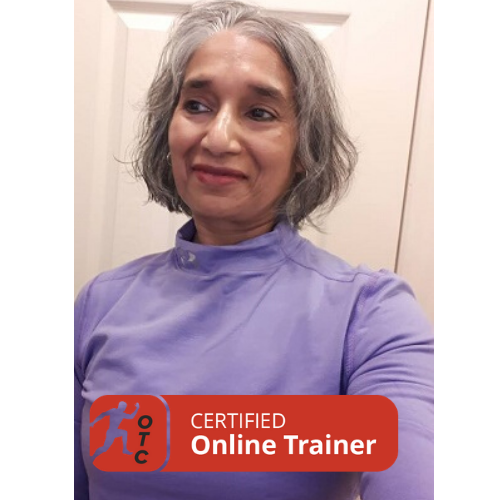
Fitness Professional
Hema is a rehab trainer, yoga therapist, and nutrition coach who has spent more than 20 years helping women over 50 get out of pain, rebuild confidence in movement, and stop burning themselves out trying to do everything “right.”
Through her work at Shanti Fitness, Hema helps clients cut through the overload of health advice and get back to the basics that actually matter: understanding their bodies, building strength safely, calming an overworked nervous system, and creating routines they can keep doing in real life. Her approach brings together therapeutic exercise, yoga therapy, stress management, and practical nutrition—without fads, extremes, or guilt.
She is also the author of a book on stress (Professional Woman's Guide to Handling Stress) and brings a clear message to every conversation: pain, fatigue, and burnout are not personal failures. Often, they are signs that the body has been carrying too much for too long. Hema helps people find a simpler, more realistic way forward.