The Trauma I Buried for 40 Years (EP 124)


 Apple Podcasts
 Spotify
 Pandora
 PocketCasts
 RSS Feed
 Overcast
 Amazon Music
 YouTube
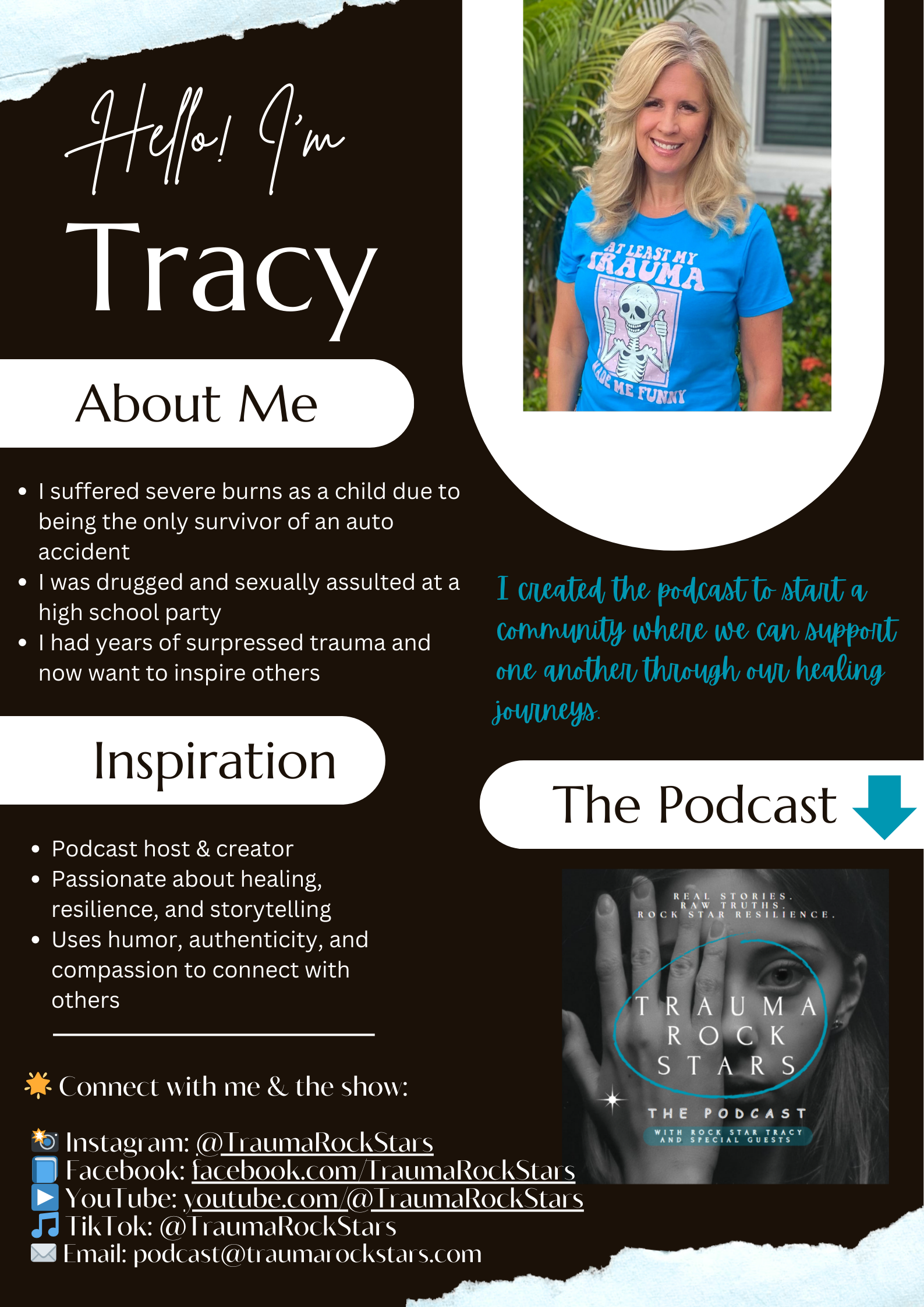
 Tracy Smaldino is the founder of Trauma Rockstars, a keynote speaker, author, podcast host, and someone who spent decades looking functional on the outside while carrying trauma she had never truly faced. When the pandemic forced her to slow down, a simple meditation practice opened the door to memories, survivor’s guilt, and pain she had worked hard to bury.
We talk about trauma without comparing or minimizing it, why being busy can sometimes be a way to avoid ourselves, and how healing can affect everything from relationships and self-worth to weight, movement, and the ability to set boundaries. Tracy’s message is clear: you do not have to tell the whole world your story to begin healing, but you do deserve to stop living as if your pain does not matter.
=== Chapters
- 00:29 When What You Carry Affects Your Health
- 00:36 Meet Tracy Smaldino of Trauma Rockstars
- 01:20 How Meditation Opened the Door to Healing
- 05:05 Staying Busy to Avoid What Hurts
- 10:05 What Trauma Rockstars Is All About
- 12:02 Trauma Is Trauma, No Comparison Needed
- 16:19 Survivor’s Guilt, Silence, and Facing the Past
- 20:00 How Trauma Shapes Relationships and Self-Worth
- 22:35 Music, Numbing Out, and the Need to Belong
- 30:21 Listening to Your Body and Setting Boundaries
=== Guest: Tracy Smaldino, Trauma Rock Stars
- Website: https://traumarockstars.com/
- LinkedIn: https://www.linkedin.com/in/tracy-smaldino-484b373b1
=== Resources / Books / Podcasts / Apps
- Trauma Rock Stars™ | Trauma Recovery & Healing Podcast: https://open.spotify.com/show/3j8Zoy3p3Mair20q0AQbW2
- Songs That Saved Us, Trauma Rock Stars™ healing playlist: https://open.spotify.com/playlist/0mQfkVQtw1eB1eNSsD9ZQy
=== MUSIC LICENSE CERTIFICATE: Envato Elements Item
- Item Title: Healthy Eating
- Item URL: https://elements.envato.com/healthy-eating-VNN4M4P
- Author Username: CrazyTunes
- Licensee: Marvin Bee
- Registered Project Name: Unhealthy Podcast
- License Date: January 3rd, 2026
- Item License Code: XPFS6HD54W
00:00 - Welcome to the Unhealthy Podcast
00:29 - When What You Carry Affects Your Health
00:36 - Meet Tracy Smaldino of Trauma Rockstars
01:20 - How Meditation Opened the Door to Healing
05:05 - Staying Busy to Avoid What Hurts
10:05 - What Trauma Rockstars Is All About
12:02 - Trauma Is Trauma, No Comparison Needed
16:19 - Survivor’s Guilt, Silence, and Facing the Past
20:00 - How Trauma Shapes Relationships and Self-Worth
22:35 - Music, Numbing Out, and the Need to Belong
30:21 - Listening to Your Body and Setting Boundaries
Speaker:
Hello friends, Uncle Marv here and welcome back to my unhealthy podcast, a show
Speaker:
where we spend a lot of time talking food, weight, movement, physical health.
Speaker:
But sometimes the most unhealthy thing in our lives is not what we're eating, it's
Speaker:
what we have been carrying.
Speaker:
My guest today is Tracy Smaldino, founder of Trauma Rockstars, keynote speaker,
Speaker:
author, and podcast host.
Speaker:
And Tracy has lived through trauma, spent years suppressing it, and now helps other
Speaker:
people understand that healing is not about pretending the past didn't happen.
Speaker:
It's about learning how to stop letting it ruin your life.
Speaker:
Tracy, welcome to the show. Thank you so much. So let me start by saying this.
Speaker:
This is one of those areas that if we were doing this as a true crime novel, people
Speaker:
would be all about it.
Speaker:
But when we talk about trauma personally, nobody wants to talk about it.
Speaker:
So let me ask you, how did you get to the point where this is what you talk about on
Speaker:
a regular basis? Well, that's part of the problem.
Speaker:
People don't want to talk about it.
Speaker:
And they, you know, they, they think you can just ignore it or push it away and, you
Speaker:
know, everything will be hunky-dory. And that's what I did for decades.
Speaker:
And I didn't really even start my healing journey until about five years ago.
Speaker:
And it was by accident.
Speaker:
I didn't wake up one day and was like, oh, I think I'll start dealing with this.
Speaker:
I actually, when the pandemic hit, I started meditating. Yeah.
Speaker:
And when I started meditating, I started getting all this information about
Speaker:
everything I had been through in my life and, very quickly was told and shown that I
Speaker:
had never dealt with any of it, and that I thought I was fine.
Speaker:
I was floating through life, you know, live a somewhat normal life.
Speaker:
And I thought I was fine.
Speaker:
I didn't really feel like I had much to deal with or anything like that.
Speaker:
And boy, was I wrong.
Speaker:
So, okay, I don't, I've listened to a few of your shows.
Speaker:
I don't think I've gotten the whole history.
Speaker:
So I'm going to ask a question that you can choose not to answer.
Speaker:
But who was it that told you you've got issues? It was meditation. The meditation?
Speaker:
It was through meditation. Yeah.
Speaker:
So I, when I started meditating, meditating, I don't know if you meditate, but
Speaker:
meditating is a very frustrating thing and they call it a practice for a reason.
Speaker:
But when I started, it took me a couple weeks kind of to get in my groove with it.
Speaker:
And I did guided meditation that I just got off YouTube.
Speaker:
I found some people that I resonated with.
Speaker:
And before I knew it, I started learning these new ways to meditate and get
Speaker:
information.
Speaker:
And I started getting like downloads of information through meditation that I
Speaker:
realized that I wasn't, I was a mess. I was literally a mess.
Speaker:
And it was it literally was like being hit with a ton of bricks.
Speaker:
Like that's how profound the information was that came to me.
Speaker:
And as scary as it was, it was kind of one of those things like once you see it, you
Speaker:
can't unsee it type thing.
Speaker:
And so I'm the type of person that I'm like, all right, let's do this.
Speaker:
You're giving me this information. Let's go.
Speaker:
And I really went in headfirst and was like, I'm going to deal with this and figure
Speaker:
things out.
Speaker:
And it took me a few years, you know, of different types of things that I did, but,
Speaker:
um, it was a lot and I never, you know, it, it was, but in a way it was a gift too,
Speaker:
because now, you know, I'm on the other side of things and I'm completely fine
Speaker:
talking about everything that happened.
Speaker:
But some of the stuff I literally just told my parents about last year.
Speaker:
Like that's how, yeah, that's how long I've suppressed things.
Speaker:
So let me at least get a little bit more.
Speaker:
So the year of our COVID kind of jacked a lot of us up with stuff.
Speaker:
So what was it, first of all, that made you want to even do something like meditate?
Speaker:
And when you hit that first wall, what made you keep going? Yeah.
Speaker:
I was so, I've always been, I always just keep myself really busy.
Speaker:
And most trauma survivors, you can read about this, like this is clinical.
Speaker:
Most trauma survivors, they keep themselves very busy. They live very busy lives.
Speaker:
They a lot of times live in very loud cities, things like that.
Speaker:
And so, and that's what I did. I was textbook for it.
Speaker:
I worked in the music industry for years.
Speaker:
It was the perfect environment for me to suppress my trauma because you can't get
Speaker:
louder than that industry. And that's where Trauma Rock starts. The name comes from.
Speaker:
But COVID and that was a trauma on the world on top of everything.
Speaker:
But it forced me to slow down. You know, we none of us had a choice.
Speaker:
We all had to calm down and slow down and give ourselves space and things like that.
Speaker:
So it was kind of like a forced thing. It wasn't something I seeked out for.
Speaker:
And I had always been a little intrigued about meditation.
Speaker:
So that's what made me start doing it. So I'm like, well, I've got the time now.
Speaker:
I'm not going anywhere. Interesting. Yeah. So...
Speaker:
So you had time you sat down started meditating um what was like the first, well let
Speaker:
me ask you this way how long were you meditating before you had these breakthroughs
Speaker:
because it i imagine that you probably did it for a little while just a few minutes
Speaker:
here a few minutes there.
Speaker:
To get the idea and then it wasn't until you know I�m assuming a few weeks that you
Speaker:
probably we're meditating longer and harder. Does that sound fair?
Speaker:
Yeah, that's, it's right on.
Speaker:
I actually started, yeah, I started baby steps, you know, and very slow, but very
Speaker:
quickly with, within a few days of starting to meditate, I, I started noticing that
Speaker:
my body was more chill and calm.
Speaker:
So I immediately started feeling like little bits and pieces of the benefit of
Speaker:
meditation.
Speaker:
But it wasn't until about a couple weeks into it, I found this meditation guide on
Speaker:
YouTube that I started doing his meditations and he started talking about your
Speaker:
higher self.
Speaker:
I had never heard about this before or what this is, you know, your higher self, but
Speaker:
it's something that you experience through meditation.
Speaker:
Only people that have done this would understand it.
Speaker:
But he started talking about your higher self, which is basically the most perfect
Speaker:
version of you.
Speaker:
So imagine yourself with like you envision yourself like this most perfect, angelic,
Speaker:
flawless being. That's what your higher self is.
Speaker:
So all of a sudden, with this guided meditation, my higher self-started come to me.
Speaker:
And it's almost like hypnosis in a way, a little bit.
Speaker:
And at first, I didn't know who it was. I was like, who is this person?
Speaker:
I had no idea.
Speaker:
And then when I realized it was me, I was like, oh, my gosh, like, this is
Speaker:
unbelievable. It was almost like an out-of-body experience a little bit.
Speaker:
And so very quickly.
Speaker:
After maybe, because, of course, I wanted to try it again the next day and the next
Speaker:
day. And very quickly, my higher self-started coming in.
Speaker:
And that's where I got this information from.
Speaker:
She told me i guess it's a she or a being or whatever you know uh angel i don't know
Speaker:
but she started giving me this information, and but it was given to me in a way that
Speaker:
i didn't want to suppress it was given to me in a way that i was like oh okay and, i
Speaker:
knew she was here with me through it so it wasn't in a scary or threatening way if
Speaker:
that makes sense because if somebody had just came from the outside and said, you're
Speaker:
a mess. You've never dealt with anything.
Speaker:
You know, this, this, this has gone on the list.
Speaker:
I would have completely shut down and I wouldn't have wanted to talk, but because it
Speaker:
was coming through this way, this information, I was like, all right, tell me more.
Speaker:
I can, I can handle it. And it just made me feel like it was time.
Speaker:
And she made me, I keep saying she made me realize that I needed to face this.
Speaker:
And so that's when my healing journey began.
Speaker:
But it was a long process because I had a lot to unravel, I guess.
Speaker:
But it was in such a way that once I was introduced to her, I wanted more.
Speaker:
It was kind of like meeting your best friend and you just wanted to be around your
Speaker:
best friend all the time. That was how the feeling was.
Speaker:
Interesting. Okay.
Speaker:
So before we get too far down the rabbit hole, let's kind of go back and explain,
Speaker:
what Trauma Rockstars is right now and what your work center is on so that we can at
Speaker:
least give people an idea, okay, this is where what we're doing now.
Speaker:
But I do want to go back and understand how all of this gets started. Absolutely.
Speaker:
And I'll give you a high level and then you could fill in questions later.
Speaker:
But I started Trauma Rockstars, as I mentioned, because of my music industry
Speaker:
background. And that's where the name comes from.
Speaker:
But once I got to this point in my healing journey and I realized that there's all
Speaker:
these incredible modalities out there to help people heal, I wanted to start the
Speaker:
show because I wanted to be able to share my experience with people to help them who
Speaker:
are struggling. And also share, like, how that felt going through this journey.
Speaker:
And so that's kind of why I started it all.
Speaker:
And it's been incredible because I have, you know, solo episodes, but I have other
Speaker:
episodes where I interview other trauma survivors too.
Speaker:
And we talk about their journeys and we talk a lot about what worked for them, what
Speaker:
didn't work for them.
Speaker:
I talk about what worked for me, what didn't work for me, and why.
Speaker:
Because not everything's going to work for everybody.
Speaker:
You just kind of have to see what feels right. And so it's been unbelievable.
Speaker:
And just being able, I would never have been able to even talk about everything that
Speaker:
happened to me if I hadn't gone through that experience and really took the time to
Speaker:
put in the work. And like I said, the pandemic forced me to do that. Right.
Speaker:
And we did define trauma because I think a lot of people will look at that and think
Speaker:
that it has to be something huge, something big, something, you know, death defying
Speaker:
or something like that.
Speaker:
Like I said, I've listened to a few of your shows and they're not always like that,
Speaker:
but they are a trauma to the people.
Speaker:
And this is all framed in this survivor centered platform, right?
Speaker:
Yeah, it's the pandemic, as I mentioned, alone was a trauma for everybody.
Speaker:
And, you know, you'll hear people talk about big T's and little T's.
Speaker:
Trauma is trauma. Like what I went through, not everybody knows.
Speaker:
Goes through something that traumatic. It doesn't matter.
Speaker:
Like there's no measure, that my trauma was worse than your trauma.
Speaker:
Everybody's different and we all, it affects our nervous system on each of us
Speaker:
differently.
Speaker:
So don't belittle your trauma because it wasn't this catastrophic thing that
Speaker:
happened in your life. It still affected you.
Speaker:
So we don't, like me particularly, I don't measure trauma.
Speaker:
I measure what it's doing in your life and how it's making you feel and how it's
Speaker:
affecting your day to day. That's what's important to me.
Speaker:
And when I'm, I even like, you know, when I'm coaching people, I even tell them, I
Speaker:
go, you don't even have to tell me what happened because I'm not, it's not about
Speaker:
what happened. That's in the past.
Speaker:
What I want to talk to you now about is how this is making you feel and how it's
Speaker:
affecting your life.
Speaker:
So take the measurement out of it because there's no measurement in it.
Speaker:
And I think it's really important that, you know, people need to give them, you
Speaker:
know, give themselves grace and realize that, you know, it's okay if you haven't
Speaker:
dealt with things. You can, now's the time.
Speaker:
Like me, I suppressed things for 40 years.
Speaker:
You know, there's no better time than the present, even if you're, you know,
Speaker:
thinking about it.
Speaker:
So you mentioned the different traumas, big T, little t, trauma is trauma.
Speaker:
You mentioned when we started that you didn't think you had trauma. Right.
Speaker:
I imagine that there are people that, first of all, Trauma Rockstars is a podcast.
Speaker:
Yes. That is your website as well. So I want to make sure people know to go there.
Speaker:
And there's a lot of work that you do with helping people recognize, work through
Speaker:
all of that stuff there.
Speaker:
But when it comes to your situation, as well as others, for people who don't think
Speaker:
that they've had trauma in their life.
Speaker:
And they come across you and your story, how do people come to you and say, you
Speaker:
know, you helped me, you know, with a light bulb that went off that I must have had
Speaker:
something there?
Speaker:
How do people identify that and how does that resonate with you now that you've been
Speaker:
sharing your story, Well, as I mentioned, I thought I was fine.
Speaker:
I didn't think I had anything to deal with.
Speaker:
Boy, was I wrong. I got knocked upside the head.
Speaker:
And a lot of people, everybody's been through something.
Speaker:
What I can tell you is if you feel, like off, if something feels off, if you feel
Speaker:
like your life is just something's missing or, you can't figure out what's going on,
Speaker:
Or maybe you have done some work because you do, you are aware of what happened and
Speaker:
you've seeked help and done some work, but the needle's not moving.
Speaker:
You're not feeling that relief because when you deal with your trauma, you get
Speaker:
nothing but freedom.
Speaker:
So if you're not feeling that freedom and that release, something's off.
Speaker:
Some people might not even be aware of it. Some people might be aware of it.
Speaker:
Everybody's journey is a little different.
Speaker:
But if you're just feeling like something is off and not right, then there's
Speaker:
probably some things you need to work on. Right. All right.
Speaker:
I think I asked that question poorly. So let me do this. That's okay.
Speaker:
You were going through life, thought everything was fine, started to do the
Speaker:
meditation.
Speaker:
And I asked, what was it specifically that hit you that was identified as trauma
Speaker:
that you had to go back and look at? And you said you suppressed it for 40 years.
Speaker:
So that sounds like.
Speaker:
How do you even figure that out?
Speaker:
Well, one thing I can tell you, and we can go more into detail with this if you
Speaker:
want, but I was in a horrific auto accident when I was a little girl.
Speaker:
I was actually the only survivor.
Speaker:
And I realized going through my meditation practice and everything, I realized that
Speaker:
I had been holding so much survivor's guilt, for all those years that I never even
Speaker:
addressed it or faced it.
Speaker:
I didn't realize like how much of that survivor's guilt I had been dealing with.
Speaker:
And then also I was sexually assaulted when I was a teenager.
Speaker:
And that I never told a soul about my entire life. Like nobody knew.
Speaker:
And that was something that in conjunction with the accident that I realized, you
Speaker:
know, this is something I have to face.
Speaker:
Like not telling anybody, I understand my choices for that, for not doing that.
Speaker:
But I need to really face it, though. I can't just ignore it and it'll go away.
Speaker:
And that's what I did.
Speaker:
I ignored it for pretty much my whole life and thought it would just go away and it
Speaker:
didn't.
Speaker:
And like I told you earlier, I literally just told my parents about that last year.
Speaker:
Was the first time I was able to actually talk about it. How surprised were they?
Speaker:
Oh, speechless. Completely shocked.
Speaker:
Was it a situation where it was random with an unknown person, or was it somebody
Speaker:
close to you? Yeah, I can tell you the story.
Speaker:
I was in high school, and everybody knew my story because of my accident.
Speaker:
Everyone knew my story. And I was with some friends. We were at a high school party.
Speaker:
You know how you go after the football games you know that type of thing I it was
Speaker:
after I was at a high school party and like with any high school party you don't
Speaker:
know who's going to be there, and I believe I was targeted because everybody knew my
Speaker:
story and I was actually drugged and gang raped, and I woke up in an abandoned house
Speaker:
and I have an idea of who some of the boys were, um but again i was drugged and i
Speaker:
never, i never talked about it i never said a word i just figure if i don't talk
Speaker:
about it it'll go away and um when i started dealing with this you know i wasn't at
Speaker:
this point like the statute of limitations had run out i.
Speaker:
I wasn't going to go after anybody i just needed to deal with it myself so, that was
Speaker:
something that i really needed to take a really good look at it all and I really
Speaker:
needed to come with peace with what happened because of course there's so much shame
Speaker:
even though I know I didn't do anything wrong, but there's so much shame that comes
Speaker:
with that embarrassment.
Speaker:
Completely destroyed my self-esteem and my self-worth so I had to deal with all of
Speaker:
that. I'm sure that that had a huge impact on how you viewed people, especially men.
Speaker:
Yes.
Speaker:
So part of me is now wondering, how in the world did you just go through life
Speaker:
thinking everything was okay?
Speaker:
And, you know, I don't know much about your family life outside of, you know, you're
Speaker:
here, you've got a family. And how do you walk through life with that sort of...
Speaker:
And I'm asking, just because you're willing to talk about it, I know that there are
Speaker:
people listening, there are probably thousands of people that have gone through
Speaker:
something similar, that also never talked about it, never exposed anything and just
Speaker:
deal with it.
Speaker:
But a lot of those people have some sort of, you know, suppression syndrome where
Speaker:
they can't communicate, they're socially inept, you know, they have issues.
Speaker:
You sound like you did not. Yeah.
Speaker:
With me, it's a really, really good question because, I mean, I'm sure there's
Speaker:
millions of people who, you know, have been through stuff.
Speaker:
And with trauma, a lot of trauma survivors, they become people pleasers because, you
Speaker:
have such, like, I have zero self-worth at all.
Speaker:
So all you want is to be loved and accepted. So I would just take breadcrumbs.
Speaker:
I would let people, and I'm not just talking about romantic relationships.
Speaker:
Like I would just, I had real shitty friends that I put up with a lot of crap from.
Speaker:
I was treated very poorly from a lot of people.
Speaker:
And this is typical with trauma survivors.
Speaker:
Like you don't want to ever push anybody away because you just, you'll take any kind
Speaker:
of love and attention that you can get. And I did this for years.
Speaker:
And when I started realizing all of this, because I had a girl, I had a girl, well,
Speaker:
I have a girlfriend that she used to tell me, you need to know your self-worth.
Speaker:
You need to know your self-worth. I never understood what she meant by that.
Speaker:
Once I started doing this healing, I'm like, oh, I get it.
Speaker:
And then I could literally go back to every single relationship in my life and be
Speaker:
like, oh, well, that makes sense. That makes sense why that person was in my life.
Speaker:
That makes sense why I put up with that crap.
Speaker:
That makes sense why I allowed myself to be treated poorly.
Speaker:
Because you don't, you're almost, like, the biggest thing with healing is you have
Speaker:
to set boundaries.
Speaker:
And when you don't deal with healing, you're afraid to set boundaries. It's scary.
Speaker:
Like, you don't even know what that is.
Speaker:
And so I'm the type of person now that I'm very particular about who's in my life
Speaker:
and my circle's gotten very small, but it's wonderful.
Speaker:
But I couldn't go down the list.
Speaker:
You could just start naming people and I could tell you exactly why I attracted
Speaker:
these people or had them in my life.
Speaker:
It was no fault of my own. You just don't know what you don't know. Right.
Speaker:
Now, I imagine, was music something that was always a part of your life? Huge.
Speaker:
I grew up in a very musical family.
Speaker:
My father is a sound engineer, plays eight instruments.
Speaker:
He was in a band when I was growing up. My brother's a touring drummer.
Speaker:
Um I've music was just such a huge part of our life and when I guess when I grew up
Speaker:
well I still don't know if I'm grown up but when I became older and I kind of
Speaker:
followed in my dad's footsteps in the music industry, um you know it was it was in
Speaker:
my blood I just I couldn't help myself it just kind of fell into me and music has
Speaker:
been such a huge part of my healing.
Speaker:
And all of my solo episodes are based around music and the concert framework,
Speaker:
because I used to be a production manager and for many years at a very popular
Speaker:
concert venue and so all of my shows are kind of based around concert, the concert
Speaker:
framework and music.
Speaker:
And I've even started a Spotify channel, Trauma Rockstar Spotify channel called
Speaker:
Songs That Healed Us.
Speaker:
And listeners, there's so many songs on there and listeners will send me songs that
Speaker:
got them through some of their hardest times and I'll add them.
Speaker:
Like music is everything with Trauma Rockstars. It's so important.
Speaker:
And so I really want, um, and music can be so healing, you know, any genre.
Speaker:
Yeah, we do know that.
Speaker:
Now I understand while you were, the one episode I was listening to is The Messy
Speaker:
Middle, and I was trying to understand why you were talking about the bridge and all
Speaker:
that. Yeah, the bridge and the song, yeah.
Speaker:
So now the music industry is also one of those that can kind of cover things.
Speaker:
You can get wrapped up in the lifestyle and drinking and drugs and all that stuff.
Speaker:
Now, did you go overboard in that area? Yeah.
Speaker:
I first I don't know by the grace of God, I never got into drugs.
Speaker:
I don't know how because it was in my face 24 seven.
Speaker:
I think one thing I can say, but yes, the drinking and partying with that, I was
Speaker:
completely like into that scene.
Speaker:
But one thing about the drugs scared me because that was the one thing with, I
Speaker:
think, with subconsciously, I didn't even realize that, but I don't like to feel out
Speaker:
of control. Like, I don't want to feel like I don't have control over anything.
Speaker:
And so drugs scared me because of that. So I never wanted to try them.
Speaker:
I had no interest in trying them.
Speaker:
But alcohol which is a drug in itself you know i definitely abused it being in that
Speaker:
you know we would go out after every show and, you know it was it was bad but that's
Speaker:
another way of numbing everything, yeah i also got to a point where I�ve only been.
Speaker:
Drunk twice in my life oh wow both of those times were like i never want to feel
Speaker:
that again yeah just because you're right You, you.
Speaker:
I can't imagine going through life and literally having loads of time that you can't
Speaker:
account for. I know. And I and, you know, we would we would do that after work.
Speaker:
And, you know, we constantly had like rock stars coming through and they're like,
Speaker:
come out with us after. And I'm like, OK. And again, I just wanted to be accepted.
Speaker:
So I would be drinking with them.
Speaker:
And thank goodness I didn't, you know, get into the whole drug scene.
Speaker:
But, you know, but I just, again, it was all about acceptance and I didn't think I
Speaker:
could have fun without doing that either.
Speaker:
Folks, you can always go to the podcast and she gives a lot of nuggets about herself
Speaker:
there.
Speaker:
So I'm not going to keep digging into her story here, although it fascinates me and
Speaker:
there's questions that I have. That's fine.
Speaker:
Maybe we'll do something later and have you come back.
Speaker:
But let me ask you about this concept, because this is where I think as we talk
Speaker:
about helping other people, a lot of times people will look at people trying to help
Speaker:
them and be like, you know, your life looks so perfect. How do you keep it together?
Speaker:
My life's a mess.
Speaker:
And we talk about the idea of there are a lot of people that walk around carrying
Speaker:
trauma in their lives.
Speaker:
They're absolutely dysfunctional inside, but functional on the outside.
Speaker:
Yeah, that was me. So can you describe that?
Speaker:
And I'm going to use that to kind of bridge into how you're able to help people,
Speaker:
because I'm assuming a lot of people come to you and say that.
Speaker:
It's such a great question. And I don't want people to...
Speaker:
Be intimidated by the healing journey.
Speaker:
Just because I talk about what happened to me to the world, I mean, it's all over,
Speaker:
you know, because of the show and everything. You don't have to do that.
Speaker:
You are in charge of your own journey.
Speaker:
But what I encourage people to do is I want people to look at me and I want people
Speaker:
to be excited about what's coming.
Speaker:
You know, I want people to look at is, is challenging and, and I guess just
Speaker:
challenging is going through a healing journey can be, this is what the other side
Speaker:
looks like.
Speaker:
So I want people to be excited about it because especially, you know, when I, I try
Speaker:
and teach people how to set boundaries and what that looks like and how that's going
Speaker:
to feel, it's very, it's very scary to do the steps that you have to do.
Speaker:
But I want people to look forward to what's coming, because once you set those
Speaker:
boundaries, you're opening up a whole world for you that's going to start coming in.
Speaker:
And so I encourage people to say, don't look at it as a scary thing.
Speaker:
Look at it as a gift. Look at it as something to look forward to.
Speaker:
Look at it as you can be here too.
Speaker:
You just haven't really had the tools to do it yet.
Speaker:
And people, you can move the needle pretty quick.
Speaker:
You just need the right person to help you do that.
Speaker:
And I tried therapy for years, on and off for years.
Speaker:
Didn't work for me, but there's a lot of wonderful therapists out there.
Speaker:
It just didn't work for me personally.
Speaker:
And so I would tell people to be open to try other things, other modalities, and
Speaker:
talk to, You know, talking about it has been like on the show, talking to you has
Speaker:
been more therapeutic for me than I ever in a million years would have imagined.
Speaker:
Now, when you say you did therapy for years, was this before or after you did the
Speaker:
meditation? Before. So, okay.
Speaker:
So, if you thought everything was fine, why were you going to therapy?
Speaker:
Well, I'm divorced. Marriage counseling.
Speaker:
That never helped because, you know, for a thousand different reasons, there was
Speaker:
marriage counseling.
Speaker:
After my accident, my parents had me going to therapy back then.
Speaker:
You know for different things but back then it was so different therapy was so
Speaker:
different they weren't talking about nervous system and listening to your body and
Speaker:
the cues it's giving you things have changed so much but, yeah i mean i have on and
Speaker:
off over the years okay okay.
Speaker:
So let's do this let's uh I�ve taken up so much time talking about your story i want
Speaker:
to uh get to what you're doing with trauma rock stars but let's give people an idea
Speaker:
of how trauma, can show up and what you experienced before and what you experience
Speaker:
now so people can get an idea of how different life is because you talked about it
Speaker:
as, you know a new freedom that you found, but how exactly does that resonate in
Speaker:
terms of what you had before and what you have now?
Speaker:
Well, trauma affects everything, mental, physical, spiritual, emotional, everything
Speaker:
in your body.
Speaker:
So you really need to be, I think the first thing's awareness, is just being aware
Speaker:
of that and understanding.
Speaker:
Like I tell people all the time, like now that we know what a nervous system is and
Speaker:
now that we know we need to listen to our bodies, I always say your nervous system
Speaker:
has the answers before your mind even does.
Speaker:
So getting in touch with those cues that it's giving you is half the battle right
Speaker:
there.
Speaker:
And with me, like, again, it was the poor relationships that I had, the stuff that I
Speaker:
put up with being treated poorly, where now I know how to listen to my body.
Speaker:
Like, if things start escalating and I start to get feeling weird, I get a pain in
Speaker:
my right shoulder blade.
Speaker:
And I know that's a cue that I need to step back, maybe close my eyes, do some
Speaker:
breath work, that something is surfacing, like I'm maybe getting triggered or
Speaker:
something. So you get in touch with that. You learn how to set boundaries.
Speaker:
You learn how to not be afraid to write what those feelings are, because it's really
Speaker:
important. Like a lot of people have anxiety.
Speaker:
And I tell people, give anxiety a name, name it.
Speaker:
Like my anxiety, my inner voice, I named her Gertrude.
Speaker:
So I'm like, okay, Gertrude's showing up again. You know, I'm like, give it a name.
Speaker:
So then you can create the space from what the anxiety is and what you actually are.
Speaker:
So there's so many different tools you can do.
Speaker:
And these are some of the steps I help people go through.
Speaker:
We just take it one week at a time. Okay.
Speaker:
So I'm trying to get an idea when you, as you're talking about relationships and I'm
Speaker:
in my mind and my listeners might be better at it than I am.
Speaker:
I'm thinking, okay, how can I listen to my body if I'm dealing with an unhealthy
Speaker:
relationship outside of getting a weird feeling?
Speaker:
But weird feelings isn't a big red sign for me.
Speaker:
And I'm trying to think, you talked about a pain.
Speaker:
So is it like if you were experiencing a certain feeling with a person, your body
Speaker:
would react? Mm-hmm, 100%. You're going to get cues. You're going to get cues.
Speaker:
Um it might be it might be you know rapid heart rate you know it might be your
Speaker:
tensing up you know there might be there's all different kinds of cues you can be
Speaker:
getting for it, but you know like if you're not feeling and this is anything if
Speaker:
you're not feeling fulfilled, in anything in life not just relationships if you're
Speaker:
not feeling fulfilled if something feels off it's probably because you're not
Speaker:
listening. You're not listening to what's going on.
Speaker:
And sometimes it's, it's not the person. It's, it's not the person.
Speaker:
It might be how you're projecting yourself.
Speaker:
So you've got to, you know, you've got to learn how to make that divide.
Speaker:
And it's not, it's not something that, you know, you talk about it, like I'll talk
Speaker:
about it with clients and then they'll be like, oh.
Speaker:
Like it's like a light bulb goes off because one thing trauma does is it shuts, it
Speaker:
shuts off all your happy chemicals in your brain, your endorphins, your serotonin,
Speaker:
everything gets shut off.
Speaker:
So you're just kind of floating through life, not realizing it.
Speaker:
So when you start doing this work, it's like a literally light switch.
Speaker:
It turns it back on.
Speaker:
And then you can start like thinking straight and thinking more clearly and
Speaker:
understanding what's going on.
Speaker:
And like I was triggered this morning and I had to pause for a minute and be like,
Speaker:
what's going on? You know, and I had to really reflect about it.
Speaker:
Wasn't the show, was it? No, gosh, gosh, no, no, no, it was something else.
Speaker:
But I, and, and that's another thing I want people to understand.
Speaker:
Like, to me, everyone's like, oh, you're healed, you're fine.
Speaker:
And I'm like, no, I'm not.
Speaker:
And I actually don't ever want to be healed because I don't ever want to stop
Speaker:
growing, evolving, and learning.
Speaker:
So I want people to look at it that it's like it's a journey and to be excited about
Speaker:
the journey.
Speaker:
Do you have a mental checklist you kind of run through now?
Speaker:
And I guess I should probably have asked is, you know, between the accident and the
Speaker:
assault, is most of your trauma based around relationships or have you identified
Speaker:
other traumas as well? Oh, well, it's affected my jobs.
Speaker:
It's affected, you know, just choices I've made. It affects everything in your life.
Speaker:
Um, and as far as a check, a checklist goes, daily checklist goes, I, I wake up, I
Speaker:
say my prayers and I meditate. That's my morning.
Speaker:
You know, I, I do that every single morning.
Speaker:
And, um, sometimes I'm running super late and I might only have time to meditate in
Speaker:
the shower in the morning, you know, but I, I've got a routine now and, and I
Speaker:
journal and I do things like that.
Speaker:
But, you know, I can look back at everything, like even, even like choices I would
Speaker:
make with parties I would go to or clothes I would wear.
Speaker:
And everything was, everything goes back to me suppressing my trauma. Okay.
Speaker:
So I still thought I was going to end this right now, but now I'm sitting here
Speaker:
thinking, okay.
Speaker:
How do you know it was suppression if it was just daily decisions and you thought
Speaker:
everything was fine?
Speaker:
I guess that's the question I'm asking, you know, because it doesn't sound like, a
Speaker:
lot of that stuff would be things you would change, or are they? No, they are.
Speaker:
Like, I was very unhealthy. I was everything mentally. I was unhealthy.
Speaker:
Physically, I was unhealthy.
Speaker:
And until you start dealing, like facing these things that are going on internally
Speaker:
with you, you're not going to start healing.
Speaker:
And once I, like, I was very, I was very overweight.
Speaker:
Once I started dealing with my trauma, like the weight just started falling off.
Speaker:
Okay. Because I was dealing with it. I used to hate going to the gym.
Speaker:
Now I love to go to the gym. I go every morning, you know, it's things like that.
Speaker:
But you have to, and you won't see it because everyone's, everyone's, you won't see
Speaker:
it until you start really taking a dive into it. Okay. That makes sense.
Speaker:
Now, now I can picture. Yeah.
Speaker:
Now you can, because, because I'm still trying to, you know, grasp the idea that I
Speaker:
thought everything was fine. And now you're like, oh, no, I wasn't fine.
Speaker:
And it manifests in these areas.
Speaker:
So, you know, weight relationships and going to the gym and being healthy.
Speaker:
So now that makes sense.
Speaker:
It's kind of like going back and identifying, yeah, 10 years ago, that may have been
Speaker:
okay, but it's not okay now. Oh, 100%.
Speaker:
You know, I completely have changed, even the way I look at things, the way I see
Speaker:
the world.
Speaker:
Like you, even going outside, it's going to sound really silly and your listeners
Speaker:
are probably going to be like, oh boy.
Speaker:
But even going outside, like the trees look brighter to me.
Speaker:
The ground feels different.
Speaker:
I'm just so much more grateful for everything where I took all that for granted.
Speaker:
You know, I took all that for granted before.
Speaker:
I never, you know, they say stop and smell the roses. I never did that.
Speaker:
But now I actually will. I'll stop and smell the roses.
Speaker:
And, and those, even those little things is what really makes your life feel
Speaker:
fulfilled.
Speaker:
That makes sense to me.
Speaker:
I mean, I'm not that sensitive when it comes to surroundings, but just in how you
Speaker:
process things in the world, you know, I, you know, I.
Speaker:
I don't listen to the news i don't listen to people that are always complaining and
Speaker:
I�m like okay I�m only going to deal with what, affects me and what makes me happy
Speaker:
yeah and all the other stuff I�m just going to put aside but there was a time where
Speaker:
i would, you know not be strong enough to tell people that you know get away but now
Speaker:
if somebody's you know, in a bad mood or whatever I�m look, I don't think we need to
Speaker:
be around each other right now. It's not good for me. Right, and that's a boundary.
Speaker:
And a lot of times, you don't even have to say that. You can just distance yourself.
Speaker:
Because when you start setting those, you can just do it without them even knowing.
Speaker:
Like, you don't even have to have a conversation.
Speaker:
You just kind of distance yourself.
Speaker:
And you'll be surprised at how many people will just fall off naturally.
Speaker:
Or if you tell people you're on this healing journey and you need some space, A lot
Speaker:
of people will be like, oh, I want nothing to do with that.
Speaker:
And they'll just fall off naturally. And you learn real quick, you know?
Speaker:
Yeah, but there are some people who would be like, oh, are you better than me?
Speaker:
And why are you doing that? You do have to explain.
Speaker:
Or you get to the moment you say, you know what? I don't have to explain myself.
Speaker:
You don't have to. You owe nobody nothing. Yeah.
Speaker:
Yourself and the Lord, whatever you believe in, yourself and God, the universe,
Speaker:
whatever, that's all you owe.
Speaker:
And that's one thing that I work with people a lot because that takes a lot of
Speaker:
strength and courage to be able to do that and to say no and to, you know, separate
Speaker:
yourself.
Speaker:
So that's one thing I work with people with to help them build that strength to be
Speaker:
able to do it. All right.
Speaker:
Well, Tracy, we took a little more time than we thought in kind of getting this
Speaker:
introduction and getting started.
Speaker:
I think we should probably take a break, have a little breath, regroup, and come
Speaker:
back and get more into Trauma Rockstars, the good stuff that you're doing, and get
Speaker:
into some ways that people can make that change and identify, any trauma they've got
Speaker:
in their life.
Speaker:
So anything before we end off here that you want to leave people with?
Speaker:
Just relax take some breaths and, you know take some i always say take four deep
Speaker:
breaths inhale and six breaths exhale and just relax and do that a couple times and
Speaker:
just calm yourself down it's that easy to do it and we'll be back.
Speaker:
All right all right folks uh thank you very much for listening and I'll be back with
Speaker:
Tracy. We're going to take the next step here.
Speaker:
So surviving trauma is one thing, but figuring out what to do next is another.
Speaker:
So in the next episode, we're going to try to get more into the practical side of
Speaker:
this.
Speaker:
And we'll talk more about boundaries and this concept of becoming your own hero, and
Speaker:
what somebody can do when they know something needs to change, but not sure where to
Speaker:
start. So that'll all be coming up next on the Unhealthy Podcast.
Speaker:
And until then, live healthy and be happy.