Your Body Is Not Betraying You (EP 129)


 Apple Podcasts
 Spotify
 Pandora
 PocketCasts
 RSS Feed
 Overcast
 Amazon Music
 YouTube
 Marylee Calmes is back for a practical, honest conversation about something most of us are not very good at: paying attention before our bodies force us to. With more than 30 years of experience as a licensed acupuncturist, herbalist, educator, and traditional Chinese medicine practitioner, Marylee explains why symptoms are signals, not just inconveniences to push through.
We talk about stress, sleep, food, movement, seasonal changes, and the small habits that can either support us or slowly wear us down. The big takeaway is simple: you do not need a perfect plan or an expensive tracker to start taking better care of yourself. Start noticing what your body is telling you, then make one small, doable change and give it enough time to work.
=== Guest: MaryLee Calmes, Living in the Season, Licensed Acupuncturist, Herbalist, Educator, Traditional Chinese Medicine Practitioner, and Founder
- Website: https://livingintheseason.com/
- LinkedIn: https://www.linkedin.com/in/marylee-calmes-7913b010/
=== Resources / Books / Podcasts / Apps
- MaryLee Calmes Acupuncture and Wellness Center: https://www.calmesawc.com/home
- Living in the Season Instagram: https://www.instagram.com/mlcalmes/
- MaryLee Calmes Substack: https://maryleecalmes.substack.com/
- Eliquis: https://www.eliquis.com/
=== MUSIC LICENSE CERTIFICATE: Envato Elements Item
- Item Title: Healthy Eating
- Item URL: https://elements.envato.com/healthy-eating-VNN4M4P
- Author Username: CrazyTunes
- Licensee: Marvin Bee
- Registered Project Name: Unhealthy Podcast
- License Date: January 3rd, 2026
- Item License Code: XPFS6HD54W
=== About the Unhealthy Podcast
Hosted by Marvin Bee (Uncle Marv), the Unhealthy Podcast dives into real conversations about health, wellness, and everyday habits that impact how we live, work, and age. From nutrition myths to stress management and tech-life balance, Uncle Marv brings humor, insight, and honesty to every episode.
- Visit our website: https://www.unhealthypodcast.com/
- Connect on Facebook: https://www.facebook.com/iamunclemarv
- Connect on LinkedIn: https://www.linkedin.com/in/marvinbee/
Follow and Subscribe: Stay updated with new episodes every week on Apple Podcasts, Spotify, YouTube, and more. Join the conversation about real-life health, fitness, and personal growth from the lens of an everyday guy striving to be healthier.
[0:15] Hello, friends. Uncle Marv here, and welcome to another episode of my Unhealthy Podcast, the show where we talk honestly about health, habits, stress, food, sleep, aging, all the things most of us know we should deal with, but we usually put off until something starts hurting.
[0:35] Well, we are back with a second episode with today's guest, Marylee Calmes. She is a licensed acupuncturist herbalist educator and a traditional Chinese medicine practitioner more than 30 years of experience and because i did not do this last time i want to make sure we, get this done at the beginning of the show her website livingintheseason.com, so it's going to be in the show notes you want to go there and take a look at some of her resources and the things we'll talk about, and that's how you get in touch with her. But.
[1:15] As promised, Marylee is back. Marylee, welcome back to the show. Thank you so much. All right. So we got a little bit into the journey of your health and traditional Chinese medicine, and you helped me understand a little bit more of what I was missing and stuff. Let me start by asking you this question. We talked a lot about you know the ways that we deal with medicine and how western is you know dealing with the symptoms and, we need to look at getting to the root but you made a comment that i wanted to go back to talk about you know your body sending you signals and stuff so my question is if your body is sending signals, what do you do what's the first thing you're supposed to do and figuring out what to do next.
[2:08] Well, the most important thing that I teach is awareness and adaptation. So you can have the awareness, and if you don't have any tools, you don't know how to adapt.
[2:21] So I'll use Central Texas. It has been 105 here since July. Two and a half months of excruciating, extreme heat. That extreme heat is really, really hard on the body. People become more anxious they become more irritable and they don't necessarily understand why am i so angry all the time because they don't understand that they're battling this extra heat that their body just can't do day in and day out it was so bad that i went to ria dosa new Mexico for a week just to get out of the heat and i immediately in 24 hours felt better, but I recognized the heat was the problem and I took action that's the doable part of going someplace that was cooler you might say, why Rio Dosa New Mexico it's only 530 miles from here so you can go in one day you can have a one-day drive there and one day drive back and I wanted to go in one day, so that's how I chose that particular location and it was fantastic I mean and it was 80 degrees there, and it was 105 here. That makes a huge difference. And I'll give you another example. If you know that you're really battling this external heat.
[3:40] There are specific foods that counterbalance that heat. So watermelon. And if you think about growing up in Texas or living in Texas, watermelon is in plentiful supply. We grow it here. So watermelon is very cooling. Cucumbers, peppermint tea, chrysanthemum tea is very calming. And you can incorporate those foods into your diet, and that will help calm that heat. I actually make a watermelon mint feta cheese salad, which is fantastic.
[4:17] But then you've got the double duty of the mint and the watermelon. When I teach people to make mint tea, I tell them to use two tea bags. If you want to use it medicinally, you want it really strong. So you use two tea bags, and that will help with external or internal heat. But we're talking about external heat. So you have to, that's what living in the seasons is all about. It's about taking everything that I've learned in 30 years, 40 years really, and putting it into an online format that you can access from the comfort of your own home very, very easily. It's very affordable. And you get all these tools so that you can know, oh, this is the food I need to change for summer. This is the food I need to change now for late summer because we're actually in, there are five seasons in Chinese medicine and we're in late summer.
[5:16] And then, okay, what do I need to do in fall? Because not only are the seasons changing outside, but your body is changing with those seasons. You may not realize it.
[5:28] So let's talk about another example of a signal.
[5:33] If you cough or you sneeze, I take that very seriously and you change everything. Most people and my patients will tell me, well, I don't know if it's a cold. I don't know if it's an allergy. And I'm like, I don't care. It's the signal that something is going out of balance in your body. So you pay attention to the signal and you adapt. Sometimes you can adapt and completely avoid an illness. You know, other times you might adapt and you might still get sick, but you limit the amount of time you're going to get sick by learning how to adapt. So that's an example.
[6:12] I have a new person in the membership. And she doesn't have, I have a checkoff form for symptoms, and she didn't really have any symptoms that she had checked off. But when you read all of her problems, it was headaches, it was gastric reflux, it was all of these things, disease conditions, where the energy is going the wrong way in the body. Her energy, her stomach energy is going up instead of going down. Her liver energy is going up to her head instead of going down. So while she didn't check off a lot of symptoms, I could look at her Western diagnosis and know immediately, energetically, what's wrong. So then what do I teach her? I teach her meditations to reverse the energy flow. I teach her foods that will help with the GERD, for example. So part of it is having the toolbox. In living in the season, we talk about nutrition. Every quarter or season you get a seasonal guide that explains everything about that season from Chinese medical terms and then you're going to get recipes, and shopping lists you're going to get affirmations you're going to get meditations you're going to get exercises we have a zoom call every month, that's how you're going to get more tools in your toolbox.
[7:40] So the longer that you sit at home or wherever you are thinking, I just have to live like this, the longer you wait to take action, the longer it's going to be to turn it around. In Chinese medicine, we're about handling everything immediately. Because if you handle it energetically immediately, you can shift it. If you wait until you have fourth stage cancer, we may or may not be able to shift it. So it's being proactive. And in Western medicine, they don't talk about being proactive. You don't go to the doctor until you're really sick.
[8:25] So it's a very different way of thinking about your body and thinking about the signals of your body. Right.
[8:31] All right, so let me ask a question about seasonal because I imagine that, depending on where you live, you understand seasons better or worse. You talk about being in Texas. So we are here in South Florida. We really don't have seasons. We have basically about two weeks of winter at the end of January, beginning of February. So how do you describe seasons for somebody like me down here? And then I have a follow-up question to that. Well, you do have seasons. You don't recognize it.
[9:11] To you, it all seems the same all the time. But energetically, it's not. And that has to do with astronomy and the planets and the Earth forces that are impacting all of us all of the time. So you do have seasonal aspects. You're just in a temperate climate. Okay. You have a lot of... Pardon? It's not just the climate, environment, what's going on. Yes. Well, and you're in an area that's very humid. Am I right? Oh, yeah. Yeah. Well, that humidity is going to affect everybody's arthritis. They're going to have damp arthritis. Somebody that lives maybe in Canada is going to have cold arthritis because they're exposed to cold all the time. So we haven't talked about any of that, so I'll back up a little bit for your listeners. In Chinese medicine, we're always talking about qi, your life force, and we're talking about polar opposites. So we talk about yin, which is the moon energy. It's quiet, it's introverted, and then we talk about the yang energy. It is not pronounced yang. It's pronounced yang. so the yang energy is the sun it's masculine it's outgoing it's the get up and go energy.
[10:37] So depending upon where you live, like in the Northwest, in the winter, we would have no yang chi. It would be yin all the time, all that dampness, all that heaviness all the time. As we aged, we would go on vacation twice a year to get out of that cold, damp, dark environment.
[11:00] That's an example. So then we have five elements. And those elements, we're going to start with fire And think about nature When you have fire, the ashes that are left become the earth The earth, when you compress it, creates metal, Metal, when left out overnight, condenses water. Water is the fuel for wood. Wood is the fuel for fire, That's called the co-promotion cycle So the fire element is supposed to support earth. Earth is supposed to support.
[11:37] Metal. Metal is supposed to support water. Water, wood. Wood, fire. Each of those elements have organs paired to them. So the fire element is the heart and the small intestine. So you can come to me with a heart problem, and I can feel that in your pulse right away, by the way, even if you don't know you have a heart problem. And I can treat your heart, and maybe you don't get better. So I turn around and treat your small intestine, and then that fixes it, because they're paired energetically. They go together. So then the earth element is your digestion, your spleen, and your stomach. It really should have been translated as stomach and pancreas, but they mistranslated pancreas and named it spleen. Then you have the metal element, which is long and large intestine. Then you have the water element, which is kidney and urinary bladder. From there, you go back up to wood, which is liver and gallbladder, and that takes you back to the fire element. So when I'm working with someone, what I'm teaching them is, okay, where are your strengths energetically and where are your weaknesses? So my weakness, I know, is my lungs.
[12:54] And so I do everything I can to protect my lungs. I don't go into a bar where there's a lot of smoking. We were in a major, our property was in a major wildfire in Washington State, in eastern Washington, and I did not go immediately because of the smoke. I didn't want to be exposed to the smoke. So that's an example of my awareness of my lungs and the weakness in my lungs, and how do I adapt then and make decisions that protect my lungs.
[13:25] It gets complicated because each of those organs have a yin and yang. So it's yin and yang of the heart, yin and yang of the small intestine, yin and yang of the spleen, yin and yang of the stomach. You've got to figure all that out. The best doctors are the best diagnosticians.
[13:42] And that's why I say being global, I can see that. I can see those patterns. It's about learning the patterns and then knowing how to shift the patterns.
[13:53] So that's part of what you have to learn about your own body. I'll give you another example. I went to South America when I was in medical school, and I decided to go home early. And I gave all my herbs to all of the other people that were continuing on the trip. I only had acupuncture needles. And we were staying at a hostel, and I went across the street to this hotel, like a four-star hotel, the only one in the city where we were. And by noon, I had dysentery, and I mean like really bad dysentery. And I had my daughter with me, and she was maybe 12 at the time. So I'm doing acupuncture, because that's all I have. And when you have too much internal heat and you do acupuncture, the points will bleed. So the blood is just flowing down my leg from this internal heat. I couldn't get a flight home for about four or five days. So by the time I get home, I have totally depleted that large intestine energy. And the lungs and the large intestine are paired. So what happens next? I start to develop pneumonia. And all of my professors are like begging me, take the antibiotics, take the antibiotics. Because I was just getting too sick. Because what happens if you deplete a whole energy system, so you deplete large intestine.
[15:18] And your lungs, and they are supposed to support the kidney and the bladder, well then they can't do that job. So then you have the next illness develop, and this is how I feel chronic disease things happen. Something happens like the dysentery, and it's never corrected, so then the next energy system is affected and the next energy. So for a woman, maybe you end up with a kidney infection or a urinary tract infection or a yeast infection because the lung and the large intestine can't support that.
[15:56] It's more complicated than that, but for this conversation, that's probably enough. So that's where you have to begin to understand, even though you think you don't have any seasonal changes, you really do. Because the earth is changing and we are part of the earth.
[16:16] Okay. You said you have a valid question. Well, yeah, but I'm trying to make sure, I don't want to gloss over anything you said, so I'm trying to make sure I ask this in the proper way. Because a lot of the seasonal living, understanding your energy.
[16:37] Listening to the body, I think most people understand that to a degree, but then they're still stuck on what we've learned with our Western medicine. And you got to take drugs, you got to listen to your doctors and stuff. So there's a- If you want to die, that's a real good thing to do. But there's a lot of us that that's what we've been taught and that's what we believe so we've been taught to think that everything else is the word isn't woo-woo it's not that but there's a little skepticism i guess that a lot of a lot of to a lot of people it is woo-woo um, because and that's one of the reasons i ended up studying medicine Chinese medicine was i was changing everything in my life i was changing now, Mao never said oh you got to change everything right now. That's not how we practice medicine.
[17:31] And as I learned more, as I read more, as I understood more, I changed how I ate. I changed what time I went to bed. I changed when I got up. I changed the kind of exercise that I did. And everything that I was changing didn't really fit into the Western culture. So by going to medical school and becoming a practitioner, then everything that I was doing was in alignment, so to speak. Now I think it's a very different 40 years later than it was when I first started. I think it's much more accepted. There's tons of research, and people don't realize that.
[18:11] This is a medical paradigm that is backed by thousands of years of observation, and hundreds of years of research. So I just happen to have some right here. This is about menopause, but I'll just give you an example. In 2016, there was a study with 209 women, and they were being treated for hot flashes or vasomotor symptoms. Their symptoms fell 36.7%, so almost 40%, with acupuncture. And the control group, their symptoms rose 6%. So I know you can't relate to that, Marv, but for those women out there that are having hot flashes, let me tell you, you want a 40% improvement, you'll take it. But nobody's telling you can get a 40% improvement. You don't know. Your doctor doesn't know. You know, my patients will want to go in. Let me ask you a quick question. So that was a study that was done. Yes. And you tell us, like, who did the study? Why did they do the study? And then why are they not pushing out those results?
[19:24] Well, because Western doctors don't make any money telling you to go to the acupuncturist. They don't read any of those journals. I talked to a dermatologist once who's a very, very good dermatologist. He taught at the University of Washington, and my husband and I both used him. I asked him one day, because I would refer patients to him, and I said, I don't understand. Have you ever taken a class? He goes, yeah, I went to the weekend class. I didn't understand it. Honestly, I don't have time to figure that out and stay up on my own profession.
[20:01] And I thought, wow, okay. And when I first started speaking, before I went to medical school, I thought, okay, I'm going to start talking to doctors. And this was in the late 80s, early 90s. And they were like, you don't have an MD behind your name. We're not listening to you. I mean, that's how it was. Right. And so then I thought, okay, well, I guess I have to go to medical school then because they're not going to listen to me. Because I really thought doctors need to know this because this medical paradigm is so powerful. I could tell you for the next hour, one miracle story after another. I have a glioblastoma patient, that's a brain tumor who's still alive 25 years later. Patients with glioblastoma don't survive. And I could tell you story after story after story like that. It's a very powerful medical paradigm, but they don't know, and then they do, the opposite thing can happen.
[21:08] I had a patient, a good friend, I knew them really, really well, and he read an article in Reader's Digest about garlic and the wonderful health benefits of garlic. So he started mega-dosing garlic. Well, garlic is energetically hot. His constitution was hot. So he just added fuel to the fire and then developed a herpes outbreak on his face, which is bad because it's close to your brain you don't you know if you're going to get shingles you want it, on your chest or your legs or but on your head and your face.
[21:47] It's too close to your brain so but that's an example where, he didn't understand his own constitution he applied something that he thought he was doing to help himself when in actuality he was harming himself all right so I do have to go back and just make sure. Explain Constitution. How does somebody get to a Constitution that is considered hot?
[22:14] Well, that's back to yin and yang. So yang is the hot energy. Yin is the cold energy. You all know the person that's very loud, very red in the face, always on the go. That's a hot, fiery person. That's their constitution. They're too hot. All their disease states are going to be hot, manifested diseases. Then you know, and a lot of times you'll see this in elderly, especially elderly women, they're really caved in. Their shoulders are caved in. Their head is down. They speak really quietly. They just don't have it.
[22:54] They don't have any qi behind their demeanor, if you will. They're a very yin-constitutional person. And this yin and yang is changing all the time. It changes as we age, and it changes seasonally, even when you're in a temperate climate. So that's part of what learning to live in the season means.
[23:19] You will learn what your constitution is. You will learn the adaptations you need to make so that you can stay healthy and well and you can, it's not about not going to the doctor i had somebody this last week that like totally misinterpreted this she was like she said well i didn't know going to the doctor was outsourcing my health, well I m not that's not what I m saying there's a place for doctors i especially love, all of the technology. I love an MRI because you can really get down to the internal structure that you can't see. But it doesn't mean you solve the problem that way. I'll give you an example. My husband had AFib.
[24:04] And he really got concerned about it. I knew he was fine, but he was like, no, it really upset him. So we go to the cardiologist. First words out of the cardiologist's mouth was, Oh, Mr. Kalmes, we're going to put you on Eliquis right now today. And my husband said, No, you're not. I'm not going to take that drug. That's a terrible drug. It has terrible side effects. I'll take my baby aspirin. Thank you very much. And this doctor truly looked shocked that somebody would say, no to him. We did all the cardiology testing over the course of a month, and my husband's heart was absolutely fine. Now, there's a correlation between alcohol, any consumption of alcohol, and AFib. And I had sent my husband that research, and he loved to have two glasses of wine at night. He just loved that. But he gave it up and substituted beer. So it got better for a little while, and then he had another AFib episode. So after the second episode, I sent him more research that beer triggers AFib. Did the doctor ever say anything about that? No. Never mentioned anything that he might be doing nutritionally or lifestyle-wise that would make it worse. He went off the beer and hasn't had one single episode since. And there's also a two-point protocol.
[25:29] This was studied at maybe the University of Massachusetts. I might have that wrong, but it's a northern university. Two points on your hand that will stop AFib, and it's heart 7, which is here on the outside of your hand, and pericardium 6, which is here in the middle, you can look those up online if you want, and I can stop his AFib in 20 minutes with those two points. So, Again, it's back to what you know. If you've never been exposed to it, it seems woo-woo. It doesn't seem possible. And then when you start working with it in your own health and your own life, you see the power behind it. So.
[26:19] I'm not saying don't go to the doctor. I'm saying use your doctors with discernment. Develop discernment. and we don't have any discernment in this culture. We just don't. We go to the doctor. He says, take this pill. We take it. The average 60 or 65-year-old is on at least five medications. And I've worked with people, many people, who are in their 60s that are on 20 medications or more. And nobody's looking at what are the consequences, what are the side effects of those medications, how are they interacting with one another, And how is that contributing to their illness, or their dis-ease in their own body?
[27:05] So for somebody listening now, and we want to give them something that they can do to learn from their body this week as a starting point, you know, without buying anything, changing anything, or all I'm thinking. So in my mind, I keep thinking of all the health trackers we have, the rings and the. Yeah, no. No, no, no. The iHeart thing on the phones and stuff. Yeah. I don't use any of those.
[27:36] I did, but there's a story I'll tell about in a later episode. So where does somebody start with something that is just simple, practical, doable, in your words, that they could do now? There's so many things. Because, you know, I mentioned again that quote from Dr. Mao that disease comes about from hundreds of little small things. Improving your health comes from hundreds of little small things. We all want the silver bullet. We all want an answer right now. I've worked with people who, you know, I want it fixed right now. And then they give them treatment because they want it fixed right now. And that's not how your body works. But the first thing that I think is really important is to get up at first light and go outside without your glasses. I take my glasses off and I go outside at first light.
[28:29] Why? Because it changes your circadian rhythms. We're really powered by the sun. So I go out at first light, and then I might come in. I might stay out. We have mosquitoes here, so it depends on the mosquito load. But then I go back out at sunrise, and I stand facing the sun. I take my glasses off, and I watch the sunrise. Just doing that one thing will improve your sleep, if you don't do anything else. So for those of you that have poor sleep, get up and change your circadian rhythms.
[29:02] The next thing I tell people to do is be in bed by 10 o'clock. For those of you that are like, oh no, no, I'm a night owl. I don't go to bed till three. No, that's a behavior you've learned. You're not a night owl. It's very, it's really very rare. So if you are going to bed at three, what you have to do is you have to start going to bed at 2.30 for five or six days, maybe a week, and then you go to bed at 2, and then you just really, really, really slowly move your bedtime back. Why? When you go to bed at 10 o'clock, you are riding the yin, which is the moon introverted sleeping energy, to go to sleep. So you'll naturally fall asleep with that energy. Then I tell people to get up between 5 and 7 a.m. Why? Because the sun is rising. You're going to use the rising yang energy to get up and get going. Have you ever noticed when you sleep in until 11, you just can't get going that day? I mean, like nothing gets done because you missed all the yang rising energy. Everything with living in the season is about aligning with the natural energies in the universe.
[30:12] So that's the next thing, is your sleep. And if you have to have an external alarm clock, some families do set an alarm clock at 9.30. And at 9.30, when it goes off, all of the TVs get turned off, all of the iPads, iPhones, gadgets, digital gets shut down, and everybody goes and gets ready for bed, so everybody's in bed by 10 o'clock.
[30:36] Then, nutrition.
[30:39] I only shop the perimeter of a grocery store that means i go in the door where the produce is i go through produce, i buy all of my meat from a local rancher so i don't usually go through meat, i will go to dairy because i like to have cream in my coffee and my husband likes to have yogurt for breakfast, and then I leave. I never go up and down the aisles. I cook from scratch, and I cook with whole foods. My example of that is if you give a nut to a squirrel, he'll go and bury it. And when he goes back, three months later, that nut is there. And if he never goes back, that nut will grow a new tree. It's a nut in a shell. And then if you give him a potato chip, and he goes and buries that potato chip, when he goes back three months from now, there's nothing there. There's no life force there. So you want to think about foods as a life source. Does it have any fuel in it for your body? And food has been bioengineered. You know, they want you to buy cereal. They want you to buy cookies and chips. And that's what it's all designed to do. I don't buy any of those products. If I don't buy them, I don't eat them. Would I love to have a good potato chip? You betcha. But I don't buy them, then I don't eat them.
[32:02] So that's your nutritional component. The other thing is movement. Everybody needs to move their body, even if it's only a 10-minute walk. And for many people that are in a lot of pain, that just seems like they can't do it. But back to chi and blood, they're paired, they're married. So if I can get you to move your blood, I can get you to move your chi. And the pain patterns are from the chi being stuck and the energy not moving. So that's four for you i think yep there you go yeah.
[32:36] All free and all doable you know it's just sometimes you have to get over your mind, master knee will tell you your thoughts are like thunder and you create your life out of your thoughts so when i say get up at dawn and you go oh my god no i can't get out of bed i can't i know i can't do that, you know that's then you're just feeding into your illness and you're not feeding into, okay, I'm not happy about it, but I'm going to give it a try for a month. Because you have to do it long enough to see the result. Right. All right. Well, folks, Marylee Calmes, licensed acupuncturist, herbalist, educator, Chinese tradition, traditional Chinese medicine practitioner based in Central Texas and creator of Living in the Season and her website livingintheseason.com seasonal wellness membership and education platform. Marylee, thank you very much for that insight and thank you for going through some practical tips at the end there. That's what I like to leave my listeners with. Thank you so much for having me. It's been a pleasure.
[33:49] All right, folks, you can learn more about her work, her seasonal wellness resources, and living in the season through her website and social channels. And if this conversation helped you, send it to someone who has been running on stress, caffeine, and I'm going to throw a new word out there, denial, and let them know that their body might not be betraying them. So subscribe to The Unhealthy Podcast for more honest conversations about health, habits, and the stuff we usually avoid until it becomes a problem. Until next time, folks, live healthy and be happy.
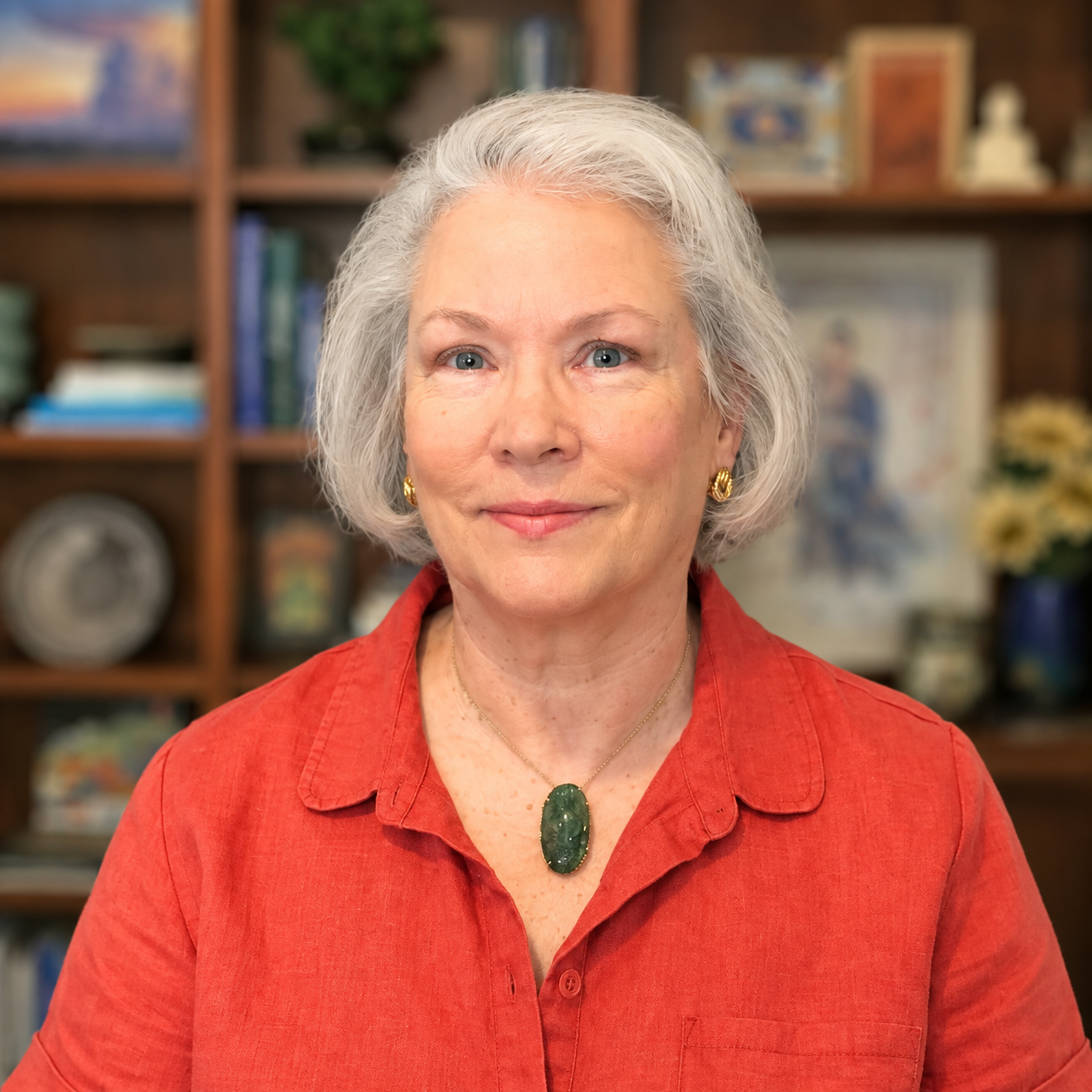
Marylee Calmes is a board-certified practitioner of Traditional Chinese Medicine with more than three decades of clinical experience. She is the founder of the Advanced Wellness Center in Kerrville, Texas, and the creator of Living in the Season, an online membership and educational platform focused on seasonal living, nutrition, natural rhythms, and whole-person wellness.