
The Real Reasons Kids Struggle with Food (EP 126)


 Apple Podcasts
 Spotify
 Pandora
 PocketCasts
 RSS Feed
 Overcast
 Amazon Music
 YouTube
 Picky eating can turn every meal into a battle, and too often the child gets labeled as difficult before anyone asks what is really going on. Lena Livinsky is back on the podcast to help us look below the surface. She explains her B.L.O.O.M. Framework, a practical way for parents to consider connection, health, oral function, the microbiome, exploration, and boundaries when food becomes a struggle.
What I appreciated most about this conversation is that it was not about blaming kids or blaming parents. It was about paying attention. Sometimes the issue is texture, anxiety, constipation, mouth breathing, sensory overload, too much snacking, or pressure at the table. Sometimes it is several things at once. Lena’s reminder is one parents and adults alike can use: it is never too late to learn your story, make a change, and create a healthier relationship with food.
Lena walks through her B.L.O.O.M. Framework:
- Connection: The foundation. Kids need to feel understood, safe, and supported before they can relax around food.
- Balanced health and environment: Look at the bigger picture, including sleep, constipation, reflux, nutritional deficiencies, stress, anxiety, and environmental factors.
- Layers of oral function: Eating involves much more than deciding whether a food tastes good. Chewing, tongue movement, breathing, swallowing, airway issues, and mouth structure can all matter.
- Optimal microbiome: Gut health can affect appetite, cravings, mood, hunger cues, and how a child experiences food.
- Open exploration: Let kids become curious about food at a pace that does not overload them. Pressure can make the problem worse.
- Mealtime boundaries: Clear, predictable expectations still matter. The goal is not chaos or letting a child run the show. The goal is boundaries that fit the child’s age, needs, and current capacity.
=== Chapters
- 00:00 Welcome Back, Lena Livinsky
- 02:23 Why Picky Eating Needs a Bigger Conversation
- 04:21 It’s Never Too Late to Help a Picky Eater
- 07:25 Why Parent Education Matters
- 10:40 Introducing the B.L.O.O.M. Framework
- 14:00 Connection Comes Before Food
- 15:46 Balanced Health, Environment, and the Total Load
- 17:23 Oral Function, Breathing, and Safe Eating
- 19:02 Gut Health, Sensory Needs, and Food Cravings
- 20:52 Exploration and Mealtime Boundaries
- 35:07 Stop the Constant Snacking Guide
=== Guest: Lena Livinsky
- Website: https://lenalivinsky.com/
- LinkedIn: https://www.linkedin.com/in/lenalivinsky
=== People Mentioned
- Sally K. Norton, My Food Matters, LLC: https://sallyknorton.com/
=== Resources / Books / Podcasts / Apps
- The Livin’Sky Podcast: https://lenalivinsky.com/podcast/
- Stop the Constant Snacking Guide: https://lenalivinsky.com/
- Toxic Superfoods: https://sallyknorton.com/
- Unhealthy Podcast: “The Real Story Behind Picky Eating”: https://www.unhealthypodcast.com/118/
=== MUSIC LICENSE CERTIFICATE: Envato Elements Item
- Item Title: Healthy Eating
- Item URL: https://app.envato.com/music/f0f30794-d2b0-45d1-8004-d817d5274b43
- Author Username: CrazyTunes
- Licensee: Marvin Bee
- Registered Project Name: Unhealthy Podcast
- License Date: January 3rd, 2026
- Item License Code: XPFS6HD54W
00:00 - Welcome Back, Lena Livinsky
02:23 - Why Picky Eating Needs a Bigger Conversation
04:21 - It’s Never Too Late to Help a Picky Eater
07:25 - Why Parent Education Matters
10:40 - Introducing the B.L.O.O.M. Framework
14:00 - Connection Comes Before Food
15:46 - Balanced Health, Environment, and the Total Load
17:23 - Oral Function, Breathing, and Safe Eating
19:02 - Gut Health, Sensory Needs, and Food Cravings
20:52 - Exploration and Mealtime Boundaries
35:07 - Stop the Constant Snacking Guide
[0:16] Hello friends and welcome back to my unhealthy podcast, the show where we look beyond the obvious symptoms, ask better questions about what may be driving them, and have honest conversations about health without shame, fear, or that one size fits all answer.
[0:36] So it was a, and I did it again.
[0:41] Whoopsie. This is going to be a great opening. We've got your dog in the background. I'm sorry. Perfect diving.
[0:48] And me with double music here. And for those that know me, I do not edit, so it is what it is. The voice you heard there joining me again, Lena Livinsky, a pediatric speech language pathologist, holistic feeding specialist, and founder of Live in Sky Kids, host of the live in sky podcast and when i had her on last we talked about picky eating and i myself learned a lot and um, it's more complicated than we think so i asked her to come back and talk more Lena welcome back, thanks for having me again all right it was so great so I’m looking forward to this all right sounds good so let me first say this before we dive in i was just at a conference one my tech conferences, and so of course the topic of picky eating came up of course but it was all focused on, you know processed foods and chemicals in our foods and ddt and you know how it is you know changing the way that our kids are growing up in the sense that they're, they're bigger and heavier than ever uh some of our kids are just.
[2:04] They're overweight before they get into you know kindergarten and grade school and stuff so it was a weird conversation and I’m thinking i wanted to just say hey go listen to my podcast from a while back so um, but i didn't get into that conversation so that conversation is out there.
[2:23] It is. I think it's a big concern for parents. Funny enough, I was just at a conference. I just got back Saturday. It was quite a different conference. It was a pediatrics holistic health conference. And one of the talks was talking about obesity and actually using peptides for, treating it and how it's done and if it's the right thing. And so many, you know, there's a lot of new ones in that conversation, but definitely the topic of obesity, it's becoming more pertinent here because our kids are struggling with their health in many different ways. Yeah.
[3:01] So just real quick to kind of recap our last episode and keep people up to speed, of course, that was episode 118. If you want to go back and check that out, if you haven't already, Some of the key points that I remember from that episode is, of course, picky eating is not necessarily a willpower problem.
[3:23] It's not a personality trait that came up. Pressure can add to the problem. So just, you know, forcing your kids to eat and not paying attention to what their body might be saying is something we don't want to do. Um there was a con i went back and listened on the mic oh i don't know if we touched on this but we talked about a child's total load, and i remember we touched on the sensory needs and stuff and oral motor development which was a new term for me um any of those things that you think we need to go back and just clarify for people.
[4:03] Um, I honestly, I'm not sure if you got into it deep enough. Probably not. But all of that, I think, is worth mentioning when we talk about the Bloom framework. Okay. So we can go back and explain it a little bit more. All right. Maybe we can do it that way. We'll do it that way.
[4:21] So, um, so of course, you know, picky eating can hide a much bigger story. That's what we're finding. And part of us have to reframe what our thoughts are on picky eating, where a lot of times, so I just keep thinking back to this conversation. It really focused on kids having too many choices, kids being entitled, which we were, they were talking about older kids. So these were like kids that were 10, 11, 12, 13, that were just simply rebellious, to their parents about eating. And all they kept saying is, wow, these parents did not put down any boundaries as they were growing up. And then when you're trying to reel that in, oh, it's too late. So very interesting. I want to add to that that it's never too late. Okay. I think it's just about; it's about the way you go about it. And I do think, you know, at that age, when they're 12, 13, 14, you know, they're starting to have, um.
[5:26] Their own sense of health and what that means and what that means growing up and how they can understand how their body feels. And they can see that maybe their friends are not struggling with all these choices. Maybe they are doing better athletically or whatever it might be. Kids start to understand the concept of their own well-being. So I think the types of conversation we're having with them is important here.
[5:53] But I do think boundaries are important as well. So there is like this gentle dance that needs to happen. But I say it's never too late, even for adults. You know, you can wake up one day, you can listen to a podcast, and all of a sudden you're like, whoa, like, I can hear my story in this. I can see that I need to make some changes. And you make a decision and you do it. So I think with kids, it's a little bit different because they need their guidance from their parents but in my opinion it's never too late okay so i, let me offer up this i don't know if I’m going to say apology or not but i was halfway through one of your episodes i was listening in the plane, and i fell asleep i apologize okay it was fine let me tell me it was the one on toxic foods.
[6:46] And it was funny listening to it because I mean, toxic foods is really a discussion that I think adults are having amongst themselves. Like I said, we're talking about all this processed foods and, and, you know, cutting out sugar and stuff like that. But. Since I only got halfway through, I don't know if you got around to talking about how we address this with our kids, but I'm in my head, I was thinking this needs to be addressed with adults first. Parents need to understand all of this stuff. And I was trying to, while I was listening to the episode, I'm thinking, oh, did I even ask Lena, you know, how much educating of parents she had to do?
[7:25] It's for me, when I work with parents one-on-one now, it's all about parent education.
[7:32] My work, when I was working in the capacity of only a speech language pathologist and doing feeding therapy, my work was focused on the work with the child in the clinical setting. So we were introducing foods and working on their oral motor skills. But what I have found that without the parent being a huge part of this conversation and without parent education, we were not making much progress. So the parents are always a huge part of this. And I agree with you. It starts with the parents teaching them about it and making them aware that, of what are foods that are considered to be super healthy that perhaps, you know, they're not when we're eating them in big amounts. And maybe other foods that were villainized before are actually proving now to be very nutrient dense. And there's been like a lot of talk about this in the past. I think there's been a big shift in what's considered healthy over the last few years, few decades, right? We used to consider more natural foods like meats and eggs and what our grandparents grew up on before the processed foods were introduced to be like the backbone of nutrition with some vegetables and fruits. And then we moved to this like ultra processed foods in the 60s and 70s and 80s and 90s when I was hip to eat all these fun foods and have like a colorful supermarket, you know, cart full of these things.
[8:59] But now we're finding that, you know, going back to nature and going back to these like really basic foods is really where true health lies. But with the conversation that you're referring to with Sally K. Norton, I believe, that's the interview with Sally, who's a brilliant nutritionist. And her story goes way deeper than mind when it comes to a plant-based diet because she did it for about 16 years and it actually was very unhealthy for her. And she had a really bad reaction to it. After some time, she got very sick because of the plant-based toxins that were present in the foods she was eating just a ton. I had a similar story because I was vegan for a few years and that diet was not good for my body. I did it, you know, I feel like very carelessly And I paid for that with my own health and repercussions of it So it's a big topic, But I think when it comes to talking about toxic superfoods and foods, there's a lot of new ones there, and it's worth to have this discussion. And Sally is one of, you know, I think, pioneers in that space when it comes to understanding food from that perspective. Can I ask how somebody is a careless vegan?
[10:17] When you're eating impossible burgers and soy-based meat substitutes, with full of chemicals, as, you know, trying to substitute the protein that you used to get with these types of funky foods, in my opinion, that are just full of chemicals, I would say that's a very careless vegan. Okay.
[10:40] Yeah. That's, I'm going to make a note here because that's a whole other conversation. Yes sorry don't call anybody out i just paid for it with my own health so I’m speaking from experience no that's fine that's why i do these shows and that's why i mean i mean impossible burgers, is pushed heavily and i don't like them they are they are it's a definitely a different conversation okay, so well let's go ahead and get into what we said we would get into from the last episode your bloom framework and so i see this as a way for parents to look beyond the plate, and start asking better questions about what is making food difficult for their child right, okay so bloom uh just like it sounds b-l-o-o-m and this is the framework you developed right And tell us first, before we get started, what actually led you to creating it?
[11:43] You know, it was an interesting moment in my life because I remember I was putting all this together. I was learning about picket eating from this holistic perspective because of my son's struggles. And I mean, like I said, I've been a speech pathologist for many, many years, 15 years now. So I've had feeding as the main focus of my career for a very long time. I just never understood it from this angle of whole body health. And then when my son turned out to be a picky eater, I needed to look at it from a different perspective because what I was, what I had learned in my career was not working for him and I needed to get to the bottom of why. So when I was trying to organize all these things that I was learning and trying to put it together and make it more, make sense even for me.
[12:34] That's when Bloom came to me. Because I remember vividly, I was lying in bed. It was usually that's when you get your best ideas. you're about to fall asleep and you're just like whoa oh okay download so i remember i just like grabbed my notebook and i started to write out all the areas in the bloom framework not the acronym just what it stands for in different words and the way you know the categories came to me, and i started to write it down and then i was so excited about it because i was like wow like this just feels like everything I’ve been trying to say but finally organized, um and i use ai for an acronym. And I was like, okay, this is exactly the categories I want to highlight. How do I make it into a word that makes sense that people can actually remember? So he gave me probably like 20 or 30 different things. I hated it. And then eventually I was like, bloom. Okay, this makes sense to me because what I'm trying to do with this framework is for kids who are struggling to actually thrive and bloom and feel better and be healthier. So to me, that word just made sense, and I was able to explain my ideas clearly with it. And then, of course, later on, I added to it, and then those letters don't fit the framework, but they're still a part of it. So I'll explain how that goes. Okay. But if you could add a C, so the C is in there, too. It's just silent.
[14:00] But the way I imagine bloom is kind of like this big tree with different branches. And at the bottom of it, at the trunk, we have connection, which is the C. Because that's the entry level to understanding your child, to start to notice these different patterns of their picky eating struggles, noticing things that might be contributing to their picky eating tendencies. And also, eating is all about feeling confident and full of trust and comfortable. Well, whenever we're sick or we're scared or we're stressed, we don't want to eat. We don't want to necessarily, unless you're like an emotional eater that calms you down. But for the most part... As humans, like protection and just this feeling of safety is always more important than digestion or eating, right? So that's why connection is at the bottom. Because there are kids, oftentimes, when they are picky eaters, they already have stress going on in their body for various reasons. And perhaps, you know, they're coming to the table stressed out because they don't want to eat certain food. It's just not making them feel good right now. Maybe they're scared of their reaction. Maybe they're scared of what's going to happen at the table. Maybe they're scared of seeing something new.
[15:29] So connecting with them from the parent perspective can help you so much to help them regulate their nervous system and also understand them better and where these difficulties are coming from. So this is why at the trunk of this tree, I imagine connection.
[15:46] Then B from Bloom Framework stands for balanced health and environment. Because whenever a child doesn't feel well physically or mentally, whether that is from constipation, whether that is from reflux, whether that is from nutritional deficiencies, nervous system dysregulation, anxiety, poor sleep, anything that could be contributing to their health being out of balance. Would go under the B of Bloom framework. This is something we need to notice. This is something that we need to address. And then it's balanced health and environment because we talked about the total load, right? When we have a lot of toxicity within our environment or things that are making us unhealthy that are contributing to this total load of the child, if their bucket.
[16:41] The load that they can carry within their bodies before they have symptoms of any type of chronic disease, if it starts to overflow because it's too full, that's when we start to see, symptoms or negative effects of whatever is happening underneath, right? And that could be coming from many different aspects of our lives, of our environment, of our mental health, you know, physical health. It's all kind of housed in that area. And it's something that hopefully we can address. We can't always address and get rid of our, you know, just take care of right away. But it's something that we should start to think about for sure in order for us to improve the picky eating process.
[17:23] L, I actually recently changed to layers of oral function. It used to be learned oral skills, but I think there's so much more to this than just oral motor skills. Layers of oral function is not only our oral motor skills, so how we chew, how we're able to move our food back and forth in our mouth, how we're able to prepare the food and make the bolus before we swallow.
[17:52] How we're able to move our tongue, right? There's more to it. The airway and breathing goes into it as well. It's really important for us to be able to breathe through our nose and do it in a way that's, very, you know, I mean, it's healthy and it's supporting the oxygen to our body the way that we're actually are designed to through the filters in our nose. There's a lot to be said there. But if we're mouth breathers, that can definitely impact our chewing and our swallowing as well. So that goes in there under the layers of oral function. And swallowing, right? Swallowing needs to be safe. We need to make sure that we're not aspirating our food. It's going down the right way. The child is eating safely. And it's also going to be the structural of our mouth and our tongue, making sure there's no restrictions in our mouth and everything is moving the way that it's supposed to. So that's why it changed the two layers of oral function, because it's a lot more than just chewing. Okay.
[18:58] Should I keep going or do you have any questions? Go ahead. I'll make notes
[19:02] and then we'll come back around. Okay, perfect. So the first O in bloom is optimal microbiome because the microbiome is such an important topic here and it can really affect.
[19:16] Our eating in many different ways. We want to be in a rest and digest mode when we're eating. And whenever we have a leaky gut, that's going to impact our mood. It's going to put us into more a sympathetic state. It's going to impact our cravings. It's going to impact our appetite. It's going to impact our hunger. And I can never say this word. Society, right? If we feel full enough or if we feel hungry, all of that can be impacted. But especially with the microbiome, with the little ones, what I have seen is, the fact that they're craving a lot of sugar and carbs when they do have those overgrowths or they have a leaky gut. because they're feeding the bad bacteria in their gut. So we're starting to get into that really big cravings for ultra-processed diet. And there's different areas in the balanced health that would also contribute to that. But that's something that is really important to mention. And sensory sensitivities are also a big part here in the microbiome, as well as in balanced health and environment. Oftentimes, kids are driven by being too sensitive or not sensitive enough in terms of what they want to eat, how they're willing to eat, how they process their, you know.
[20:34] Their proprioception senses, their smell, their sense of taste and temperature, all of that can drive their food preferences and choices when things are out of balance. So that is something that definitely needs to be considered when you're working with a picky eater.
[20:52] And the second O stands for open exploration. So that's that element of letting your child be curious, letting your child play, letting your child explore on their own terms. Because we're so eager oftentimes as parents just to want to.
[21:08] Get them to try different things, maybe perhaps before they're ready or in a way that just feels too much for them or too strong for them. In a very meaning, you know, just in a well-meaning way, in a very loving way, perhaps to our picky eater who's a little too sensitive, maybe it's just not the right way to do it. So that's that area of open exploration, letting your child get curious and work on those milestones. Perhaps they're kind of a little bit delayed on in a way that feels safe to them, because we're always going back to that feeling of safety and rest and digest when we're working on picky eating. And then mealtime boundaries is the last one, because kids need boundaries. They need to know what's expected of them. They need to know what's coming, what's going to happen, how it's going to happen, because it helps them, again, to feel safe. They like predictability. And also, sometimes they need to be pushed outside of their comfort zone when they're ready for that in order for them to explore more and try different things. And that's going to look different for every child, depending on their age, depending on where they are right now, physically and mentally. But all of these things are very important to consider.
[22:23] But yes, that's the Bloom framework, and it's still kind of evolving as I'm learning more. And there is more areas that would go under every category, like primitive reflexes, posture, so many different things to consider. But I would probably need to have another 30 minutes to go into every single area. Right. Okay. So, interesting. Posture.
[22:46] So that leads me to a question that I don't even know which one it falls under, I'm assuming it falls under mealtime boundaries but I know, kids that are basically two years old that can't sit still when they eat. They have to be up and walking around, and the parents are just trying to grab them, put them in the chair, and then they're wiggling to get off.
[23:12] And this is every meal. So I can't even, you know, it's not something where, you know, normally if they get up in the morning, they're fine. And as they go along in the day, you know, they have too much sugar and can't sit down. This is every single meal. So is that, is that a boundary issue or does that fall under one of the other categories? You know, you mentioned two years old. So I think a lot of two-year-olds will struggle with sitting down. I think the age here is important. What we're expecting of a two-year-old versus a four-year-old is going to be very different in terms of how we want them to show up at the meal. And then we got to pick our priorities what is more important is them sitting at the table more important or is it them eating a full meatball that's more important and perhaps you're going to, feed it to them when they're playing in their room which is not ideal initially but perhaps this is what they need because their body their nervous system they just cannot sit still right and we always want to go back to that feeling of safety, and how do we make them feel more safe and more regulated?
[24:22] Boundaries are very important, but those are going to be very slim with a two-year-old, I would say. Okay. What about a 10-year-old? Oh, yeah. We would expect it very differently. Right. Unless they're, you know, maybe... On the spectrum, or maybe they're, you know, have ADHD that's really high and they just cannot sit still right in this moment and they need breaks. And we should take that into consideration. But of a child who's 10 and they're able to actually sit down and attend to the meal, we would expect them to sit for the duration of the meal. Right. Right.
[24:59] So this question it just made me think on the spectrum has been, a little bit of a discussion because kids nowadays have learned so much, from the internet and watching YouTube and television shows that are literally teaching them how to get away with stuff, So some of the times I look at the behavior and listen, I'm not a, I'm, let me rephrase this properly. I have a stepson, but I didn't raise him. So I am not a parent. I will watch kids, all my nieces and nephews and, you know, grandkids and stuff. They love me, but I can ship them off when I'm done. But I noticed that there are a lot of kids that use what they learn or what they see and try to make it as though, oh, I have ADHD or I have this and stuff. Do you have to deal with anything in those lines trying to decide, OK, what's real and what's not or what's real and what's learned? Yeah, I think there is some of that. I think there's overdiagnosis too, where things like ADHD.
[26:18] Things might manifest a little bit, like their attention is poor, but it's really something else going on internally, like gut health issues and, affecting maybe their concentration. I think it's a big topic, but I think there is space for that, right? Because kids can get away with things if they are labeled as having some kind of a, difference or neurodivergence so they can absolutely perhaps try and, get away with it but you kind of know working with kids when you are, a pediatrician when you are a therapist when you have worked with so many kids you know for me i could walk into a room and i know, i you know when kids are struggling on different levels you, you start to notice these things just as part of your training because, well you've been trained to distinguish a lot of things and maybe not as an SLP to diagnose autism or ADHD but you have worked with so many kids you can kind of tell these differences. So I think it depends on, you know, the child very much.
[27:31] But yeah, I mean, I understand what you're saying. I think the internet is a crazy place and kids are definitely have way too much at their fingertips right now. And parents are hands off a lot of times and don't keep up with it. And it's just easier not to deal with it, not to fight. I know. Well, there's digital babysitters, you know, iPad and kids are disconnected. And I feel like families oftentimes, unfortunately, because of the lifestyle, get disconnected, which is why connection is the entryway to my framework, because I think it's the backbone of relationships. Right. And with picky eaters, rebuilding these relationships is really important. So looking at this and trying to understand, you know, the idea of balance.
[28:19] When you're struggling with other areas, say, for instance, the layers thing, when you've got a child that is really having those, let's say, inflammation or they simply... They simply can't stand the taste of something or it feels funny. And, uh, I imagine that part of what you have to do is teach parents which level this is at. Does that make sense? Yeah. Um, I'm trying to think of, you know, because it's like, we may be thinking that they don't like vegetables, but it might be a particular vegetable that has a texture or something like that. Right. Yes. Okay. Definitely. Um, It's, health doesn't exist in silos, right? Health, everything's so connected. So oftentimes with even my framework, like it's hard to distinguish because is the sensory sensitivity stemming from the gut? Is it stemming from something else like nutritional deficiencies? Is it stemming from like lack of zinc or magnesium or iron? Like it's hard to pinpoint. So that's why like the framework is here to guide, but it's branches of one big trunk that overlap. And that's how health is. But I think what you're trying to ask is like trying to get to the root of what's really causing it. Right. Sometimes it's like hard.
[29:48] And what I have learned is. In general as the more I’m learning about health and everything and all these different domains that it's usually multiple right it's usually multiple things overlapping at once um, because once that total load it's really just like too much and it's overflowing the bucket is overflowing it's going to manifest in different ways it's never it's not usually just one thing, so that's why it's important to connect and observe so you can kind of think about Okay, well, is it really my child struggling to chew? Is it that? Because then I know where to go. I know go to see, I need to go see a myofunctional therapist, I need to go see a feeding specialist, and we need to work on that. Is it the mouth breathing and the airway issues where maybe their teeth are, misaligned and they're not chewing well? Maybe I need to go see an airway specialized dentist.
[30:46] There's, I think, you know, there is an overlap in all these different things, which is something that unfortunately can get overwhelming to parents. But I do find that once you start to address little things and little changes and you take away from that total load and you start to make small changes, things calm down and things get better in many different areas as well. All right.
[31:10] So the idea is not to look at this as a checklist right but more of here are the areas that you can observe and you can kind of start to pay attention to and realize that you know one or multiple of these could mean significant stuff when it comes to why, your child might be a picky eater. Exactly. Exactly.
[31:37] It's not meant to overwhelm. It's meant to guide. Because I think if you just think about a picky eater, it's like, I have no idea where to start because it's hard to pinpoint. And when you have these different areas, you're like, okay, well, is it the fact that I'm pushing them to eat broccoli, like a cup of broccoli every dinner? That's maybe a little too much. So I need to bring that back a little bit. And maybe my expectations need to change. Is it the fact that my kiddo is getting up, they're 13, and every day they're just getting up and making themselves dinner because they're refusing to eat what I'm making and my boundaries are just not there? Is it the fact that their stomach hurts every single day or they're constipated and they just literally do not have appetite to eat? It's nice because it's meant to guide you so you know, okay, which area do I need to go? Where do I need more guidance in?
[32:28] Versus just having no idea where to even start. At least that's my hope. I'm not sure if that framework is doing that, but that's really why I am sharing it with everyone because it's kind of how my brain works and hopefully it helps somebody else. Right. Well, it's a start. It gives people something to use to kind of figure stuff out in a starting place. And... Listen, from what we've already done in these two episodes, there's a lot in my understanding. And I said, I don't have kids, but now I'm watching kids. I love it. That's right. Not helping yet.
[33:05] Oh, like, have you? Yeah, like, this is not just something difficult, you know? All right, folks, if you want to learn more about Lena, go to LenaLivinsky.com. That is her website.
[33:19] You've got a couple of places you can start. you can look at her live in sky kids tab uh listen to her podcast and like i said I’m listening I’m a little behind but i i am listening because, well like we said a lot of this stuff applies to us too so there's adults that you know have eating issues that were never addressed, yes yes i was a binge eater for the longest time not even know what emotional eater you know um okay are those are two separate things aren't they, well i guess you can be a little bit of both yeah because you can get emotional and then you're binging right, you know so i think I’m not a psychologist disclaimer here so i cannot explain it from that angle however this has been my experience so luckily that's no longer something i have to deal with but yeah, no you're done with that so no more buckets of ice cream or, no more buckets of ice cream no.
[34:25] I mean, I address my gut health and I address deficiencies and that's helped me tremendously because it's really rarely you having a behavior you picked up. There is a root cause for it and it's within your, usually within your physiological body that, you know, has been addressed or like ignored for a long time. And it's easy to ignore, especially as a mom or as a dad when you're just working and busy and taking care of the kids. It's so easy to ignore you. But when you have kids with special needs such as picky eating at home you know it's really important to take care of yourself so you have the energy and the patience to show up at the table helping them to regulate um.
[35:07] And just you know just do their best and the rest that you can, but i think it's all part of it we're all one family unit okay um before we go i want to ask one more question this will hopefully drive people over to your site you've got a guide up there that, um, stop the constant snacking guide. I do. So just real quick, tell us about that and I'll drive some people over to the site there. Yes, I do think that snacking is a huge issue because kids ruin their appetite and they're often snacking on carbs and sugars, feeding into the problem that's already underlying.
[35:47] It's just part of the snacking culture, especially in the United States. I'm from Poland. We did not snack growing up. So my husband is always like, I don't understand it. Why are we snacking all the time? You know, but it's part of the culture here. You send your child to school and snacks are there. But I do find that snacks can be great in a pinch when your child's really hungry and you're running late for dinner. But when we are feeding our kids a lot of snacks, we can be not only feeding a lot of the issues that are causing picky eating. We're also spoiling dinner and their appetite and them wanting to have a full meal because they're not hungry. We want them to show up hungry. So the guide is there. If you are that mom who's struggling with the constant snack requests with your child not wanting to eat real foods and just wanting to eat snacks, you know, it's like a little reset to kind of put that into perspective, why that might be happening or what you can do about that, to stop the constant snacking.
[36:46] All right uh again folks head over to LenaLivinsky.com and check out the guide that'll help a lot of us so uh let's see here, I think that's it. Lena, thank you very much for doing a second show with me. Thank you, Mark, for having me. This was a blast. I got great questions. All right, folks. And if you're having a child that is having some of these issues, well, obviously, we want you to start slow. Pick one small place to start. And I think Lena said it here. You know, start watching, but without the judgment, lower the pressure and build a safe place for them around the table. And of course when needed bring in the right professionals to help you understand the full picture that is going to do it for our episode today thank you very much for tuning in follow the website or find the podcast in your favorite catcher so you don't miss an episode and support my guest Lena Livinsky and we'll see you guys out there on another episode and until then live healthy and be happy.
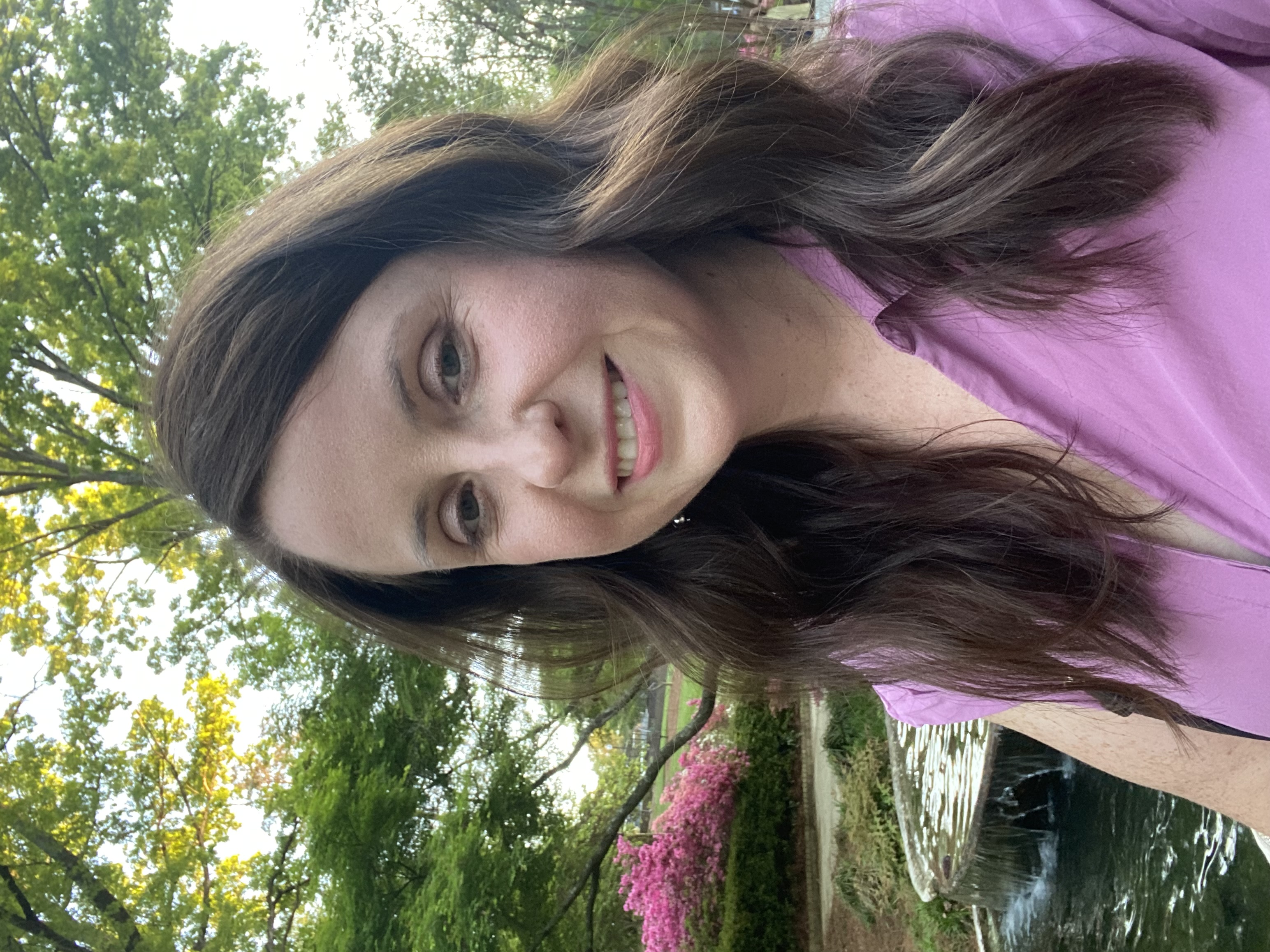
Feeding Specialist/Speech Language Pathologist
Paulina “Lena” Livinsky, M.A., CCC-SLP, is a pediatric feeding specialist who helps families uncover what may be driving their child’s picky eating. With over 14 years of experience, she combines clinical expertise with a whole-child approach to help parents find clarity, pursue the right support, and feel more confident at mealtimes.