When “Being Nice” Turns Toxic (EP 113)
Barb Nangle and I dig into what it really means to feel safe in your own life by learning where your limits are and actually honoring them. Her story of codependency, recovery, and reparenting yourself shows how boundaries can transform everything from friendships and work to weight, health, and love.

 Apple Podcasts
 Spotify
 Pandora
 PocketCasts
 RSS Feed
 Overcast
 Amazon Music
 YouTube
 When Barb Nangle talks about boundaries, she’s not talking about controlling other people, she’s talking about finally realizing you have standards for your own life and you’re allowed to live by them. She shares how she went from “just dealing with whatever came at her” to saying no to things that drained her, limiting time with people who couldn’t respect her needs, and choosing sleep, health, and sanity over people-pleasing.
We walk through her codependent bottom, inviting a homeless friend to stay “just to be nice” until she felt trapped in her own home, and how that moment pushed her into therapy, Al‑Anon, Codependents Anonymous, Adult Children of Alcoholics, and ultimately a trauma‑recovery path through ACA and Overeaters Anonymous. Barb opens up about losing over 100 pounds, ending one‑sided friendships, changing the way her team functioned at Yale, and finally ending up in the first truly healthy romantic relationship of her life because she learned to know herself, tell the truth, and hold boundaries even when it was scary.
=== Chapters
- 00:30 Boundaries and Safety
- 05:29 Learning My Limits
- 07:37 Hitting the Codependent Bottom
- 12:15 What Codependence Really Means
- 15:53 Recovery Beyond Addiction
- 19:39 Reparenting Through ACA
- 23:46 How Recovery Changed Others
- 30:55 Love After Healing
- 37:17 Ongoing Recovery Work
=== Guest: Barb Nangle, Higher Power Coaching & Consulting / Fragmented to Whole: Life Lessons from 12‑Step Recovery
- Website: https://higherpowercc.com
- LinkedIn: https://www.linkedin.com/in/barbnangle
- Instagram: https://www.instagram.com/higherpowercoaching
=== Resources / Companies / Books / Podcasts
- Fragmented to Whole: Life Lessons from 12‑Step Recovery (podcast): https://higherpowercc.com/podcast
- Al‑Anon (Al‑Anon Family Groups): https://al-anon.org
- Codependents Anonymous (CODA): https://coda.org
- Adult Children of Alcoholics / Dysfunctional Families (ACA): https://adultchildren.org
- Alcoholics Anonymous (AA): https://www.aa.org
- Overeaters Anonymous (OA): https://oa.org
=== About the Unhealthy Podcast
Hosted by Marvin Bee (Uncle Marv), the Unhealthy Podcast dives into real conversations about health, wellness, and everyday habits that impact how we live, work, and age. From nutrition myths to stress management and tech-life balance, Uncle Marv brings humor, insight, and honesty to every episode.
- Visit our website: https://www.unhealthypodcast.com/
- Connect on Facebook: https://www.facebook.com/iamunclemarv
- Connect on LinkedIn: https://www.linkedin.com/in/marvinbee/
Follow and Subscribe: Stay updated with new episodes every week on Apple Podcasts, Spotify, YouTube, and more. Join the conversation about real-life health, fitness, and personal growth from the lens of an everyday guy striving to be healthier.
[0:15] Hello friends, Uncle Marv here, and welcome back to another episode of the Unhealthy Podcast, the show where we talk honestly about the habits, stories,
[0:25] and patterns that quietly wreck our lives, or at least they wreck mine. And I thought I would go out and find people and chat with them about what they are doing to make their lives better. And today we're getting into a topic that I think most of us were kind of taught but maybe don't always understand when it comes to boundaries and internal safety. And so I found somebody that can help us with that. Barb Nangle is a boundaries coach, speaker, and host of the podcast, Fragmented to Whole Life Lessons from 12 Step Recovery. Barb, welcome to the show. Thanks, Uncle Marv. I'm really excited for this conversation. I am too, and I will honestly admit that when it comes to this topic, I probably don't know as much as I think I do.
[1:19] Okay. Well, that's great. That means you'll be asking genuine questions that I will very likely be able to answer. Well, I think a lot of us do. I think there's a lot of areas that I'm finding as I progress with this show that we just assume we've heard one or two pieces and we think we know everything about it. And I ve never understood or at least I ve never associated the term boundaries, with safety at least in the way that you've talked about it it's always been boundaries as to you know this is how i want to live my life, these are my boundaries and other people should respect it and that's it.
[2:02] So yeah way more complex yes, so let's start with when you get asked, about this let's start with what's your definition of boundaries and then kind of guide us into how that turns into internal safety, sure so i think of boundaries as there's standards that you have for your life hopefully that you live up to, and therefore you have limits for yourself and for other people, to uphold those standards. So.
[2:34] I've used health as a good example for a long time, but I feel like I'm getting tired of that. And so maybe social interaction is a good one. So, you know, I've realized that I really don't like gigantic parties. I would much rather get together one-on-one with someone or maybe like six, maybe eight people and interact because it's just too much stimulation for me. I am and actually always thought I was an extrovert who needed a lot of alone time. then I learned that there's something called an ambivert, which I think that's what I am. It's like in between an introvert and extrovert. And so that makes sense for me as an ambivert that I don't like the giant thing. I do like to spend time alone, but I'd rather have meaningful social interactions with other people. So the limits I have for myself is unless it's something really important, like a wedding, I'm not going to say no to a wedding because I'm celebrating with someone. But if it's just like a New Year's Eve party and there's going to be a million people, no, not going. I don't typically go out on New Year's Eve anyway because it's a big drinking night and I'm a sober person.
[3:43] And then, you know, limits, that's a hard one to say limits for other people. So maybe I will go back to the health. It's like I have a lot of high standards for my health now because I neglected and abused myself for so long with drugs and alcohol and food and toxic situations and stuff. So limits I have for myself to support, uphold, and promote my health are things like I go to bed by 1030 at night because sleep is foundational to good health. A limit I have for another person to uphold my health standards is I don't let people smoke in my house. So the standard is health. And then the limit is based on like what you need to meet that standard. Does that make sense? It does. And I want to ask the question that just popped in my head because when that has come up, it's usually in a context of somebody like you said.
[4:45] I don't let people smoke in my car. And then people are like, well, aren't you a fuddy-duddy sort of a thing. And it's kind of always been either laughed off or smirked at or something like this. But it seems as though we are now making a conscious effort in health and wellness to say, no, these are boundaries that are legit that, you know, people don't have the right, to trample on. Does that sound fair? Yeah. And well, whether they have the right or not, I mean, it's kind to not do that. But there are some people with such poor boundaries that they are incapable, of respecting your boundaries.
[5:26] And so that's where they're your boundaries. So I'll give you an example from my real life. So years ago, when I was learning how to build healthy boundaries, my brother was just mired in dysfunction, as was I, by the way. And he and I have since like reconciled and reconnected. But this was years ago. And I really, even though he and I agree politically, I don't want to talk politics. And I didn't want to hear about his job. So I would say to him, hey, while I'm here, I don't want to talk politics. I don't want to hear about your job. And I thought that was me setting boundaries and that he would be like, oh, okay And I realized first of all, he's incapable of doing that He just is literally mired in politics and all he thinks about his work or back then anyway and.
[6:11] So I started to realize, wait a minute, these are my boundaries. I'm the one who doesn't want to talk politics or talk about his business. I can't force him to not do that. So what can I do? And I realized that I could spend less time with him. So I started spending less time with him, like number of minutes or hours, and less frequently. Now, I could have gone to him and said, hey, you know, if you don't stop talking about politics and work so much. I'm going to stop spending so much time with you. But back then, I didn't even have the wherewithal to have that conversation. So I just did it. It's not wrong that I just did it, but it worked for me because I didn't have to have the conversation with him because it didn't feel emotionally safe because I knew if he pushed back, I might cave. And it just worked for me because I was like, oh my God, like I didn't know before that Marv that I don't have to put up with stuff that I really don't like, especially not from my family. I just didn't even understand that it was an option to have my own standards and live up to them. I just basically grew up believing you just deal with whatever comes at you. Just deal with it. And that's what I did. And then I started learning, oh, wait, I get to have my own standards for life.
[7:38] So i get that and i, i mean in my head I m thinking okay that sounds perfectly normal yet, there are so many instances that you know you mentioned growing up where people were just told suck it up you know yeah you live with it you deal with it and, when did you get to a point in your life where you said this is not healthy for me Well, I hit what I call a codependent bottom back in 2015 when I was 52.
[8:15] I can talk about the word codependent and what a codependent bottom is if you want. But what happened was I had invited a homeless friend that I met through church to stay at my home during a really bad snowstorm that we had. And I now know it's actually not normal to invite a homeless person to stay in your home. And of course, he said yes. And then I invited him another time and another time. And within a few weeks, he was practically living with me. And I soon felt trapped in my own home.
[8:43] So one day I was talking about him. His name was Dan.
[8:47] I was talking about Dan in therapy. And in the middle of a sentence, I went, oh, my God, do you think I need to go to Al-Anon to my therapist? And she said yes. So in case people don't know what Al-Anon is, it's a 12-step recovery program for the loved ones of alcoholics. And when people hear of that, they're often like, wait a minute, why do the loved ones of alcoholics need a program of recovery? And it's because alcoholism is actually a family disease. We tend to think of alcoholism, the drinking behavior of the alcoholic, as the problem. It's actually the tip of the iceberg of the symptoms of the problem. And so what happens in families of alcoholics sort of naturally is they start trying to control the behavior of the alcoholic to get them to stop drinking, to get them to go to rehab, to detox, go to meetings, you know, start taking responsibility for their life. And they start engaging in all these controlling behaviors. and then usually entirely focus on the alcoholic to the complete neglect of themselves. And then they get filled with resentment. And then the alcoholic person feels controlled because that's what's happening. And then they get filled with resentment. And then they use that as an excuse to drink more. And they blame the loved one. And it goes into a cycle. So I had heard of Al-Anon So whatever I plugged into Google When I got home, Marv.
[10:15] The word codependent came up. And I was like, what? Now, I had started therapy when I was 15. So this is 37 years later. I wasn't in therapy the entire time, but damn close. And I had been introduced to the whole self-help world when I was like 22. So this is 30 years after that. And then I had done all the things, you know, workshops and seminars and retreats and spiritual, like you name it. And I was like, how have I never heard of this word codependent?
[10:47] And so I found that there was a group called Codependents Anonymous. And that is where the world opened up to me. And I started to understand my patterns of behavior, that putting up with stuff from other people that annoys the hell out of you is not something that you have to do. It's something that you can choose not to do. I didn't feel like I was choosing to do it I actually was but I was blind to the fact that there was choice involved there because I didn't perceive Any other choices and I think when you don't perceive choices How can you make them if you don't see that you have an option? And what I m kind of hinting at here Is a mentality that many people may have heard of and it's called victim mentality and the mentality is, I m basically at the whims of life like i just have to get bandied about by life and i just have to put up with whatever comes along and starting to perceive that i actually had choices, helped me get out of victim mentality and building boundaries also really helped me to understand how much agency I actually had in my own life. So that is how I got to the.
[12:15] Okay, Barb, so I have tons of questions. Okay, bring it. Only because when I've heard the term codependency in the past, it always seems to be centered excessively on needing somebody else to validate, cling to, or stuff like that. That didn't sound like what you were doing just because you invited somebody to your house. Yeah. I mean, I was way going above and beyond what a normal person would do.
[12:51] I remember when I was trying to wrap my mind around the term codependent and what it meant. I remember thinking about Dan. I was like, I cannot depend on him for anything. And I was like, wait a minute. You know what I can depend on him for? To depend on me. So he was staying at my house very regularly. I was feeding him I let him do laundry at my place I let him take showers I gave him money for cigarettes I drove him places You know, I'm like I have a master's degree I work at Yale University I'm a professional woman And this is a homeless man And he also came to my place of work Because they had You know, we had people from every walk of life It was called the consultation center And they had a coffee pot And he would come in And I would have him visit me And it, like, now I look back And I'm like, What was I thinking bringing this person into my work life? And then also I got to the point where I felt trapped in my home. I didn't feel safe in my own home. That's not normal, helpful behaviors.
[13:59] And so at the time, I had no concept that I was a people pleaser, that I was an approval seeker, that I was an over giver, that I was codependent. I thought I was nice. I thought that I helped Dan out because I was nice. And when I came to understand through the process of 12-step recovery that I was actually an approval seeker and that my motivation was not just to be helpful. I mean, yeah, of course I want to be helpful. Who doesn't? But being helpful doesn't explain where you put yourself at like emotional risk or you put yourself like in financial risk, you know. And speaking of that, I will tell you, back in 1999, when my student loans came due, I declared bankruptcy because I had so much credit card debt. I couldn't handle that on top of the student loans. And when I got in recovery, I'm like, oh, my God, all of that debt was about my codependence because I was either trying to buy people's affection. I was trying to manage my image. That was a lot of it. Or I was trying to rescue, fix, and save people.
[15:08] So to me codependence is what you said You're really focused on everything outside of yourself to the point Where other people's feelings matter way matter, way matter way more than your own In fact most people who are codependent don't pay any attention to themselves and what they think or feel And they talk themselves out of those things and they tell themselves things like you know I'm just being selfish and, you know, a good person would never turn a homeless person away and, you know, things like that. So you do have it right, but the implications of that are profound and far-reaching. Okay, that made sense. Now...
[15:53] You keep talking about recovery. And again, there's that disassociation in my mind where recovery has to do with alcohol or drugs or something severe when it comes to depression and stuff. Now, were you in because of codependency or were you doing other recovery things and that just happened to come out of it? Yeah, I'll take a couple minutes to tell you about my journey. So codependency is what got me into recovery. So you're right. So Alcoholics Anonymous was the first 12-step recovery program ever created in the 1930s in the U.S. It was the first time in history that droves and droves and droves of alcoholics got and stayed sober, documented it, and started carrying the message to other alcoholics. Al-Anon was the second one. I think Gamblers Anonymous was the third. I'm not really sure on that. Now there are some 200 and something. So yes, 12-step recovery is for some kind of physical addiction. But it's also for things that people call process addiction. So it's not a substance that you ingest, like alcohol or cocaine or marijuana. It's like you're addicted to sex or alcohol or people in the terms of codependence, like what people think of you kind of thing.
[17:10] And so Codependence Anonymous is about learning how to like really focus on yourself. But what happened for me was about six weeks into my journey in CODA, which is the nickname for Codependence Anonymous. By then, I remember I had said to somebody, I think I need to be reparented. But I have no idea where I got that term from. I think I thought I made it up. Well, six weeks. Reparented? Okay. Yeah. Yeah. I can flesh that out in a little bit if you'd like. So about six weeks into CODA, I went away to Cape Cod, Massachusetts to visit my friends, one of whom had been an AA, Alcoholics Anonymous, for like 10 years at that point. Every time she'd ever spoken to me about it, she just raved about how utterly transformed her life was about as a result of AA. So I got there and I'm like, you're going to love this. I'm going to CODA Penance Anonymous. And she was like, oh, this is great. While you're here, let's see if we can find a CODA meeting. And she couldn't, but she found an ACA meeting, which I knew of as ACOA, Adult Children of Alcoholics. It never occurred to me that I would qualify for that program, never occurred to me. Like, I'd heard of it for sure, but I didn't know why did Adult Children of Alcoholics need a program of recovery. And now we know because it's a family disease. So we go to the meeting because her dad's an alcoholic.
[18:30] And I walk in and in the opening readings, they said something about we reparent ourselves. And I was like, wait, what? That's a thing? What? And then they read the 14, the list of the 14 traits of an adult child. Now, my friend tells me I sobbed the whole meeting. I don't remember that, but I bought the literature. I came home to New Haven, Connecticut. I started going to ACA meetings. Then another one started. Then I started going through the ACA 12 step workbook with three other women. And I could not believe the profound insights and then the integration of those insights into my behavior I couldn't believe it, And the way that I describe ACA now is that it's a trauma recovery program where you reparent yourself and you use the 12 steps to recover. So I did the two of those programs for about a year. CODA, I just went to meetings. I didn't do anything else. ACA, I dove in. I worked the steps. I went to workshops. I hung out with people in that program. And about a year into that, I decided to let go of CODA because it was maybe a 75% fit and ACA was 100% fit.
[19:39] And that turned out to be a higher powered moment for me Because one of the women I had been doing the 12 steps with.
[19:46] Had started going to Overeaters Anonymous after having shared about her relationship with food. And I remember being aghast at what she was sharing. And it's not what she was doing. It was the fact that she was sharing it because that was me. So I went to this meeting with her and I'm like, oh my God, I'm a compulsive overeater. I didn't even know that that was a thing. I am now down over a hundred pounds from my top weight. I've been at my goal weight for over eight years and I've been, it's called abstinent in that program. I've been abstinent. That's equivalent to being sober in an alcoholic recovery program. I've been abstinent for 10 years. I've been an ACA for 11 years. And my life is, I mean, I just can't tell you how utterly transformed it is. And the way I think about this, Marv, is that all that, the tons of personal development I did before recovery, like scratched the surface of the iceberg of my life and recovery melted it, Which is why I started my podcast because the things I learned about myself in my first two to three years And don't get me wrong. I continue to learn things about myself, but it was massive in the beginning.
[20:56] Zero of those things had ever come up in any of those years of therapy And any of the personal development and any of the reading and any of the workshops the retreats The support groups none of it, And I thought what is Going on here that I've Gotten this massive Nation but none of it came Up and I've been trying what's happening for people Who are not trying, And so that's the main reason why I wanted to start my podcast, because I'm like, there is stuff here. There's tools and tips and tricks and mindset shifts, and especially coping mechanisms for how to deal with the vicissitudes of life in recovery that I had never learned elsewhere. So recovery means basically, you have some kind of an issue that is plaguing your life and then in the context of 12-step recovery you use the 12 steps to recover and then that problem it doesn't necessarily go away like when it comes to addiction the people in 12-step recovery anyway are of the belief that you're never not an addict, you're just not using.
[22:10] So staying in recovery and doing continual personal development work and staying connected to other people is what's going to keep you, sober or clean or abstinent or whatever it is, as opposed to, oh, okay, I'm done with that alcohol problem. And I'll begin drinking again someday and be able to have just one beer. And, you know, what I learned as a compulsive overeater and a recovering compulsive overeater and sugar addict is that, like, I can't have just one bite of the things that I binged on. I told myself for fucking 40 years that I would just have one bite and I never did it. I couldn't do it, but that somehow wasn't evidence enough for me that I couldn't do it. And now that I'm in recovery, I have all these boundaries in place for myself, and I'm able to withstand them, partly because I am not living a life that I need to escape from anymore, partly because 12-step recovery programs are spiritual programs. Programs you don't have to believe in god you do have to believe in a power of some kind greater than yourselves maybe it's the power of the group, and it's also because they're group programs you know i have fellows in recovery that know what it's like for me and i reach out to them and i stay connected to them, so when i say recovery that's sort of the gist of what I m talking about Okay.
[23:38] Give you a moment here to catch your breath. And I, there's so much there in your story that is just.
[23:47] I don't want to say mind-boggling that's not the correct term but it is something where like a light turns on it sounded like of all the things that you were going through so part of my, question now turns to as you were going through this learning for yourself and realizing this what about the people around you because it sounds like you had a life that, was you know better than normal, I should say, you know, and people probably saw you a certain way. And then all of a sudden you seem to make this turn. What, what happened with the people around you? Yeah. So I definitely had the appearance of that. I have my shit together. I mean, I got a master's degree. I work at Yale. I own a home. I pay my taxes. I volunteer. Right. But nobody knew what was going on internally because I wasn't telling anybody. And that's why. So by the time I got in recovery, I was 52. I stopped drinking abusively when I was in my early 40s. I continued to smoke tons of weed. And I also obviously was still compulsively eating. And then, of course, I was still codependent. So I was doing all kinds of things that I just had no understanding of the connection between all that substance use and the compulsive overeating and the rest of my life. I didn't I thought it was normal to drink you know and so.
[25:15] What happened over time with people around me is that as I started setting boundaries, I kind of lost most of my friends and it's not because there was ever a like an argument or confrontation or anything but, What I realized was that pretty much all of my friendships, I did all of the social work. I made the arrangements. I did the phone calling. I set the stuff up. I made the friendships move forward. And when I stopped, and then I started to realize this is the reason I'm resentful at my friends all the time is because of that.
[25:59] And I would never go to that friend and say that. I would talk to everybody around them. That's called gossiping. That's called complaining. I don't do that kind of thing anymore. So I just sort of stopped doing all the calling and the arranging and I stopped seeing them. And I realized, especially now that I was in recovery and I had like people that I was around on a very regular basis that I started socializing with, I had these friendships that were based on a certain mutuality. And I realized, you know, I actually really like having people in my life that want to be in my life as much as I want to be in theirs. And I really don't like having people in my life where I have to do all the work in order to maintain the friendship. So that's what happened with, like, friends. What happened in the workplace was actually pretty profound.
[26:48] So I, my first two and a half years in recovery, I was still working full time at Yale. And as I started specifically building boundaries, there was other things too. I started to see this effect on my team, my project, my organization. And I remember going like, wait a minute, none of them are in recovery. Like what's happening here? And it's, it's just goes to show like when one person, changes the dynamics of their interactions with those around them, everything around you changes because you're the center of your life. And when you change, all the things around you change. And so a really good example is I had this boss who I was with the whole 19 years I was there. I loved her dearly. And she also drove me crazy. She was one of the most unreliable humans I've ever met. Mind you, she was like an assistant, I can't remember, assistant associate professor of psychiatry at Yale University. Obviously, this woman is highly accomplished and knows what she's doing, but she wasn't doing things the way I wanted her to do. So she didn't show up on time for meetings. She blew people off all the time. She didn't follow through on things. You know, whenever she estimated it's going to take her so long to do something, she was wrong 100% of the time. And it drove me crazy. And I started, I complained about her all the time, but not to her.
[28:08] I tried to manipulate her to get her to do the things I wanted. And when I started realizing, wait, I don't have to go above and beyond the call of duty here. I don't have to buffer her from the negative consequences of her behavior when she continually blows people off, when she doesn't show up at things, when she doesn't show up on time. I used to be like, let me find her, let me call her or make excuses for her. And I stopped doing it. And I also started realizing that there were a lot of things I had been literally waiting around for her to do for 19 years that were perfectly within my skill set and my purview, to do, but because I kept waiting for her to change, I didn't do any of them. So what ended up happening was I we had a smaller like we had multiple levels of teams, but my smaller administrative team I was like here what we're going to do. We're going to have a 15-minute touch base meeting every Monday unless we don't need to.
[29:11] And then our larger team met every other Wednesday So I said to my small team on the Wednesdays the large team doesn't meet we're going to meet, Now when you need to talk to one of the four of us on this small team or communicate something Your first question is who needs to know if we don't all need to know don't include all of us What's the how do I need to communicate them? Is this something that can be done via email on the phone or in person? If it's on the phone or in person the first words out of your mouth are going to be do you have a moment?
[29:40] And what happened was, instead of having impromptu meetings when we run into each other in the stairway or in the kitchen, we actually had meetings in our meeting time. And then when we ran into each other, we could chit chat. Whereas when we had meetings with our boss, a lot of times she wouldn't show up and she would write the agenda. And then we'd be chatting about stuff and she'd come in and we wouldn't cover the work stuff. We'd be chatting. And so what happened as a result of me implementing these things is that my team the morale went way up they felt way more effective because we were actually communicating about work in a structured way, and we were able to have pleasant conversations in the stairway instead of like I m on my way up to another meeting but i need you for five minutes because blah blah blah blah, and our effectiveness went up and I felt way more empowered and like I had way more agency in my life, meanwhile that agency had been available to me all that time but I didn't know it I didn't see it.
[30:50] Hmm. So, you know, those are a couple examples of what happened with people around me. Oh, and then I could also talk about romantic relationships because there's been a gigantic shift in that. Do you want me to go into that now? Now, I was going to say that's where most people understand codependency the most in personal relationships, although I can now understand, you know, work relationships can fall in that category, even personal friendships. So, yeah, let's go ahead and do that because I have a couple of questions and then we'll figure out the next steps. So prior to recovery, well, when I got in recovery, I did a relationship inventory and I found that I happen to date men. So there were 28 men on my list. So these were everybody from I dated them a handful of times to I lived with them. So every like the gamut of really. You remembered all 28?
[31:43] What was that? You remembered all of them? Yes. I remember my teacher and every homeroom teacher from the beginning of time. And I'm 63. So, yeah, I just have that kind of mind. And also, like you're doing work. Like you don't do it in one sitting. You're like, OK, you know, all that stuff. So anyway, every single one of those relationships was dysfunctional. And what I saw when I did the inventory was that my codependence got worse over time. I also happened to, this wasn't actually part of the inventory, but I did it from my own self. I also noted how many of those relationships contained massive substance abuse, all of them except for the last one. How many of them was I actually in love with? How many of them did we both declare, boyfriend and girlfriend? How many of them were friends with benefits?
[32:31] How many of them did I break up with? How many broke up with me? Just because I'm a sociologist by training. I'm like, I just like data and I want to see the patterns and stuff like that. I am now in the only healthy romantic relationship I've ever been in. We've been together for seven and a half years. I was 55 and he was 60 when we met. So it's never too late. And when I was in recovery, I tried to date somebody about six months in thinking, this is hilarious, that my codependence was gone and it so was not. And he really, he might as well have said to me, I am emotionally unavailable or had it written across his forehead. But I couldn't see that. So after, that was about six months into recovery. And I remember saying, you know, I'm going to, in six months, it's my birthday. I'm going to wait until then to date. because what was happening with all the women in recovery around me, they were like, I want to date, I want to date. And I was like, hmm. And then I got to my birthday and I was like, you know, I'm really digging my life right now. I think I'll wait until I'm done with the 12 steps. And then when I was done with the 12 steps, I was like, yeah, I'm really, really enjoying my life in a way I never have before. It's not that I don't want to date, but I'm not going to seek it out. I'm not putting any ads online. If I meet someone, then okay. So when I met my sweetheart.
[33:48] And it was like, I knew this man needs to enhance in my life and it things, this, this needs to go up. Well, he was also in recovery. I didn't meet him there. I actually met him through church because our two churches were potentially going to merge. And so I knew him kind of peripherally. And then I saw him outside getting out of a 12 step meeting after I was getting out of a 12 step meeting next door. So I put it together and he was married for 10 years and then he was married for 25 and he was single when I met him. And to hear him tell it, he is a radically different person just as I am. And he was doing and saying things I had never experienced before in a relationship with a man doing all the right things. it was really clear that he had healthy boundaries. One example is I was probably with him for two or three years before he really told me any details about his previous marriages. And when he did, he told me facts. He did not disparage the character of his ex-wives. He said things like, I wasn't a very good husband. I was super focused on work. I was very selfish. I was like who is this man Like I've never dated Everybody I've ever dated We sat around and bitched about our exes.
[35:08] And, and just, just the way that he interacted with me, he made it well known that he was attracted to me as a man without being all creepy and gropey, like most men that I've dated and, just was just a very good, loving, kind person. And we had conversations mostly initiated by me that I was like, I've never said anything like that before in my life.
[35:35] And I think the reason I was able to come up with and easily have conversations I'd never had before was one I really knew myself by then because I just didn't before because there was a lot of me That was sort of up for negotiation. I had blurry boundaries like the boundaries of barb were blurred And two I had become honest. I truly believed I was an honest person when I got in recovery and then I was like oh my god I've been lying about cigarettes drugs alcohol relationships the preponderance of my lying was in the people-pleasing department like saying things were okay when they weren't, or people would be like how are you and I'll be like I'm fine meanwhile I'm dying inside, or agreeing to things that just weren't okay with me and so once I became honest and really knew myself and also really enjoyed my life the way that it was I was like, look, here's what's happening. This isn't like, this isn't working for me, or this is working for me, or can I, you know, request this from you? And we, you know, here we are, October will be eight years that we've been together. And it's been incredible. And I had no idea.
[36:46] That this level of, like, peace was available in a romantic relationship. I didn't know this level of intimacy was possible. And I attribute the vast majority of my ability to be in a healthy relationship to my boundaries. There's other things, too, but it's really about me knowing who I am and being an honest woman of integrity because of my boundaries.
[37:17] Barb I m just sitting here listening to you and I m thinking about, the podcast episodes of yours that I ve listened to and i was like okay now that makes sense why you said this in this episode and when you've when you've talked about, managing other people's reactions and special boundaries and stuff and that is a lot of background a lot of unpacking, that you did with yourself.
[37:45] Tons and I m still doing it it's not rapid the way that it was in the beginning right but i still you know i have a sponsor i meet with her every other week and, right now I m going through something called tony a's 12 steps tony a was the founder of the aca program and the traditional aca 12 steps are the same exact steps as alcoholics anonymous and all the rest of them it's just the way that what you work on is different in them. But Tony A wrote what a lot of people would call a much more gentler version of the 12 steps. And I had never gone through them before. So I'm doing them with my sponsor. And then I'm going to take a couple of sponsees through them. So I'm always doing something. Sometimes we do things that are outside of actual recovery literature, but it's usually recovery adjacent. So I meet with her every other week. And either if it's just a book that we're reading, we'll read through it together and talk about it. Or if it's like I'm doing a workbook, then I read, you know, what came up for me and I share that with her. And then I also one of the 12 steps is, well, it's actually kind of a combination of steps 10 and 11. I do a nightly inventory. And I used to literally write out something every single night. Now, like I have my list. I look at it.
[39:06] I probably do it at least five nights a week, sometimes six, seven nights a week, but it's just not as much stuff is coming up. And the way I think about that, Marv, is when I went through the 12 steps of recovery, it was like I went down into the deep, dark, dank basement of my life. I cleaned it all out. I sandblasted it. I painted it. I redecorated it. I furnished it. And now when I do my nightly inventory, I go down into the metaphorical basement of my life and sweep it out every night so that there's never any buildup. And that really helps me. So if something comes up for me on that nightly inventory, I share it with my sponsor the next time I talk with her. And when I first got in recovery and I heard people did that I was like hell no, I deserve some privacy And you know what that may be so but I ve realized I want someone else To know what's going on for me when I m acting out of my old patterns.
[40:04] You know, I want someone else and she I ve been working with her I think it's been eight years now is eight and a half seven and a half eight years now that I ve been working with her, so she knows me and she could be like you know what that sounds like that sounds like the time that you blah blah blah blah blah and I ve never had a person like that ever in my life before I ve never let somebody in even therapists i did a lot of withholding of information of therapists, in the past and i know I m not the only one i think most people do yeah so i don't do that with my sponsor.
[40:39] Wow. Very nice. Well, Barb, I don't know a better, I don't know a way to transition properly because what we said we were going to talk about was internal safety and how boundaries apply to that. But I do want to say thank you for being very willing to share. I'm not sure you planned on sharing that much but thank you. I think now we should probably- Nothing I haven't shared before. Okay. I'd like us to take a break and regather, and come back and talk about, you know, what you're doing now because of all that stuff that you found out about yourself. Does that sound okay? Sounds perfect. All right, folks, we are going to come back. I will have the links in the show notes. I mentioned her podcast already, Fragmented to Whole. Her website we did not talk about, but we'll have that in the show notes and then we will come back for part two. And you'll hear more from Barb Nangle. We'll see you soon, folks. All right, thanks, Barb. All right, live healthy and be happy, folks.
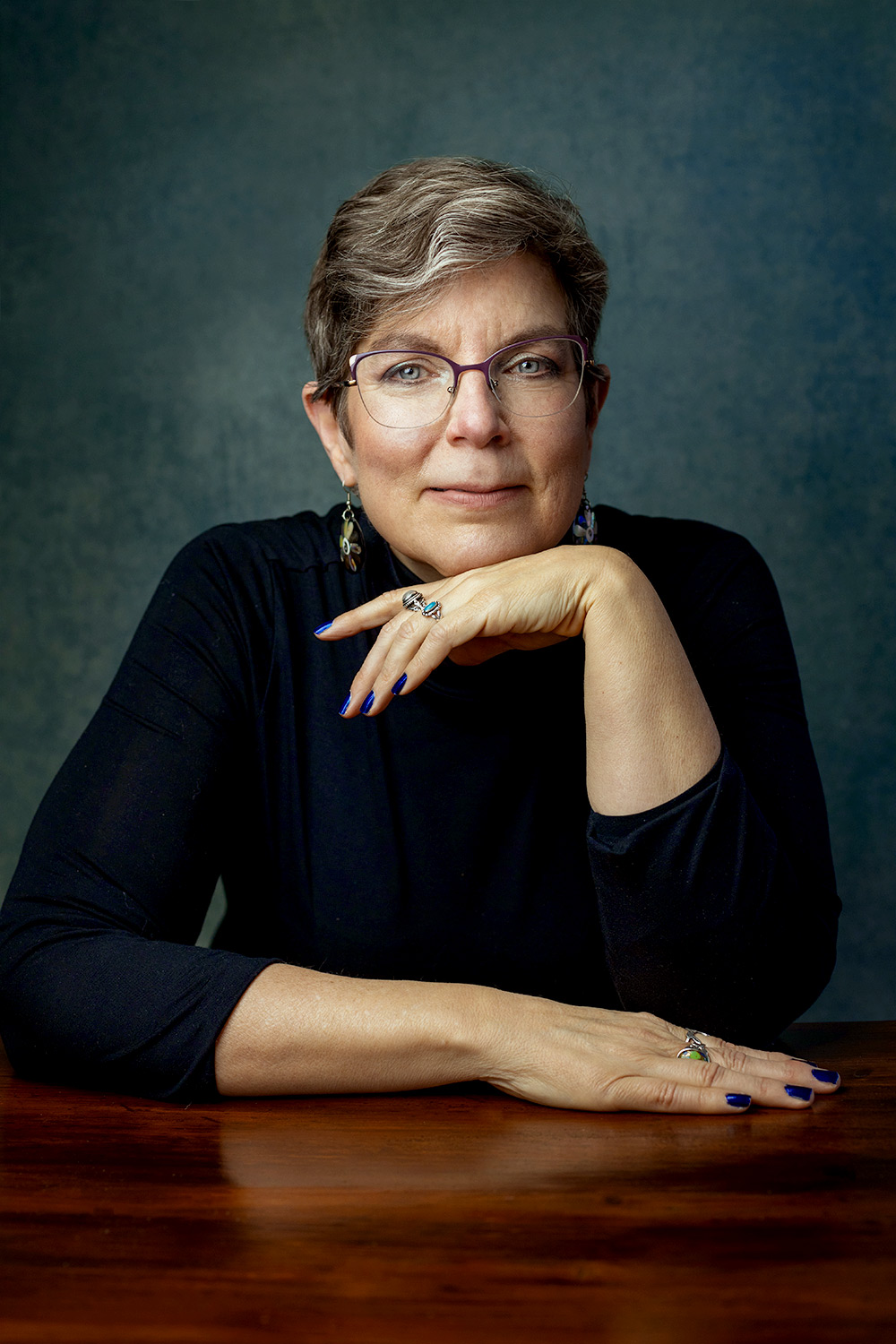
Boundaries Coach
Barb Nangle is a boundaries coach, speaker, author and podcast host. She specializes in helping women build internal safety so their boundaries actually hold.
At 52, Barb Nangle’s life transformed through 12-step recovery, after decades of therapy merely skimmed the surface. Addressing codependence unlocked healing from intergenerational trauma, childhood wounds, and compulsive overeating. Learning to build healthy boundaries revolutionized her relationships, impacting her professional life at Yale. Formerly masking her struggles with substance use and overeating, she shed over 100 pounds and confronted her deep-seated negativity and fear. Driven by a desire for growth and social justice, Barb now empowers professional women to break patterns of self-neglect. Through boundary coaching, speaking, and her podcast, "Fragmented to Whole," she guides women to build internal safety, reclaim their power and say no to what no longer serves them, fostering a world where inner change drives societal impact. Barb’s podcast is ranked among the top 1% of podcasts worldwide by Listen Notes.