
Are You Really Addicted To Sugar (EP 110)
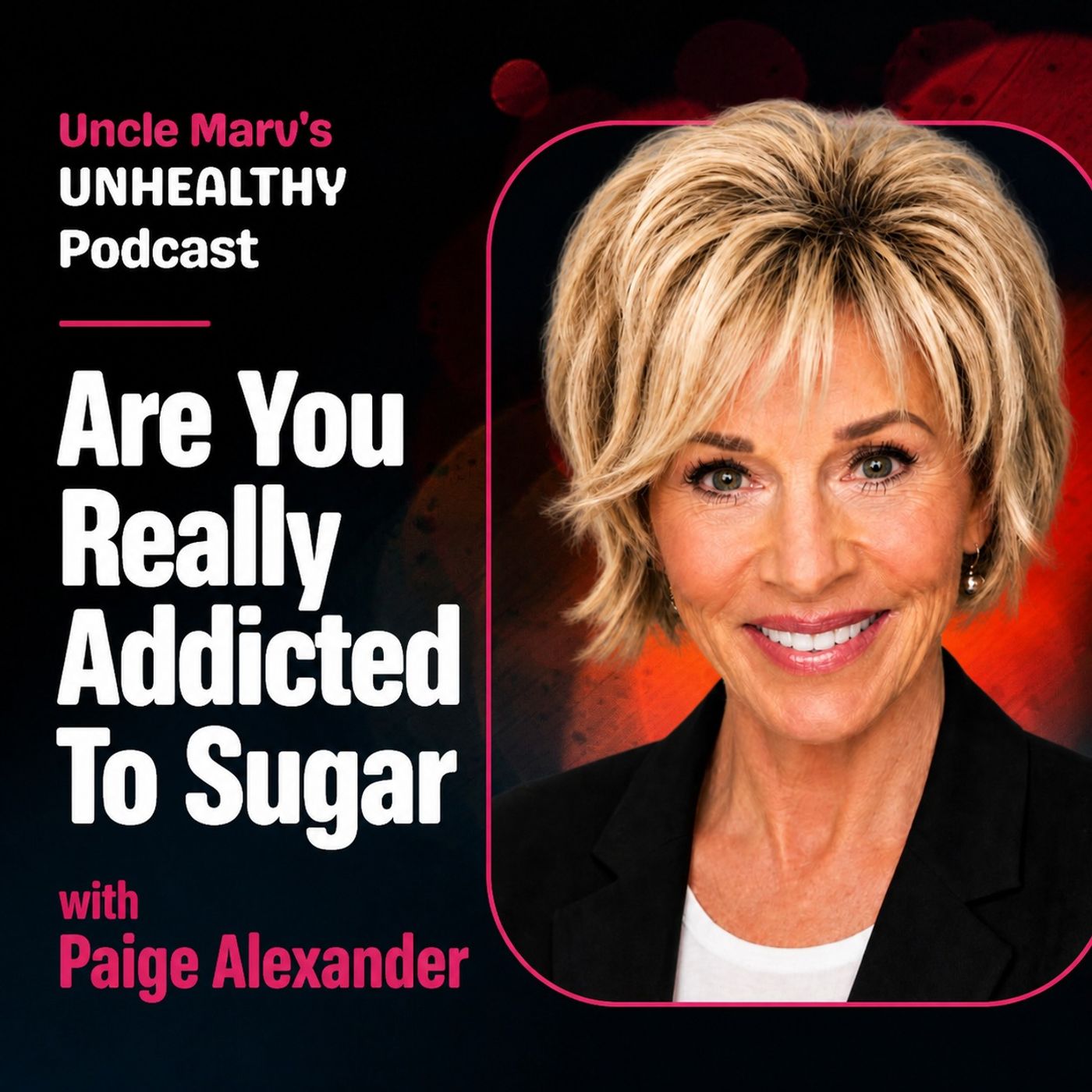
Sugar isn’t just a “bad habit” for some folks; it hijacks the brain like any other addiction, and Paige Alexander breaks down what that actually looks and feels like so we can finally stop calling it a willpower problem.


Most of us joke about having a sweet tooth, but Paige Alexander has lived through the darker side of sugar, where “just one cookie” turns into a full-on binge you hide from everyone. She walks me through her journey from living on a dessert diet and out-exercising the calories to hitting that point in midlife where the weight crept up, the binges got worse, and the old tricks stopped working. Hearing the word “addiction” for the first time wasn’t shameful for her; it was a massive relief, because it finally explained why her brain would push her toward sugar even when her body was begging her to stop.
Paige also shares the science in plain language: how cravings pull blood flow away from your frontal lobe, shut off your brakes, and light up the addiction centers in your brain so hard that digging a donut out of the trash can feel like a genuine emergency. She talks about secret wedding-cake runs, progressive cravings that demand more and more for less and less payoff, and how food addiction is actually one of the hardest addictions to treat because you still have to eat and the triggers are everywhere. Out of that mess, she built Real Food Recovery, a community built around real food, sleep, movement, and some kind of higher power, where people get compassion, structure, and a soft place to land while they learn to live without sugar running the show.
=== Chapters
- 00:31 Sugar Addiction Revealed
- 04:28 The Science of Cravings
- 08:39 Building a Recovery Community
- 14:48 Holistic Healing Approach
- 20:33 Aging, Weight, and Change
- 22:14 From Nursing to Recovery
- 25:04 Signs of Food Addiction
- 30:48 Addiction Recognition Debate
=== Guest: Paige Alexander, Real Food Recovery
- Website: https://realfoodrecovery.com
- Instagram: https://www.instagram.com/realfoodrecovery4u/
- LinkedIn: https://www.linkedin.com/in/paige-alexander-0656632a8/
=== Resources / Companies / Books / Podcasts
- Real Food Recovery Podcast: https://www.realfoodrecovery4u.com/podcast
- Real Food Recovery: If Food isn't the Answer, What's the Question: https://amzn.to/4uXJi5X
=== MUSIC LICENSE CERTIFICATE: Envato Elements Item
- Item Title: Healthy Eating
- Item URL: https://elements.envato.com/healthy-eating-VNN4M4P
- Author Username: CrazyTunes
- Licensee: Marvin Bee
- Registered Project Name: Unhealthy Podcast
- License Date: January 3rd, 2026
- Item License Code: XPFS6HD54W
=== About the Unhealthy Podcast
Hosted by Marvin Bee (Uncle Marv), the Unhealthy Podcast dives into real conversations about health, wellness, and everyday habits that impact how we live, work, and age. From nutrition myths to stress management and tech-life balance, Uncle Marv brings humor, insight, and honesty to every episode.
- Visit our website: https://www.unhealthypodcast.com/
- Connect on Facebook: https://www.facebook.com/iamunclemarv
- Connect on LinkedIn: https://www.linkedin.com/in/marvinbee/
Follow and Subscribe: Stay updated with new episodes every week on Apple Podcasts, Spotify, YouTube, and more. Join the conversation about real-life health, fitness, and personal growth from the lens of an everyday guy striving to be healthier.
[0:15] Hello friends, Uncle Marv here with another episode of my unhealthy podcast, the show where we talk about health, fitness, and all the things that we do in our life that, I mean, they could either be healthy or unhealthy,
[0:29] but you know, they're going to be things like this. Have you ever found yourself sitting in the kitchen at 10 o'clock at night, staring at an empty package, wondering, how did I just eat all of that? Or let's say you're at work, sitting at your desk, living on coffee, snacks, and drive-thru, telling yourself you'll fix it on Monday. But you said that last week. So that might be a part of our conversation today. We're not talking about macros or the latest fad diet. We're talking about what's really going on in our brains, our nervous systems, and our lives.
[1:08] My guest, Paige Alexander, is a registered nurse and wellness coach who's been in that fight herself. She went from a full-on sugar addiction to co-founding Real Food Recovery, helping other people get off the ultra-processed roller coaster and build a sane, sustainable relationship with real food. Paige, welcome to the show. Howdy, howdy. You know my goal by the end of this is to change the name of your podcast to Uncle Marv's Healthy Podcast. Then nobody would ever, you know, pick it up and listen to it, You know, unhealthy kind of tricks them like, huh? But then you're right. They're like, oh, well, this isn't unhealthy at all.
[1:50] So, of course, you know, the fact that you describe yourself as somebody that's had a full-on sugar addiction. I think most of us can say we've had some sort of sugar addiction to some degree. People love our sweets. What makes your addiction so much different? Because it happened to me, Marv. It happened to me, and it's all about me. There we go. You want to hear my story? Would that be good? Yeah. You know, people talk about sugar addiction, and some people hate that word, sugar, or addiction.
[2:26] Yeah. Yeah, because they think there's shame associated with it. But I didn't do anything to cause this. So I don't have any problem saying that I have an addiction to sugar because my body responds in a very addictive manner. I think it's pretty clear that I have a sugar addiction. I don't have a food addiction because food would encompass all food. It's the sugar and the ultra-processed foods. I mean, Cheetos, they're hard to, you know, fire Cheetos are hard to set down when you take a few of those. But I think I have had a sugar addiction from my earliest memory because as a child, I knew I loved it. And I could live off, I called it the dessert diet only, until my mid to late 40s. And then my body shape started changing because I could always control my weight and my figure because I was an avid exerciser. Well, guess what? As you get older, you cannot out-exercise your calories anymore like you did when you're younger.
[3:27] So I had, yeah, all of a sudden I had a waist that I'm like, what, why are my pants so tight in my waist? The things start shifting around. So I started a food blog, Food Fitness by Paige, thinking I'll just go with these plant-based sweeteners and I'll just start, I'll switch my sugar to the plant-based sweetener and make chocolate cake and frosting and things like that. Hang on. I'm going to stop you right there and ask, why did you decide that as your first step?
[3:58] Because I'm a freak about calories. I had been on every diet known to, you can't name a diet I hadn't tried. And at that time in my thinking, I'm like, well, it's just about reducing the calories, right? And if I could stop binging, having these major sugar bins once or twice a month, then I'd be super skinny again, right? That's all I cared about. I really didn't care about my health. I'm being honest. I just cared about my figure. I got you there. But I mean, did you decide that it was a sugar thing? I mean, what made you say it was sugar?
[4:29] I love that question because it wasn't until a decade later that I finally heard the word addiction.
[4:37] I didn't have the verbiage for it then. I didn't understand that the blood flow would leave my frontal lobe and swish around to the back of my head and start, saturating my center brain where all the addiction centers were. But in the frontal lobe, that's your breaking system, your long-term consequences, your irrational thought. And once a strong craving comes, it literally floods, goes away from that frontal lobe and floods the center brain where all those addictive centers are held. And you've got dopamine saying, I don't care what you do, but it's an emergency. And if you have to eat that donut out of the trash, then you have to do it. And if you're not going to do it, then I'm going to drop your dopamine so low that you will be dying to get out of that pain and agony so it will push you, to get the donut out of the trash. So it wasn't until I heard, actually heard the word addiction that I was flooded with relief because now I had verbiage for it. I never had verbiage for it before. I just thought I was weak or a pig. And I didn't have any willpower. And I didn't hear any of my girlfriends talking about these major sugar binges. I mean, I would eat all the sugar I could get my hands on until I was too sick to continue on. Or it was all gone. And I'm no quitter. So most of the times I was able to finish anything.
[6:05] My stomach wanted to stop. But my brain kept sending the message, get more, get more, get more, get more. Are you, does that ring any bells to you? Or are you like, I don't know what you're talking about, lady. Have you ever experienced anything like that? I don't think I've experienced anything to that degree to where, listen, there was never a temptation to eat a donut out of the trash. I will say that. But i do i do have things where there are habits which part of the reason i started the show is to break some of these unhealthy habits where every night i did have to eat something before going to bed you, know whether i had a big meal earlier that day or not and i do understand those things and yeah i mean i didn't call that an addiction but i guess it could be, well so there's a scale and you might just rank.
[7:03] A different kind of scale. You may rank very low. On an addictive scale. I ranked very high that. So some people talk about moderation. Well, I'm just going to have one piece of cake and I'm just going to do it once a week or one cookie after dinner. There's no one anything in my life when it came. I can't moderate the immoderatable. For me, sugar is immoderatable. So I have to just be abstinent from that. Even with the plant-based sweeteners that I was, I have 2,000 recipes on my blog of every dessert known to man made with plant-based sweeteners, which helped, but it still kept those sugar cravings alive because the brain was still looking for the calories that didn't come. So it would niggle in your brain to ask for more.
[7:58] So that didn't solve my problem. Are we talking stevia and others like that? Yeah, stevia, monk fruit. monk fruit was really my choice of sweeteners. I really liked the monk fruit the best. I found it to be the best. And some people have to do good, better, best. Some people can't abstain. Some people, that amount of restriction actually leads them to binges. So we work with all the full spectrum of people and we have to just meet you where you are and work with what we've got. And then how can we edit and make small improvements to reach your goals?
[8:35] Right. So you just made a comment there that I want to go ahead and clarify for people. Real Food Recovery is your website. And this is actually a community where you put this together to support people that are ready to fight this addiction and help themselves. So I want to make sure I get that out there for people. You also do a podcast. Yeah. Real Food Recovery Podcast, and they can be found on your major pod catchers. And so I wanted to get that out there. Now, I want to go back and ask a couple of, starter clarifying questions. Can I say something about the community first? You said we have a community. Do you know why that a community is necessary when people are trying to recover from addiction?
[9:24] Specifically that? No. So connection is the opposite of addiction, and you need to be in a place, well, first of all, you would have done it on your own if you could, but you haven't by now, and so you can't. It's very difficult to recover from an addiction. Solo. You really need support, a tremendous amount of support. You need people who have walked that path, who's been successful to help guide you through. And it's very helpful to be in a community of people who understand you. And it's a soft place to fall. It's very filled with compassion. And also you get bright ideas that maybe you hadn't thought of, but being in a community is extraordinarily helpful, not only just with getting out of the addiction, but just feeling loved and held up and supported in a way that you know other people understand you. So, okay, so we're going to go another way. Okay.
[10:24] Let me ask, when you came up or across the word addiction, did you, in the beginning, think of it in the same manner as alcohol addiction or drug addiction.
[10:39] I will tell you that I just raised my hands and said, hallelujah, now I finally understand what's happening in my brain. There's nothing wrong with me. I'm not broken. I'm responding to sugar exactly as my body was designed. So I never felt any shame, if that's your question. I never felt any shame. No, I didn't think of it in terms of shame. I was thinking of it in terms of when you titled the program Real Food Recovery. Okay. That's along the same lines as you go to a recovery center to take your addiction. And guess what? I had a very close family member who had to go to a rehab facility for a substance abuse. And we had conversations after they were out of that facility. And I told them what we do. And we just talked about how the brain works, the blood flow, impulse control. And they said, yeah, that's crazy. That's really all the stuff that we talked about in there as well. So the brain doesn't care what the addiction is, whether it's shopping, porn, drugs, alcohol.
[11:54] Its food is dopamine. So it doesn't matter to them. As long as it gets its dopamine that's brain food for them so it functions in the same way it just wants to get the quickest hit the highest hit available and it really doesn't care what you use, to get it maybe that didn't answer your question but an addiction is an addiction and really it's pretty much treated the same way in fact food is the hardest one because you have to keep eating to live. And it's in your face everywhere you go. And it's legal. Well yeah i mean and your body has to have it like you said it's yeah it's a problem it doesn't have to have you know those certain drugs or alcohol that sort of thing so, i started to ask that based on the fact of do you consider the community in the same manner as you would a recovery center where yeah people um you know come together in groups, tell stories help each other route, do you have.
[12:59] They're not called mentors. What are they called? So we have coaches and health coaches that are highly trained in this area. And we meet on Zoom six hours a week. And then one day a week, I'm on call just to take individual calls as necessary. So we meet on Zoom and whoever wants to come that day for that hour can. You can come early, leave late, whatever you need to do. And you can share when it's your turn or you can just listen. Whatever works for you. We're just glad you're there because even if you're just there listening, you're going to pick up some recovery messaging and that will help your resolve. It just is another drop of oil in your bucket for the day to strengthen you.
[13:45] So yes, we do it where if this was a Zoom room and I was the coach and you were my client, I would just say, you know, Marv, it's your turn. Tell me what's going on. How are things going? And other people would be listening. And then when I would go to the next person. So we just talk about psychology. A lot of it is science based. And let's say you had a sidestep the night before is what I call them. Let's talk about what happened. Let's talk about what today looks like. Let's talk about what we could do if that happened again. What would that look like? Do you have a plan? What was your day like during the day? A lot of discovery going on. So people can leave with a little bit more understanding of I'm not just this weak loser, there's a reason that that happened to me. Maybe it was poor planning. Maybe you didn't eat dinner in time. Maybe you let yourself get too hungry. Maybe you had a fight with your spouse. Maybe you had a bad day at work. And then we talk about solution-oriented options moving forward for the next time you're in that position.
[14:49] So how did real food recovery start? So I was in, once I discovered that food addiction and sugar addiction were a real thing and it wasn't just me and my lack of willpower, I joined a group and I saw that they had it almost right, but they weren't a holistic approach. We have four main branches. So the cornerstones of our program are single ingredient food. I don't care if you're vegan or carnivore, just single ingredient, non-processed food. Sleep, making sure you're getting your sleep at night. Movement, some type of movement in your body and some type of spirituality. We don't tell people to go to church. It's just having some type of higher power that when life kicks you in the teeth, and it will, you have a source to turn to versus substance. So they lacked that. They just focused on the food. And I'm like, that's not right because we're whole beings. We need to focus on the entire being. And then we do have another dozen branches of like stress management, service to others, education, purpose, talents, things like that to support our recovery too.
[16:09] So I noticed that they were missing that and I started out as actually just with the podcast, and then it went so well that it naturally morphed into this community that's been very successful because we do take a holistic approach you've got to look at the whole picture you can't just look at, what are you eating you've got to talk about everything okay.
[16:35] So I want to hear a little bit about the process of how you got there, because obviously this wasn't something that you battled with your whole life because the first 40 years you said is, you know, as long as you look good, you had no problem, right? Well, I did battle. I was battling it.
[16:53] I just was keeping my weight under control. So it was hidden. Okay, but you said you exercise a lot. Were you an athlete? Were you a two-year? Well, thank you for asking that question. That makes it like it was a possibility that I was an athlete. I was very athletic and I was very active. So, you know, doing half marathons, I'm not fast. Okay, but that's athletic. Yeah, I'm very, very active. I was very active and on the go all the time. Had a house full of kids and just busy lives. And, yeah, just very active. So I could out-exercise my calories up until I couldn't when perimenopause started happening and my body started changing and things just weren't the same as they used to be. But I battled the sugar addiction my entire life. I just, from the outside, it looked like I had things under control. But I knew those binges weren't normal and they also happen in isolation. So that's not normal either. I would want to hide when we'd go to a wedding. How can I sneak up and get that fourth piece of wedding cake and please give me the corner piece with the most frosting? And I'll worry about this on Monday. Right.
[18:13] So I'm going to try to ask this in the best way possible because you don't look like somebody who struggled. You don't look like you ever went through an overweight phase. So how bad was it that you were worried? I mean, because part of me is, is I've talked to some people where, you know, they overcompensate to the point where if they gain just a couple of pounds that's an issue for them and, they don't look in fact you know if they would mix in a steak and put on a few more pounds it would actually look better so I m trying to just gauge you know because looking at you i don't see that people look at me and they can tell you know, i I ve got a I ve got a I ve got a dad belly, even though I'm not a dad at the, you know, although I don't drink. So that doesn't seem fair, does it?
[19:12] So I'm trying to remember what, what, what exactly is your question that I didn't. Like, where was your comfort level that you were, you were worried about, you know, your weight and how you looked and stuff because you don't look like you had to. Yeah. So I could see that I was gaining, gaining, gaining, and things were going in a direction that I could not, get under control, which is what pushed me into the plant-based sweeteners, thinking that if I could just control my sugar consumption, and certainly I could just have one piece of dessert at a time, and that wouldn't, make me have the entire pan, but I could see things were spinning out of control, and I was starting to lose this battle, and I was gaining weight. I was probably 25 pounds heavier than I am now.
[20:04] I got you okay I m sorry i just i just had to ask because i wanted to get a thank you that's actually a compliment so thank you very much I m glad that i don't look like that anymore yeah and I m trying to get a gauge of the time frame because you said that you know you felt like you started losing in the in your 40s, so i wanted to get an idea from the time you know went to the first group that didn't work, to when you started real food recovery and how did we get Okay.
[20:33] Okay. So I'll say this. During that decade of my mid-late 40s to mid-late 50s, I had probably put on 20 pounds during that time. And then I found that recovery group and very slowly. So this is not a weight loss group.
[20:51] And people come to us sometimes thinking they're here to lose, which most people are, honestly. And I don't blame any girl out there that that's a goal. I get it. We all want to look our best and present ourselves in the best way possible. So once I had maybe started losing a little bit of that before the recovery group, but then it just slowly inched off a little bit, at a time over the next five years or so. Because it was probably about five years ago that I went to that first recovery group. And I'm older. I'm 62, almost 63. So it comes off a whole lot slower than it used to. And I also can't exercise at the level I did in 30s, 40s, even some of my 50s, because now you're much more susceptible to injury as we age. I just can't push myself like I did. I have to be a little more careful. And if I do have an injury, it takes a lot longer for me to heal from that. So I have to be really careful with what I do. Yeah, I'm there. I'm there with you. Yeah, no more running. I can't run anymore. So for 30 years, I ran. And so that changed. Yeah. That was a big change. Okay. So...
[22:14] Trying to figure out how to do this and give ourselves enough time would you be willing to do a second show with me because i know we're not sure do that sure okay, so let me ask this i read in your history that you're you know were the registered nurse.
[22:32] Was that something that you had done for a while did you start out doing it or did you become registered nurse later in life? So I graduate just out of college. I got my nursing degree and I did that for about 10 years. But during that time, my first husband and I had had started a wholesale balloon, distribution company that ended up being very successful. And so I only worked at the hospital and MICU for like once a week for about 10 years. And then after that, I just quit because my other job kept me so busy. But as time went on, I always missed the health and wellness aspect. That was my real passion. It's just financially, this other venture was much more successful than nursing at the time. And I sold my business about a decade ago. And so I got back more into the health and wellness industry. I also became a nationally certified massage therapist. So I have a little practice in my home that I do that along with a health and wellness recovery side and, do the food blog and things like that, the things I'm more passionate about. Okay. Because I wanted to ask the connection there and you did state that. So when you got back into this and you started doing the real food recovery.
[23:56] Because you were talking some big words at the beginning there dopamine and hippocampus.
[24:02] Probably said that wrong, all that stuff. So did you, did you do any studies for that? Or is that something you just started? Yeah. Yeah. That, so there was some, I became certified in that first addiction group that I was in. I had to take some certifications there. And then after that, it's such a passion that I'm like this sponge, just trying to learn more and more and more, listening to podcasts, reading books, and just lived experience as well as just obtaining as much information as I can along the way. And I think I got it now combined with my nursing background. It helps to have a strong anatomy and physiology background going into it. So the language is familiar. Okay.
[24:57] It's a dopamine-driven disease. It's a brain disease. It's a dopamine seeker. Yeah.
[25:05] So for somebody listening who is probably thinking, you know, I might have a problem, but I'm not sure, what are some red flags? Yeah, that's a great question. One of the biggest things that I think, and this may be even the only thing you need to answer is, do you have trouble stopping once you start? See, you already mentioned I can have a cookie or a treat or whatever after dinner and that doesn't seem to be a problem for you. I could never do that. I could never, ever have one cookie ever in my life if I had one cookie. So that's a big red flag, especially because if you're wanting to stop and you can't.
[25:49] Okay, but actually go ahead and finish the other flag. Well, there's other things like, for instance, getting the donut out of the trash. That's not something that a normal person in the right mind would do. That you would get something despite consequences. You might be late to work because you have to stop at Starbucks and get your favorite XYZ because I just absolutely cannot function unless I have that. So and the other thing is this is progressive like any other addiction. This is progressive. And so if I use the term, your reward pathways are down regulated, it just means you need more and more to get the same high. You're never going to get that same high as that initial high. But as time goes on, you're going to need more and more of it. So that's another big sign that things are progressing for you. Things were progressing for me, too.
[26:49] So, do we categorize the same thing when it comes to, yeah, I have that coffee every morning. I can't function without my coffee. Don't talk to me until I've had my two cups. Is that a similar thing? If people are in the middle of like a craving cycle or a binge where, do you have cravings at all? If I talk about cravings, are you familiar with that? Do you experience that? So I don't know if I would call them cravings. It's one of those things where.
[27:27] I do get into habits, but they're not craving habits. I do drink coffee every morning, but if I get up and get busy doing stuff, it's not like my body's freaking out because I don't have my coffee. So it's nothing along those lines. I don't have it. Go ahead. You know what would help? If you were a girl. Stop. You would understand what I'm talking about when it comes to sugar. Sugar is more of a girl disease. Alcohol is more of a man disease. Science will tell us that. But cravings, you feel like that's literally all you can think about. I make a joke that until once I got off sugar, I could read big girl books. But because whenever you're so mired in addiction, it controls your entire life because your addiction is always negotiating your life. If it's always working the room, it wants to make sure that it's fed, satisfied, that you have access to what you need.
[28:33] Those videotapes are always playing in the back of your brain, making sure that it is taken care of first. Above everything else, your addiction wants to be satisfied because your brain wants to be comfortable. And if it's you know you're not getting your fix you're jonesing that's all I can think about is how can I get my next fix it's very distractive it distracting it takes up a lot of space in the brain, and so here's the big problem are you ready everybody lean in for the people in the back I want you to listen up close.
[29:10] When you are mired in addiction, you don't have access to your true authentic self because you can't think of anything else but satisfying the addiction. Think about if you lifted that burden off your shoulders, you would have more brain space. You would have more time in your day. You could think about other things. I could have never written a book if I was deep in my addiction. I could have never done that because I couldn't concentrate that deeply on something else. I need to make sure number one was making sure that if I if a craving came up that I would have access to whatever I needed, to get to what satisfied the it's very painful to have a craving I mean it's excruciatingly painful, and it feels like an emergency it feels like you're going to die if you don't get what you need and it's also very painful to be in the middle of a binge because you feel like you're in this free fall. It's a total free fall. You don't know when it's going to stop.
[30:11] You don't know how many calories you're going to consume. You don't know what it's going to take to compensate for what you're just doing. You don't know how sick you're going to get. You don't know how you're going to hide it from others. You may have something that you need to get up and be in tip-top shape the next morning for, but you've had this major binge and you're sick in the bathroom. I mean, it's horrific. And people feel hopeless because they don't know how to get out of it. That's why I love the word addiction, because it labels what's going on, and it gives people direction as far as what to do. If you just think you're a weak, will-powered person, what do you do about that?
[30:49] Well, so I was going to ask you the question about, you know, how people look at this and they don't see food addiction in the same category as drug or alcohol because they think of it as just, you know, something that's a willpower problem. Like you mentioned, a character flaw. We are trying to get it into the DSM-5. Okay. There is a lot of activity working on getting it in there as a recognized disease. All right. Well, here's what I want to do. I want to go ahead and take a break here and give people a chance to kind of absorb what we just went through here. You had a nice little diatribe that I want to dig deeper into, but I don't want to start it now. So, folks, we are going to come back and we are going to get into what to do, about this addiction, how to deal with it. We'll talk more about the Real Food Recovery Program. We'll talk about this book that you wrote. Yeah, that'd be great. So, folks, Paige Alexander, Real Food Recovery. And I'll have links in the show notes to her website and stuff. But be sure to stick around and come back for part two. Part two will be even juicier. Well, more juicier than you saying I could be a girl.
[32:13] We can't all have what we want, but I'm just saying, you would understand my language more if you were a girl. Okay. All right. Thank you for hanging on with me. Come back for point two, folks. We're just getting started here, so maybe this is the episode for you to take that one step, make one better choice, reach out for one bit of support. So join us for part two here real soon. And until then, live healthy and be happy.
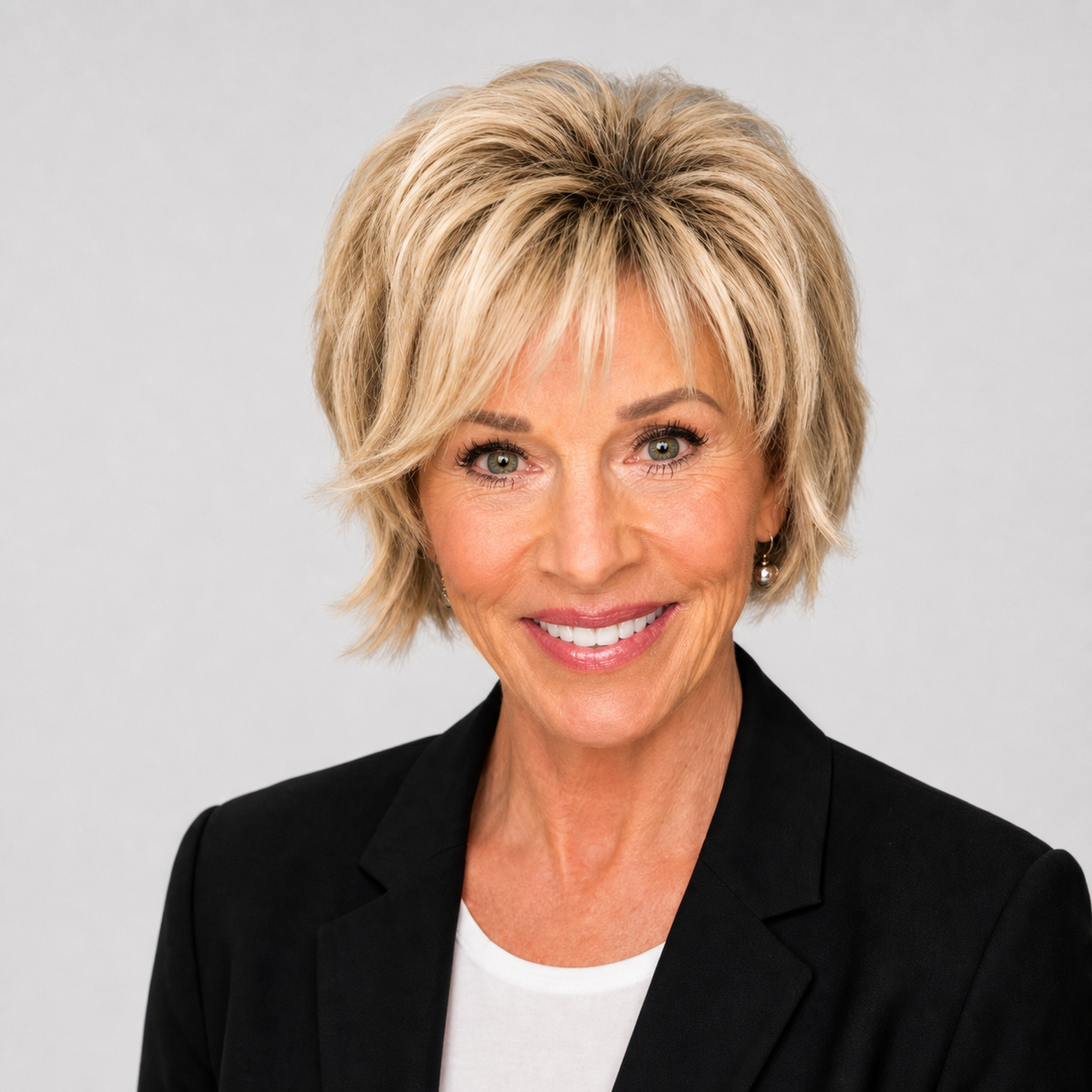
Paige Alexander holds a Bachelor's degree in the Science of Nursing from Wichita State University, as well as a Wellness, Grief and Trauma Informed Coaching certification to complement her degree. She is the host of the Real Food Recovery Podcast and leads the Real Food Recovery online food addiction recovery community. The book, Real Food Recovery: If Food Isn’t the Answer, What’s the Question? is a number one best seller on Amazon, and the website is realfoodrecovery4u.com. Her passion for cooking led to her creating a food blog, Food Fitness by Paige and is a regular guest on ABC's KAKE TV. Find her on all her social media sites under Real Food Recovery and Food Fitness by Paige. When not creating new recipes in her kitchen you will find her climbing mountains as her favorite pastime or playing with her grandchildren!


