Sleep Apnea Warning Signs (EP 98)
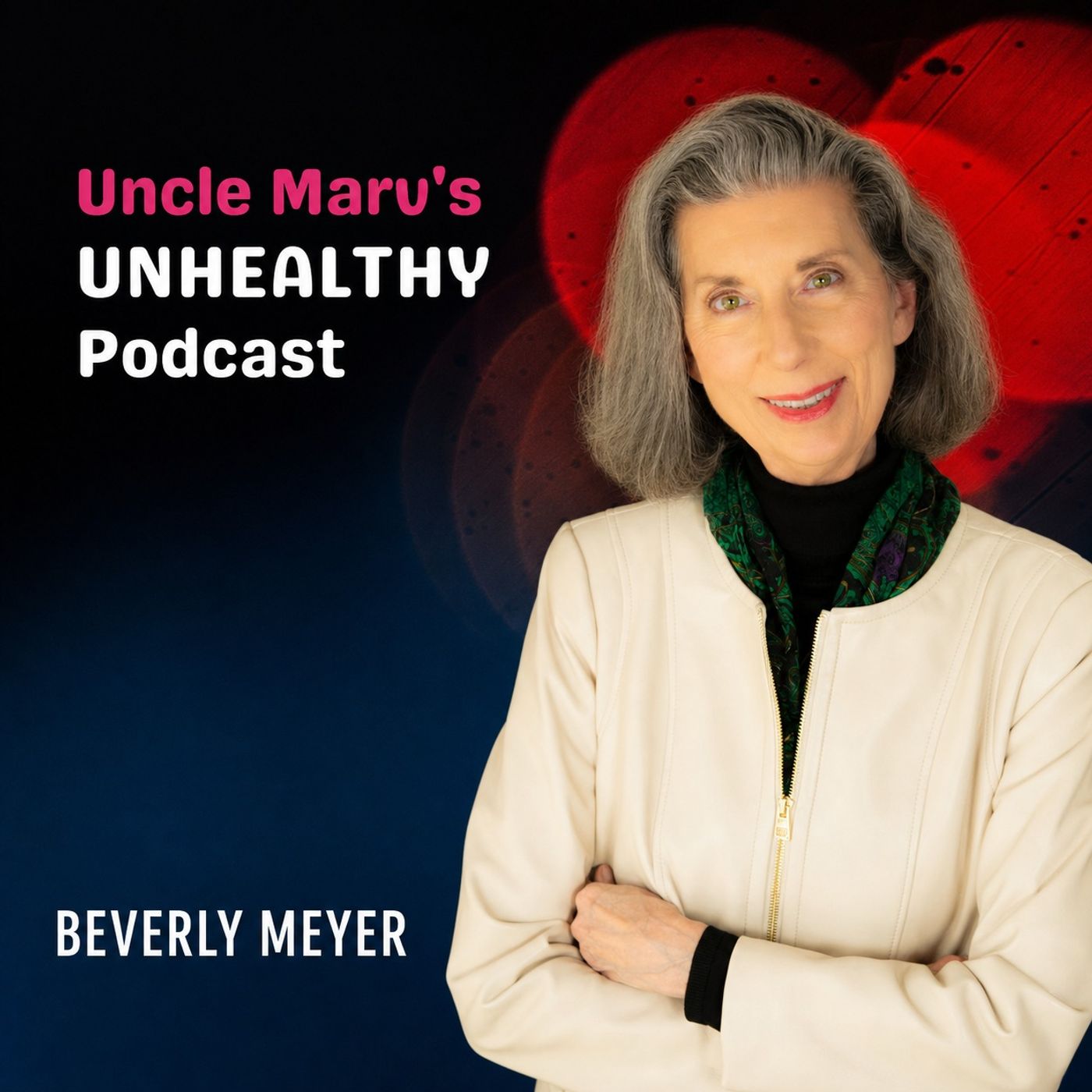
You're probably stopping breathing 50 times a night and have no idea. Beverly Meyer, a clinical nutritionist who's been fixing broken bodies since the '70s, told me sleep apnea is the number one undiagnosed disorder in America—and I'm pretty sure I have it. We talked about the symptoms everyone ignores, the at-home tests that actually work, and why those terrifying CPAP masks aren't so scary anymore.

 Apple Podcasts
 Spotify
 Pandora
 PocketCasts
 RSS Feed
 Overcast
 Amazon Music
 YouTube
 Beverly Meyer is not your typical nutritionist. She's a certified clinical nutritionist and functional health practitioner who's been in the health game since the 1970s. Her whole approach is built around getting to root causes instead of slapping a Band-Aid on symptoms, and she's been preaching blackout bedrooms and mouth taping for 20+ years before it was trendy.
We started with sleep apnea because Beverly has it herself, and she's become somewhat of an expert on living with it. The stats are wild: sleep apnea is the number one undiagnosed medical disorder in the United States. One in five adults have it and don't know it. The scary part? You can be a thin, non-snoring person like Beverly and still stop breathing 50 to 100 times a night. Your blood oxygen levels can drop into the 70s, which is absolutely not okay.
Chapters
- 00:32 Introduction to Unhealthy Habits
- 01:38 The Role of a Clinical Nutritionist
- 09:01 Importance of Sleep
- 13:23 Understanding Sleep Apnea
- 20:22 Symptoms of Sleep Apnea
- 24:42 Diagnosing Sleep Apnea
- 28:41 Types of Sleep Apnea
- 32:11 Home Testing for Sleep Apnea
- 38:48 Treatment Options for Sleep Apnea
- 47:54 Conclusion and Future Topics
GUEST: Beverly Meyer, On Diet and Health / Primal Diet Modern Health Podcast
- Website: https://www.ondietandhealth.com
- LinkedIn: https://www.linkedin.com/in/beverly-meyer
- Primal Diet Modern Health Podcast: https://podcasts.apple.com/us/podcast/primal-diet-modern-health/id577470427
COMPANIES / VENDORS / PRODUCTS MENTIONED
- Somnifix (Mouth Tape): https://somnifix.com
- SleepHQ (CPAP Data Forum & Community): https://sleephq.com
- CPAP Equipment Retailer: https://www.cpap.com
- OSCAR (CPAP Analysis Software): https://www.sleepfiles.com/OSCAR/
- Bleep Eclipse (Magnetic CPAP Mask): https://bleepsleep.com/pages/eclipse
- ResMed AirSense 10 (CPAP Machine): https://www.resmed.com/en-us/products/cpap/machines/airsense-10/
- HIRO / Z Machine / Z Synergy (Home Sleep Test Machine): https://www.generalsleep.com/zmachine-synergy.html
- Breathe Right Nasal Strips: https://www.breatheright.com
- Oura Ring (Smart Ring): https://ouraring.com
- ** Buy on Amazon: https://amzn.to/48HBlJO
- Fitbit (Sleep & Fitness Tracking Wearables): https://store.google.com/category/watches_trackers
- ** Buy on Amazon: https://amzn.to/4n8yJdP
- RingConn (Smart Ring): https://ringconn.com
- ** Buy on Amazon: https://amzn.to/4wunyAL
=== MUSIC LICENSE CERTIFICATE: Envato Elements Item
- Item Title: Healthy Eating
- Item URL: https://elements.envato.com/healthy-eating-VNN4M4P
- Author Username: CrazyTunes
- Licensee: Marvin Bee
- Registered Project Name: Unhealthy Podcast
- License Date: January 3rd, 2026
- Item License Code: XPFS6HD54W
=== About the Unhealthy Podcast
Hosted by Marvin Bee (Uncle Marv), the Unhealthy Podcast dives into real conversations about health, wellness, and everyday habits that impact how we live, work, and age. From nutrition myths to stress management and tech-life balance, Uncle Marv brings humor, insight, and honesty to every episode.
- Visit our website: https://www.unhealthypodcast.com/
- Connect on Facebook: https://www.facebook.com/iamunclemarv
- Connect on LinkedIn: https://www.linkedin.com/in/marvinbee/
Follow and Subscribe: Stay updated with new episodes every week on Apple Podcasts, Spotify, YouTube, and more. Join the conversation about real-life health, fitness, and personal growth from the lens of an everyday guy striving to be healthier.
[0:20] Hello, friends, and welcome back to my Unhealthy Podcast, where we talk about
[0:26] all the things we actually do and what they might be doing back to us. So this is a show where bad habits, sketchy routines, and guilty pleasures get a little daylight, not to judge them, but to understand them and maybe fix or upgrade them. Today, we are joined by Beverly Meyer. She is a certified clinical nutritionist and functional health practitioner who's been helping clients improve their health. She runs On Diet and Health, where she combines labs, diet, hormones, and real-life history to find out root causes instead of just treating systems, symptoms.
[1:13] Beverly also hosts the award-winning Primal Diet Modern Health podcast. So Beverly, sounds like we're going to have a lot to talk about. Welcome to the show. Yes, I always have a lot to talk about. Thank you for having me. Well, thanks for joining us. And I'm going to go ahead and start out by saying I think I'm fascinated by a couple of topics. I know that you could talk about a bunch of stuff.
[1:39] But, uh, I want to stop. I want to start on this sleep apnea thing. I just want to get you ready for it. Uh, but before then let's talk about, uh, the fact of being a certified clinical nutritionist and functional health practitioner. I don't think I've heard both of those in the same phrase before.
[1:59] Well, okay. So a clinical nutritionist is not a dietician or a nutritionist. We are clinical nutritionists. So our training is much more labs and hormones and how the hypothalamus communicates with the nervous system and what the neurotransmitter GABA does. And so we're much more like naturopaths. We just haven't gone to naturopathic college.
[2:32] And in my own focus, my podcast motto is food first. So I do have a strong emphasis on urging clients and readers and listeners that supplements and biohacking is not going to get you where you need to go. You've got to get your overall sleep and food and lifestyle and chemistry under control If you want to make changes, you're not going to do it with a handful of pills We've got to start with the big chemistry Food, sleep, lifestyle And how you think If you're always twisting yourself up in catastrophes and, oh gosh, oh gosh, oh gosh, and what that does to your body is very bad. It's very bad.
[3:32] Now, I understand a lot of what you said. We hear all the time. We hear that pills aren't the fix, that if we can just get a healthy diet, that'll satisfy almost all of what we need. Not everything. If you've got deficiencies and stuff, yes, you can supplement where those deficiencies are, But tell me how, you know, what your clinical stuff does, because you're not the one that's going to tell us to, you know. Eat more broccoli or anything like that right well okay so my goal with people yes i have an online store people can buy professional supplements and do their own thing but if they're if they're working with me I’m i try to be clear with people is look I’m not here to pimp pills. I'm here to help you change your chemistry so that your body can take better care of you. You take better care of it, it takes better care of you. So indeed, I am very focused on food when I first start working with somebody.
[4:43] But then again, the purpose of that is how are you eating? How are you sleeping? What is your lifestyle like? Because that's going to be the biggest piece in looking at your overall health. And it's the giant piece that nobody looks at. You know, they just put you on a pill or a prescription or something, but they haven't acknowledged that our chemistry is big. It's a lot bigger than a handful of supplements or, you know, some one sentence of, well, eat less meat or something, you know, it's like, no, that's not the answer. So it has to be a complete approach. And I try to term it in terms of, I know this sounds funny, but what species are you? Are you a cat? Are you a parrot? Are you a cricket?
[5:47] No, you're a human being. And, okay, how did the cat and the carrot and the cricket, what did they evolve to eat? Well, that's their diet. But you're the human being. What did you eat 100,000 years ago? And, okay, well, yeah, we're hunters and gatherers. We shouldn't be eating all these grain-based carbohydrates all day long. And that is by far the number one thing that's making us sick as a general population is that we're just totally addicted to carbohydrates that we never ate before. It's the wrong food. Right. Now your history kind of goes back to around the time where I think a lot of stuff started to change in the seventies and eighties when we started to, you know, I don't want to say synthesize food. That's not the right term, but all of the things that we look at now that we consider bad with processed foods and all of the additives and stuff. Um.
[7:03] It wasn't like that a hundred years ago right we were still eating whole foods we were for the most part cooking them right or oh had we already started on that path it the problem is not you're speaking about the agricultural revolution okay all right and that's when uh the big companies and the scientists said oh you know what we if we if we do all this to the plants with all this chemistry and later on the genetic remodeling and this and this and that. We'll be able to feed more people really cheap. But we were already in the bad place that had said, meat and fat are bad for you. And that ridiculous concept came out 50 years ago from basically one small flawed study and that set up the whole statin cholesterol mania drug thing that we're stuck in ever since. So people have been told, don't eat meat, don't eat fat. Oh, well, then the only thing left is, oh, carbohydrates. So let's eat a lot of bread and rice and beans and grains and legumes and smoothies and fruit juice. And I'm like, no, no, no, you're going the wrong direction.
[8:32] So I need people, my clients, I need them to understand when I say, what species are you and how can you eat? But in the way that your teeth and your enzymes and your stomach and your intestines, what are they expecting to have so that they know what to do with it? Okay.
[9:01] I want to talk a little bit about the second part that I think a lot of us miss. We always talk about diet and exercise, and then we have started to hear sleep. Come in a lot lately. It's probably been there for a long time, but for some reason, at least I'm hearing it more and more now where people are saying, sleep is paramount. Sleep is so important that you've got to guard it as a sacred part of life. Has this been something that has been newly revived or is it just that people are suddenly listening? Well i think it depends on the person i mean I’m in my 70s now but I’ve been on the health journey since the 1970s so you know I’m a I’m a requester and researcher and trying to get through my own physical or mental problems and you know i love to research and you know I’m a very scientific mind, but I mean I've been.
[10:15] Preaching you know blackout bedrooms for you know 20 years or more and blue light blocker glasses the real ones not the computer glasses but the real blue light blocker glasses at night and turning down the lights in your house and getting off the fluorescence and, you know so light is, and its effect on sleep have been hammered by those of us in the natural health community for decades. But I mean, I just saw something about this just this past week on, I read a lot of online newspapers like Washington Post or something, and they're like, hey, you know, it's really important that your bedroom is dark at night. I'm like, yes, we've been saying this forever but so it is still new and it's not new at all okay i think it might be that we're trying to shift back because how can you have a dark bedroom when the tv's on right um yes interesting enough now um.
[11:28] What was the turning point, you think, where, well, let me ask this, because I'm sitting here thinking, now that you say that, I'm trying to go back and look at my childhood and remember that we didn't have TVs in the room, we drew the curtains, when the lights went out, we didn't have all these electronics in the room that had the lights on and all of that stuff like that.
[11:51] Was that about the time, and I'm kind of going back again to the 70s, 80s, 90s, when we started bringing all of the stuff into the bedroom.
[12:00] Um, because I remember going to bed at a decent time back then and waking up refreshed and then not so much during college and working years and stuff. Was that about the time we started having trouble? Yeah, it's just, it's just life, Marv. It's just life. We've got all this electronic stuff now and, you know, Social media is so incredibly addictive. Television is so incredibly addictive. Light is addictive and activity. We're basically all in a constant state of anxiety, recognized or unrecognized, about the mortgage and the appointment and our pings and our apps and our traffic and our gas and the prices and the mortgage and the politics. And, you know, that's what's happened is that, you know, the better living with chemistry dumped us in a place where we're overloaded with chemicals and better living with computers and cell phones have taken us into a very bad place. And now we're all struggling trying to just simply be simple people that are happy and comfortable and not overstressed all the time.
[13:24] Yeah. I know when we talked before, we kind of talked about the fact that sleep apnea affects more people than we think it does. Yes. Statistics say one in five adults are undiagnosed sleep apnea. And I've read quite a few different studies on this. And one stat is that sleep apnea, which we'll define in a minute, remind me if I say that, but sleep apnea is the largest undiagnosed medical disorder in the United States. The largest? Largest. Number one undiagnosed medical disorder.
[14:15] So, yeah. And then others like, okay, one in five adults. Well, that's pretty major, you know. Okay, so let's talk about what defines that then, if we're saying that it's undiagnosed. Let's talk about, first of all, what is diagnosed sleep apnea? Yeah, okay. What sleep apnea means is that when you sleep, that we go into REM sleep, and we all know that your body, it's not paralysis. There's a term for it, but everything just stops when we're in REM sleep. We don't move. We don't talk. We don't kick our legs around. We're basically in REM sleep. You're very still, but okay. That that's not sleep apnea. But what happens is when we sleep and we're lying down, the airway gets closed off. And this little airway, I mean, this is all that, you know, between your nose and your lungs is just a little thin strip of territory. The size of your finger, the width of the finger. Yeah. I don't know the exact things, but I'm a thin person and I'm holding up a thin finger. So the airway is quite small.
[15:40] And so what happens is when we lie down or when we get older or when we get overweight or not when we get overweight, because I'm a skinny little thing, that the muscles and the tissue in the back of the throat kind of collapse in, they fold in, the back of the tongue kind of slips down, and it just shuts off the top of the airway, and there's no air. But the problem is, is that we, the sleeper, have absolutely no idea this is happening. None.
[16:22] We have no idea that we are not breathing for 10 to 60 seconds five to 100 times a night. Okay, this is serious. So you stop breathing for multiple, multiple long seconds, you know, 50 times in a night or whatever your range is. And every time that happens, your blood oxygen levels plummet. Okay? So it's not just that you're not getting air. It's that when you're not getting air, your blood oxygen levels are crashing. And if you've ever worn a pulse oximeter on your fingertip, you know that we, you know, it should be 95, 96, 97, 98. But when you get into sleep apnea Sometimes it can drop into the 70s And that is completely unacceptable So there's that But again, the sleeper does not know this is happening, Now, if you have a sleep partner Somebody in the room or the bed with you, They may hear you snoring or not or they may hear you cough or take a big inhale. That's a classic sign or not.
[17:50] So they may look over and like, honey, honey, are you alive? You're not breathing. Wake up, breathe. So a sleep partner is the first way that we can get diagnosed is they hear you, they see you, uh and like that but if you're in that room alone this is completely an invisible disorder so then ask me what this what the symptoms are well i was going to first ask the things that I’ve heard over the years heavy snoring and obesity are kind of the things that would dictate that, but I heard you say that you could be a non-snorer and still have sleep apnea. Yep. A skinny, non-snoring female like me, definitely diagnosed with sleep apnea in the correct test, which we'll talk about. But so what snoring...
[18:57] Is snoring it's different than sleep apnea okay but they're often associated but not always um i have been using sleep tape mouth tape um over my mouth for i don't know 20 years so i don't snore because my mouth is gently taped shut everybody should tape their mouth every night. If you're older than eight years old, you should be taping your mouth every night. That's all other story. And I have three articles and podcasts on that. So I don't snore, but, but that doesn't stop my airway from being closed off. Um, so, okay. So snoring can be a sign waking up, coughing or, or, or choking. You might notice that the main symptom is going to be the excessive daytime fatigue so we're all fatigued in the daytime unless we're shooting caffeine all day long um which of course i don't agree with but um in my case i developed, excessive daytime fatigue i mean to the point where I’m on the highway and I’m thinking you know I’m just going to pull over to the side of the highway and take a little nap.
[20:23] And that was like Okay This is not a good thing And One of the other classic signs Is headaches during the night, headaches first thing on arising And I had that in spades And that was my main symptom Was the headaches, But when We.
[20:46] When we visualize, think of a person who might be a person that might have sleep apnea. So if we paint that picture in our mind, what we see is an overweight, generally is an overweight male who snores and is probably white. And that's kind of how doctors are taught, that it's older, overweight, white males who snore. And okay sure they can have sleep apnea too but everybody else might have it as well okay so if that's the case so you've already indicated that you had these issues so, were you diagnosed with sleep apnea or did you have to find out yourself that you had it yes i had no clue whatsoever. I'd never studied sleep apnea. I knew nothing about it.
[21:45] But it was my drive to find out, wait, why do I have these headaches when I wake up at four or five or for sure when I get up at seven? What are these headaches all about? And then the new symptom, which was that overwhelming fatigue in the afternoon sometimes. And that was enough for me to realize, oh, I better do a sleep apnea test. And I told my doctor, I said, can I do a sleep apnea? I want to check my blood pressure and see if that's why I'm getting headaches. And I remember telling her, I know I don't have sleep apnea, but I'd like to see what my blood pressure is doing. And then to my surprise, I come back, there's mild, moderate, and severe, or none. And I came back with moderate sleep apnea and saw all my charts and graphs and my oxygen just crashing into the 70s. Like, oh my gosh. Now, were you getting the recommended number of hours sleep, seven to nine? So, okay, because my first thought is... Eight or nine hours. Right. And to me, I'm sleeping great. Well, I was going to say, because. I have no idea that basically, see, when you stop breathing, your body takes that as a pretty serious problem.
[23:10] And what it does is throws out hormones and cortisol and things to stimulate you to wake the heck up and breathe. But it doesn't wake you all the way up like, oh, did I put the dog out? No, they're micro arousals that we have no idea is happening. But that's what's happening all night long. Your brain is sending hormones to slap you in the face so that you tilt your head or whatever you need to do to take a breath. And then maybe 10 minutes later, it happens again. And then again. And then again. So you're not getting sleep.
[24:06] So i was just going to say that a lot of people that get tired during the day would just associate that with not getting enough sleep and my question was going to be for those people can they still have sleep apnea even if you're not okay because children can have sleep apnea i mean you know there's we all have different shapes of our faces different um Shapes of our mouth You know, we've got crowded teeth Or swollen tonsils Or.
[24:42] If there's Overweight area in the neck There's fat that's pressing in On the airway In my case, that was not my issue It's just that, One of the worst Things you can do Is tilt your chin Down while you're Sleeping Thanks. That will very much come automatically that your airway is going to get stressed. So if you're lying down and already gravity is kind of pulling stuff back and down, and as you get older, there's more stuff sliding and slipping, because we don't have as much good collagen. But if you're lying down and your head is back and then you tilt your chin down, Your airway is going to get compromised, So it's more than just learning how to wear a mask Which I'm going to show you some of the new types of masks Which are ridiculously easy It's just a whole new world.
[25:50] But also that you have to arrange your pillows Or a sleep collar or something A pillow, a cervical support pillow so that your head stays back, not with your chin down like you're piled up on pillows and you're looking at your belly button or something. You're going to shut your airway off. Right. Now, you just mentioned the pillow because I think we were...
[26:23] We were shown a lot of commercials a few years back, I haven't seen them lately, where they were pillows designed to stop snoring and fix sleep apnea. I haven't seen those lately. Are those not commercial grade? Do they have to be given through a doctor? How do those work? No, I mean, there's thousands of them online or hundreds. And yes, they do help. The only thing that's going to stop snoring, in my mind, is taping your mouth at night. And as I said, everybody should tape your mouth at night. Yeah, but people, that sounds a little freaky to some people. I know.
[27:04] It's very lightweight, gentle tape that you can lift up easily to say, honey, did you lock the door? And then 10 minutes later, oh, wait, I forgot to turn the light. I mean, it's not a big deal. okay besides you can it's special tape it's not like you're putting duct tape on your face right you know uh the brand I’ve used for 15 years is somni like insomnia somni fix f-i-x somni fix and they're like 10 imitators of that on amazon and i bought them all and thrown them all in the trash. If you're going to use a mouth tape, use Somnifix. And there are other types of tapes that work really well, but that's it. The sleep forums like SleepHQ, there's all kinds of discussions about tapes and pillows and masks and leaks. And there's so much support out there now. I mean, for me, I'm such a go-getter. I got that piece of paper from my doctor with my.
[28:14] The chart of all my breathing, breathing, breathing, breathing, breathing, oxygen, oxygen, inhale, exhale, inhale, exhale. We got this really groovy report. And, you know, summary, moderate sleep apnea. Well, the next day I'm out the door. I went to buy a CPAP and start trying masks to see which would fit me. And, you know, I didn't wait. I just jumped right into it. So, you know, that's my style.
[28:42] Okay. Before we get into treatments and other stuff, I want to go back and ask a question because I, in my research, did not realize there were multiple types of sleep apnea. The two that I know of are the OSA and OSA. C-S-A. O is obstructive. I forgot what the C is. Central. Central apnea. Central apnea is very rare. Well, it's very confusing. When you get your sleep report, your machine will download just amazing amounts of data. And then you plug it into, here's my favorite forum, so you can write this down. It's SleepHQ, like headquarters.
[29:34] Sleephq.com I’m not associated with them I’m just one of thousands of people on there but you can download the data from your machine your cpap machine every day every week whatever and a sleephq.com and you know boom it just shows you all of these incredible pieces of information and then you can ask for help you say hey i don't understand why am i showing CAs, why am I showing central apneas? Because that is a neurological disorder. And it means that your brain is not sending a signal to breathe. And it's a completely different story. And it's quite rare. But on SleepHQ, it divides into.
[30:26] Obstructive apneas, hypopnea, which means low breathing, RERAs, which is restricted, something airway, and CA. So one of my early posts on SleepHQ was, what is the central apnea? Do I need to see a neurologist? And everybody commented, No, no, no, no, no, no, don't even, it's not that. So, OSA is obstructive sleep apnea. That's the obstruction in your airway. Okay. And that's the one most people would have. Yes, and then there are degrees of it. One of those other things that I was mentioning, the hypopnea, means you're just not breathing enough to. Like your chest is not rising and falling and inhaling and exhaling correct amounts of air. And that shows up on your stats too. So it's not an obstruction. It's reduced breathing. And then, of course, that can have multiple things. Like you had eight beers before you went to bed.
[31:38] You have a large dog that sleeps on your chest. You know there's all kinds of reasons why you know you're in a weird position your chin is all tucked up but so there are many things that just cause slow or low breathing okay and then the last thing i want to ask you before we move on is um everybody now has some sort of tech and well i shouldn't say everybody but you know everybody
[32:06] has the Fitbit watch or the aura ring or i have RingConn ring. Um, and we're all getting these things that are talking to us, giving us health hints that we should know about. And I wanted to ask you, uh, I noticed that they are actually, if you wear the ring, you know, at night, it will do some sleep monitoring and it'll give you a, uh, oxygen level.
[32:37] While you sleep, which, from what I understand, could help determine if you have sleep apnea. Is that correct? Yes. So there are many ways to do an at-home sleep test. You don't need to go into those labs and do things unless you're really in trouble, unless you've got severe sleep apnea and those bad things. Well, if your partner's waking you up, you probably should go, right? No, you don't need to go anywhere. You have to do a home test. So there's probably 15 different devices, watches, rings, giant rings, little rings, pulse oximeters, things hooked up to your cell phone.
[33:26] There's like at least a dozen ways To quote unquote monitor, Your sleep And indeed If you can get a report Of your entire six to nine hours Of your oxygen levels Like if it will highlight Oh, you had three times where your oxygen went below 85, And that's the case You need an official sleep apnea test.
[33:58] If your device either is too stupid to know that your oxygen went down, you know, because it's something that just doesn't work or whatever. I mean, I bought one of these devices, which was a watch with a pulse oximeter on your finger. And then I downloaded all that to my computer. And I did that for a week and compared it with downloading my data from my machine to SleepHQ, and they were not the same. So I sent them back. So I know that some of those testing systems, they might highlight if they actually do report low oxygen, then that's a good sign. But in my case, it didn't. Okay. So, yes, do what you can to look up, set it somehow for, show me if my oxygen dropped below 90 or my oxygen dropped below 85.
[35:00] If it's dropping below 85, you probably have sleep apnea. Or you're tucking your chin down, which is, well, that is another type of sleep apnea. It's just not that the back of your throat has collapsed. is that you've shut it down by the positioning of your head. But in any event, oh, and then the best way to do a test is, and there are two companies that make this, it's a box, like a metal or plastic box that straps around your, under your armpit, so it straps on your chest.
[35:41] And it has a nasal cannula You know, the little plastic things that go in your nose So it can record air in and air out The thing on your chest is recording Chest rising, chest falling Chest rising, chest falling, oh, nothing's happening. There's no inhale. So it flags it right there as stop breathing. So it's very sophisticated equipment. And then it has a pulse oximeter, which is directly monitoring your oxygen and your heart rate. Because remember what I was saying about if your body detects that you're not breathing, it's going to start throwing things at you, hormones and cortisol to get you to micro-arouse so that you will breathe. And that will often coincide with an elevation in heart rate. So that's another thing. You can have a nice, easy heart rate, and then whoop, it jumps up. It's like, uh-oh, what was that? Was that the dog? No. We don't have a dog. That was your body trying to wake you up. Yeah.
[36:56] And when you see a chart, as I do on SleepHQ, because people share their stats and ask for help about certain things. So it's i mean it's greatly entertaining because you can go in and look at all kinds of data and learn from people's comments about your own story or you can contribute and talk about your favorite mouth tape or whatever um but it's quite interesting to see to see you know breathing breathing breathing whoa breathing breathing breathing breathing breathing okay breathing breathing breathing and then you coordinate that with yep they their body was in that alarm state having an apnea event again now you've already talked about oh wait i want to give you the name of those machines yes um because i spent like a week tracking down the machine and who makes them and how to find doctors in your area that use those machines. Okay. They may just want you on a little ring thing, which is fine, but if you can, to find a doctor that uses the box on the chest, you don't have to remember the name, the box on your chest, and it's either a HIRO, H-I-R-O, like hero, HIRO.
[38:23] Or, and it's the same machine, but it's a different color. Z, like zebra, Z machine, or Z synergy.
[38:34] So those are all the same machine. And if you're really motivated to get a proper test,
[38:41] you can call people that advertise in your county or city as sleep doctors. It's a whole new field of medicine now. I mean, in San Antonio, there were like 25 of them that came up when I searched for sleep doctors. It was ridiculous. And I talked to all of them to make notes. What are you, how do you test? What equipment, what equipment? And then I talked to the companies and I found there were three doctors in my area that use the high row.
[39:13] So anyway, if you want a really good test, but you could start with one of the other ones and see what it says. Right. And just repeat it. But if you're an overweight person and you're snoring, then you should probably get tested regardless every two years, especially, you know, as you get older, it's more likely. For me, it was the headaches and the fatigue had just become ominous. I had to figure out, what is this? Now, you had started to talk about some of the things that can be done after testing, and you talked about you have the mouth tape. You also talked about a machine that you send data to. So, are you doing both? Are you doing multiple things? That's the CPAP machine. Okay, so you're actually doing a CPAP machine. Oh, absolutely. And that's the one where everybody gets afraid of where they put the thing on your mouth and nose. Yes, except I'm going to show you different masks that don't do that. But CPAP, by the way, Continuous Positive Airway Pressure.
[40:31] Continuous positive airway pressure so from the instant that you put your little your little mask on which I’m going to show you this is my mask this tiny little nothing um you can feel a gentle breeze in your nose and you're checking okay is it on yep yep yep do i feel any leaks, are a big thing no leaks air is on okay ready to lie down um so continuous positive airway pressure um and the machine that's the most popular in air sense like sense and sensibility air sense 10 they have an air sense 11 but anyway the air sense 10 is seems to be really popular, and then the sleep doctors or the places you go to buy your CPAP they can try to fit you and sell you masks of which I now have a large box full because I hate them all and they leaked and they didn't fit and they hurt my face, so I had to do my own research so it wouldn't be just the tubes in the nose it actually has to cover, okay so this This, for example, is...
[41:57] This little nose thing. Okay, so you've got the little head harness. It's just a little tiny, like a quarter of a teacup thing. Yeah, like a harness. It just goes under your nose. Right. And a little strap that goes around the back of your head. So it's just not a big deal.
[42:19] And the air just comes right through the holes and right into your nose. And yeah if you roll over and throw your head around the pillow you're likely to dislodge it a little bit so you know that you have to figure out how to do but then and so that's the first mask that i had that i liked i could do that and then i kept searching and then i found this thing, which is called an eclipse like a solar eclipse or eclipse of the moon okay and that's just a little hose to the little air valves. You have two little sticky ovals that have a magnetic ring on them.
[43:03] And these go on your, okay, that goes to the left side, that goes on the right side. So you've got the two little sticky ovals and the magnet, the steel ring is around your nostril. Okay, so that's nothing. But that wouldn't be a seal though, right? No, we're getting there. Okay. And then this little ridiculously tiny thing is your mask. You see how it has magnets on the hand? Yes, I see. Yeah. Yep. And so you've got your little magnetized rings, and then this goes click, click. Ah, okay. And that's it. There's no strap, no mask, nothing. It's little things that click, click on the end of your nose, and then your little hose hooks up to your machine. Okay. It's ridiculously easy. Okay.
[43:59] And yes, you can have the triangular mask with the straps and all of that stuff. A lot of people do that, especially people that have been on masks for, you know, three, five, 20, 30 years.
[44:15] But this thing, the eclipse, is only two years old and it was started by an individual. It was like, there has to be a better way. And he invented this. And then the big companies the two big companies started experimenting with these tiny little they're called pillows because they're soft and squishy these little pillow masks instead of the.
[44:42] Big facial mask and once they started coming out with them people were just buying them like crazy and throwing the other ones into the closet um but a lot of people have been they'd like the big masks and you know the goal is no leaks so whatever you can do that fits your face at the correct pressure for you that's another story without any leaks and that's one of the advantages of the magnetic mask is it has zero leaks okay no mass no straps no leaks no, I'm, I'm happy with it. Now, of course, the question comes up. If, if you're a, what's the, what is the word that we got used? And I don't want to say aggressive sleeper, but you're a tosser and a turner and you don't always stay on your back. Obviously there's a risk that you're, you know, you know, you know, make the mask come off the face, yank the hose, stuff like that. So how do you prevent those types of things, or do you just have to learn to sleep differently? All of the above.
[45:57] We all, everybody on the sleep forum, we all have stories. But yes, you experiment with a mask that fits your face, your cheekbones, your ears, your jaw, and whether they come in sizes. So there, you know, because sometimes those with the straps are more likely to be stable when you turn on your side back and forth. Um, yeah. And, again, we get into pillows and a chin collar that makes you hold your head up. So there's other pieces to the puzzle. But the simplest possible thing to get started is a test and then either buy a CPAP or file for it under insurance. I just forked out the $800. I wasn't going to wait. It is covered by insurance.
[46:56] And then put the little magnet mask on the end of your nose, so you know you can do that in one day and you know I tried the little nasal pillows for a month or two and yes they can dislodge, and a lot of people oh the SleepHQ is just full of stories of people that have to retrain themselves to sleep on their side rather than their back. So there's more to it. But the basis is that little magnets that's stuck on your nose, it doesn't matter if you're standing on your head, it's going to be stuck on your nose. It doesn't come off. And then those settings for your machine, which are generic settings, the way they're sold to you. Over time, that's what your stats are all about, is refining,
[47:52] refining your pressure and all kinds of stuff. That's kind of the fun part, the hobby part.
[47:59] Never heard of sleep apnea as a hobby. But I want to let people know. So what intrigued me about this is I mentioned that Beverly has a podcast. And, uh, I found, I was trying to search real quick. I wrote it down, but I lost that piece of paper. So you, you did, you did this episode back on November of 2025, the hidden sleep apnea symptoms. Is this you? And that was what kind of intrigued me. So, uh, I will have the link in the show notes for the primal diet modern health and I’ll actually link that episode which a lot of it is what we talked about here but we got a little deeper uh here we got we got into some scientific weeds that yeah and just to know that there are forums and there is help and probably the least, least healthy person is your doctor. Don't say that. They may order the test for you, but mine literally handed me a piece of paper and said, okay, call me if you need me.
[49:12] That was it. I didn't know where to go. I didn't know what to buy. I didn't know how to set it. It was ridiculous. And then the opposite extreme, people go to a sleep doctor, and they sell you all this stuff. And then they lock your machine so that only they can adjust the settings, which, of course, they do for a small fee. Oh you have to come in every six weeks so we can check your stats yeah like nuts to that I’m going to check them myself thank you very much yeah that's one reason there's a whole um, what do you call it process or options of how you're going to get help and that's why i like the SleepHQ there's another one called Oscar like the movie star Oscar okay and they're very good apps that let you download your data from your machine and ask for help say hey what's happening here this is happening every night around three to five what am i doing wrong and you know six people will chime in and it's you know it's great yeah i mean obviously we're in a weird time where you know listen you gotta pay for stuff but you know.
[50:36] You want to pay for results. You want to be able to talk to people and, you know, get real answers, which is part of the reason I started this show is, you know, what is it that people are really doing in life to fix the things that we're unhealthy with? And so I'm glad that I came across you. We're going to have links to SleepHQ. We're going to have links to your website on diet and health. And I promise folks, Beverly and I already decided we're going to do a part two and go back to everything that has to do with how we eat and our diet. But I was just so intrigued by the sleep apnea talk. I want to do that first.
[51:16] Go ahead. I want to just add there are multiple websites that are happy to sell you all this stuff with a prescription, you know, that you just fax them or whatever. But like CPAP.com, I mean, there's at least 15, and they'll talk to you for an hour about your face or your shape or what your problem is and have you tried this. And we'll take these two, but send them back if they don't work, and we'll exchange them. So everybody's happy to sell you stuff because you're going to be on this the rest of your life and having to buy and replace parts of this as you go. So that's another reason why you want to test is to get a diagnosis so your insurance will cover it.
[52:06] But personally, I've never filed it under insurance. I just paid cash. I mean, I don't want, I don't know, but I'm weird. Now, is the mouth tape part of the process, or do you do that separately? Do you do it with the machine? No, you can do that tomorrow. Just get online to Somnifix and order it right from their website. You can go on Amazon and get one of the imitators. They all drove me nuts. They were too sticky. They weren't sticky enough. They were too big. They were too little. They just, Somnifix is the originator, and it was developed by a dentist. And that's the one I used for 14 years until I switched.
[52:50] Because of my mask, I needed a different tape. What about the nasal strips? Oh, yeah, they do help. They do? I wear them, if I'm getting ready to hook up for the night and I'm a little congested, I'll use a Breathe Right, or there's like 30 different brands, a nasal strip. And that can help if you're chronically congested. But again, the goal is that continuous, positive airway pressure. And it can rise and fall depending on your breathing. So my exhale might be listed as a seven and my inhale in a cycle is like a 12 so it inhale exhale 7 12 7 12 to let you exhale um so, anyway that there are other ways you can control your settings um.
[53:56] All right well Beverly thank you very much and uh that was uh more than insightful and again folks her information will be in the show notes i just mentioned the uh the website again the on diet and health and her podcast that uh I’m going to put the link for that specific episode that i want you to go listen to uh on this sleep apnea uh primal diet and modern health and uh that's just a sample topic there so if you found this uh information helpful or if you found yourself thinking okay that sounds a little bit too much like me um you might want to give uh any of these places a shout out and uh let's see here you make sure I’ve got that good here uh Beverly thank you very much yes thank you and i just want to add for your listeners that that you're a really good host and you do a good job so people should leave good reviews for Marv um you know I’ve been podcasting 14 years. And there are bad hosts and there are good hosts. And anyway, you're doing a good job. So thank you for that. Well, thank you very much.
[55:20] All right. Well, I'm going to end on that because I don't want to go downhill from here. So thank you folks for listening to the Unhealthy Podcast. Hit follow or subscribe so you don't miss the next conversation, which will be with Beverly. And thank you for listening. And until next time, live healthy and be happy.
Clinical Nutritionist, MBA
Beverly Meyer has been a client of natural health therapies since 1972. After a successful but exhausting career in big business, she became a Clinical Nutritionist in 1985.
Beverly’s award-winning blog and website at On Diet and Health.com focus on practical, everyday advice for living a healthier and happier life.
She has been podcasting since 2012 as Primal Diet – Modern Health, both solo and with guests.
Living with Celiac, Epstein Barr, Primary Immune Deficiency, Adrenal Failure, Celiac and Partial Seizure Disorder, Beverly credits her decades of health research and activism with her current level of health.