168-Hour Health Audit with Diana Feinstein (78)
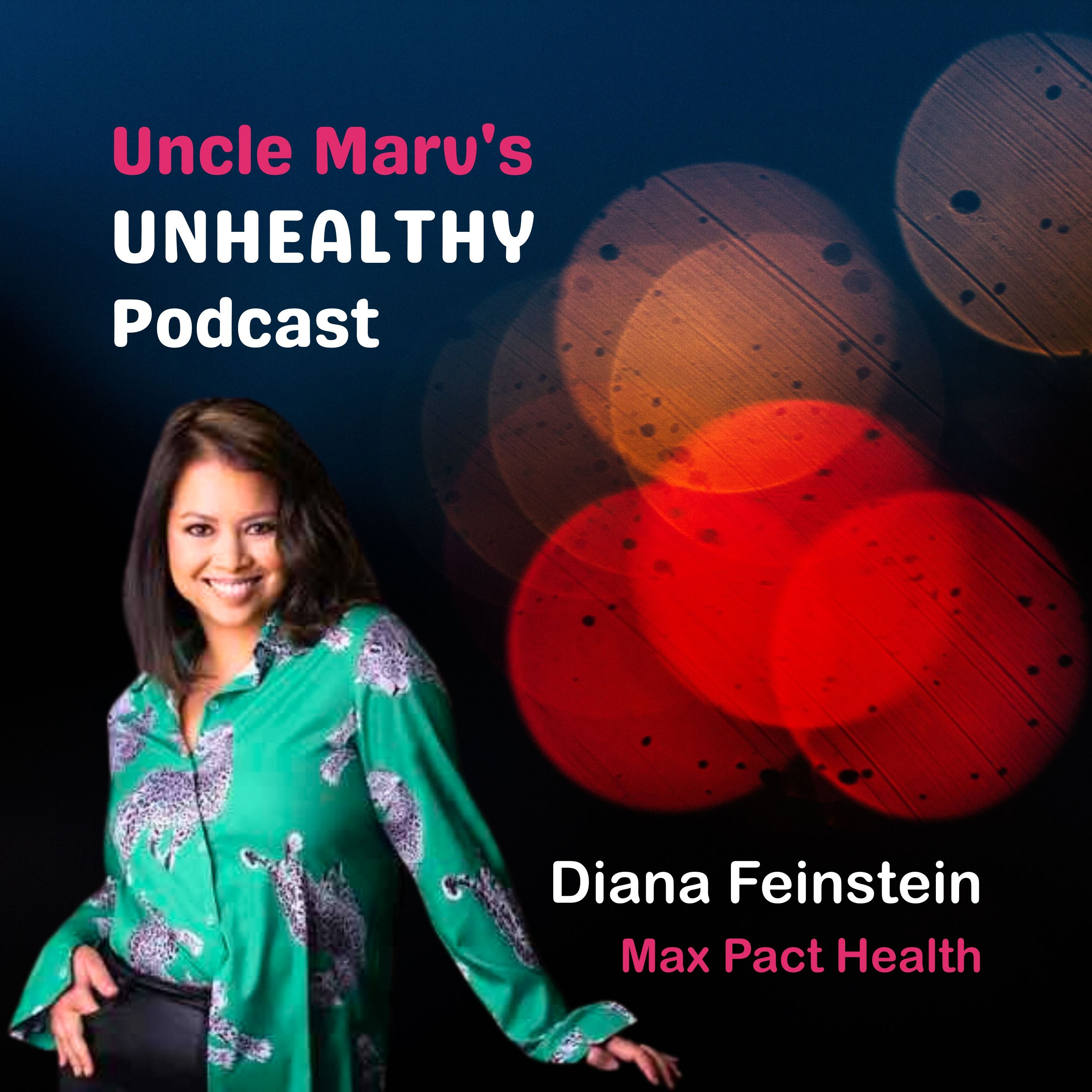
I bring back performance and health strategist Diana Feinstein from MaxPact Health to unpack why so many of us say “I know what to do, I’m just not doing it.” We talk about unwritten scripts, defining a personal North Star, and why the old “eat less, move more, try harder” playbook falls apart in midlife. Diana walks through how to use your 168-hour week, simple movement, and protein-forward meals to build a life that stays healthy, mobile, and emotionally present for the long haul.

 Apple Podcasts
 Spotify
 Pandora
 PocketCasts
 RSS Feed
 Overcast
 Amazon Music
 YouTube
 If you’re the person everyone thinks is crushing it while you quietly feel like you’re running on fumes, this episode is for you. Diana Feinstein and I dig into what’s really behind that gap between knowing what to do for your health and actually doing it—and how to close it without blowing up your life.
Why Listen
- Get language for pushing back on “shoulds” from studies, programs, and society that don’t fit you.
- Learn how to think in seasons—like tax time, conferences, or boardroom weeks—so busy stretches don’t wreck your baseline health.
- Hear a real story of a high-performing client going from heart-attack-risk labs and 2,000 steps to better health with small, smart changes.
- Understand why standing, glute activation, and simple movement matter if you sit and work or podcast all day.
- See how protein-forward meals can reduce cravings, support sleep, and make you more present for family.
- Get a preview of Diana’s Max Pact Health Assessment and 2-week program built around your own data and time map.
Mentioned on the Show
- RingConn (smart ring): https://ringconn.com
- Oura Ring: https://ouraring.com
- WHOOP wearable: https://www.whoop.com
- Fitbit: https://www.fitbit.com
- Apple Watch: https://www.apple.com/apple-watch
- Yuka app: https://yuka.io
Guest Bio
Diana Feinstein is a performance and health strategist and the founder of MaxPact Health, where she helps busy, high-achieving women, executives, and business owners build sustainable, data-informed health strategies that match their real lives instead of generic programs. She uses tools like biometrics, blood work, and a 168-hour “time as a tool” audit to design personalized plans around metabolic health, sleep, stress, nutrition, and movement so clients can protect their long-term capacity while they continue to perform at a high level.
- Website: https://www.maxpacthealth.com
- LinkedIn: https://www.linkedin.com/in/dianafeinstein
=== MUSIC LICENSE CERTIFICATE: Envato Elements Item
- Item Title: Healthy Eating
- Item URL: https://elements.envato.com/healthy-eating-VNN4M4P
- Author Username: CrazyTunes
- Licensee: Marvin Bee
- Registered Project Name: Unhealthy Podcast
- License Date: January 3rd, 2026
- Item License Code: XPFS6HD54W
=== About the Unhealthy Podcast
Hosted by Marvin Bee (Uncle Marv), the Unhealthy Podcast dives into real conversations about health, wellness, and everyday habits that impact how we live, work, and age. From nutrition myths to stress management and tech-life balance, Uncle Marv brings humor, insight, and honesty to every episode.
- Visit our website: https://www.unhealthypodcast.com/
- Connect on Facebook: https://www.facebook.com/iamunclemarv
- Connect on LinkedIn: https://www.linkedin.com/in/marvinbee/
Follow and Subscribe: Stay updated with new episodes every week on Apple Podcasts, Spotify, YouTube, and more. Join the conversation about real-life health, fitness, and personal growth from the lens of an everyday guy striving to be healthier.
Hello everyone. And welcome back to The Unhealthy Podcast. I'm your host, Uncle Marv.
You know that moment when somebody asked you, how are you doing? And your mouth says I'm fine, but your body is screaming, bro, we are not fine at all. You're running your business, holding your family together, answering the calls. So if you're an IT person like me, you're answering tickets after hours, all that sort of stuff.
Well, we are going to talk about some of that stuff and figure out the real world stuff behind I'm fine and see how we can fix it. We're going to dig into the why try harder strategy and why it stops working in midlife and what to do about it. So my guest once again is, uh, somebody who challenged me.
I'm not quite sure how I, how I feel about that, but we'll see where that goes. Um, performance and health strategist, Diana Feinstein from MaxPact Health. She works with high performing women, executives, and business owners.
You know, folks like us who look unstoppable on the outside, but are low key exhausted on the inside. Diana, welcome back. Oh, hi.
I'm so excited to be here, Uncle Marv. I bet you are. Oh, so, uh, just to let the listeners know, yeah, it's been about a month since, uh, Diana and I did a show together.
We did have some homework. Uh, some of that homework is done. Of course, some of it is not.
So Diana, I want to start off by asking you a question because towards the end of the show, and then in our debrief afterwards, there was a phrase that I said to you that I'm quite sure you were like, what? And basically it's the idea when you're looking to either start coaching somebody or you're in the middle of coaching somebody and they say to you something like I said, where it basically is, I know the right answer. I just know I'm not going to do it. At that point, what is your move? And do you question the right answer or the resistance behind it? So one of the favorite phrases that my husband has is, uh, the answer is always in the divine terms.
So define the word, right? Define in your mind what the, what the right answer is. And so we have these thoughts that we automatically think that aren't necessarily our own, right? These are called unwritten scripts. And often those thoughts are our parents, our teachers, society, what we think we should do.
And so what we think we should do versus what is actually right for us in this moment often is vastly different. All of our behaviors make sense. All of our behaviors make sense.
And they're just trying to meet a very specific need. And so let's take health. Health, eat right, exercise.
And so we can go to all of the diets and look externally to what the right food is. We can look externally to what the right exercise is. But what I encourage people, instead of looking outside, is to look in.
How do you define what is right for you in this moment? That's what we call option. C. So the gap between knowing and doing is a feeling and underneath that feeling is a story. So why don't we start with what your North star is? Oh, we're coming back to me already.
Oh yeah. We're, we're going right. Oh, okay.
So this is the part of homework that I did do. Although I don't know that the answer is going to sound like I did it, but the bottom line is as far as I can determine what my North star is, is that, uh, my goal is to, uh, build a sustainably healthy, mobile, and emotionally present life so that I can keep showing up for a family work and podcast with energy and clarity. How does that sound? You tell me, how does that sound? Sounds fantastic.
What do you feel at peace? Do you feel like it's what you should have? What is the feeling underneath that? So here's, here's, here's how I came to that. So most people, when they're thinking of whether you call it a North star or a purpose or a goal, everybody seems to have these big, huge, lofty goals of, you know, I want to, I want to affect change in a million people or, you know, I want to accomplish all of these great things. I want to try, you know, it's always these grandiose things, at least that's how I, I hear it.
Um, I, so I was at three conferences in the last four weeks and I heard the same thing from a lot of them in terms of, you know, when you talk about, you know, their goals for their business, you know, it's always, you know, well, you know, I got to be a million dollars by next year or, you know, you know, I want to exit as a $10 million evaluation, blah, blah, blah. It's, it's always these big, huge things. I'm okay with where I'm at.
I'm okay with what I'm doing. I don't have those aspirations to, you know, leave behind a legacy for, you know, a million techs. And I think what, what changed for me is, you know, I'm not looking for that external validation.
I'm okay with doing what I'm doing as long as I'm meeting what's necessary for me, my family. And so when I look at why I decided to do certain things, it's really just, I want to be able to keep doing what I'm doing now without diminishing returns. If that makes sense.
And a thousand percent makes sense. Okay. Thousand percent.
Okay. So what is it that you think you should be doing, but are not doing? What do you think you should be doing, but you're not doing? I don't know if I have a great answer for that because what I've determined is that I don't want to take what others think I should be doing and do it just because, although that's kind of how we got to where we are in society right now. Society has told us what we need to be doing.
The studies have told us all of these things. Um, Oh, you know what? I'm going to take us off track. You see that on my hand? You got the aura ring.
I love, oh, we're going to put a whole nother flavor on this. It's not the aura. Okay.
It's RingConn. RingConn. Okay.
Yep. Yep. Yep.
Okay. Good. Yeah.
Yeah. Um, and I, I bring that up because aura has its own set of recommendations and that sort of stuff. So everything we do comes with guidance, recommendations, here's what you should do, whether it's a diet, whether it's a program or whatever.
And there's a part of me that has kind of come to the realization that, you know what? I know that there are a lot of people that do succeed with those programs, but with each and every one of them, there's a lot more that don't. Yeah. And part of, part of my journey is to find out why it doesn't work for everybody.
Yeah. And the fact is everything should be molded to the person, not the person, to the program. Right.
So when I started, when I first started this journey, meaning this show, uh, two years ago, I forget when I started, it's been up and down, you know, there was the whole things where, okay, I'm going to lose this weight. I'm going to get in shape. I'm going to do all this stuff, but I just did it based off of what I thought.
Shouldn't say what I thought. So the first time I did it was based on, well, this is what I did, you know, 15 years ago in words. Funny thing is 15 years ago, it doesn't work now.
So, so it's been the exploration of, okay, what's going to work now based on who I am now, my body now, all the stuff that has changed. Um, so in terms of what I'm doing now that I think I should be doing, the only couple of things that I can tell you is, yes, I do. I do know that I need to move more.
I'm not going to say exercise because I don't, I don't know that I'm willing to go that far. Um, but move more, eat better. Great.
Those are the two things. Perfect. So let's define moving more and let's define eating more.
Okay. Now, when you have, um, when you have milestones, like when you have a goal, right, you can work towards that goal. What that road looks like, it really depends on you.
You just know you want to get there. So we got even more specific in the next 10 years, I want to keep doing what I'm doing, podcasting, working, loving on my family. I want to be able to do that at the same capacity that I'm doing today.
That's a, that's a quantifiable goal. In the next 10 years, this is the, this is the quality of life that I'm looking for. Right.
Now, when you layer on, um, endocrine aging, when you layer on cardiovascular health, right, you can take the, you can take, um, the data that's released out of like PubMed or the NAG, data that has, that is true against populations. And then you can say, okay, from a population standpoint, I know that this is how populations tend to respond, right. When they have certain body composition, you know, body composition, blood markers, et cetera.
Right. This is why, you know, going to your doctor, having a relationship with your doctor, you know, looking at key metrics, when you look at these key metrics and you project out where they're going to be going over the next 10 years, you can then say to yourself, okay, if I put on another 10 pounds over the next 10 years, knowing that my endocrine system is aging, knowing my bone density is decreasing, knowing that my cardiovascular health is going down, knowing I have all of these pre, you know, predisposed genetic dispositions, am I going to be happy with where I'm going to be in 10 years? Right. Your physiology changes, but your lifestyle habits don't.
So is your body's rate of decline keeping up with your lifestyle practices? You could make that decline go faster, or you can make it slower, or you can make it plateau. It depends on how you are actually spending your time. Right.
So let's just use time as a tool for a second. You have 168 hours in your week. How are you spending that time? How much are you moving? How well are you eating? How well are you managing your blood sugar? Right.
How are you managing your KPI of your body? And I'm going to tell you something, you fall to the level of those habits 95% of the time. Are you happy with where those projected values are going? Now, having these biometrics like RingConn or Whoop, you can get all of the data in the world, but which ones are actually going to move the needle? Which ones are going to give you the most leveraged responses? Where is it if I just on this metric where the juice is going to be worth a squeeze? Right. This is what's called sequence before strategy.
Strategies eat well at move more, but what is the sequencing and what does that actual execution loop look like? And that's why working with a coach or a healthcare provider that you feel connected with to interpret that data, to know what the next execution point based on that data, that's going to help you fulfill on that North Star vision. If I do nothing, is that where I'm going to be in 10 years? Got to look at the data. Look at the data.
Right. And then what is the story that the data is saying? You know, so for your, for your IT professionals, that's why people, right? All people have their specialties, but a trained eye will be one to determine, well, based on this architecture on what it is that I want the system to perform, what is the thing that you need to fix? QA test, reduce throughput issues. What is the one mechanism that you have to titrate in order to decrease friction? Right.
Not everybody coming off the street is going to know that, but an IT professional will. Right. Okay.
So I see you trying to, you know, make the analogy work for me, but so I'm stuck on going back to understanding capacity, understanding how to diagnose this 168 hour week. So I think we've always, you know, talked about dividing the day into thirds, you know, a third of the day you're working, a third of the day you're sleeping, a third of the day you're doing other stuff, right? That's right. But we don't quite fit those, those, those pie splits perfectly.
That's right. So how do you have somebody figure out what the good split for them is? Because I mean, are you talking about where, first of all, let's, let's list everything out and then take, you know, a piece of this pie and move it somewhere else? Or is that how you're talking about doing it? Yeah. So, so one of the four big pillars that I work with people on to help them build capacity so that they can reach their North Star, they are the cornerstones of what's called metabolic health, sleep, stress, nutrition, and movement.
Sleep, stress, nutrition, and movement. From a behavioral change standpoint, you know, you can't do everything all at once at the same time. You have the ability to focus on only a handful of things at a time.
The minute you try and focus on everything, everything falls apart, right? So this is really about where you manage your attention to do the thing, right? And being able to do it within the margins of your life. We all have constraints, right? I have a 10-year-old and a 15-year-old. The world will not stop.
They are a priority in my life. They are a use in time, energy, and attention, right? So I'm not going to do certain things, you know, the things you're supposed to do, because they don't fit into my life given my priorities. And so it's important, in my opinion, to understand this is the cost of me not doing something.
Am I okay with that? So many of the high performers and high capacity people that I work with, they will have busy seasons, right, in their life. Let's say I work with an accountant. They have tax season.
That is a constraint on the system. And so we prepare knowing that we are going into that season of constraint. We understand what baseline capacity looks like so that the human body, which is a system, can keep on ticking.
Once that season is over, you can then ramp up in that season. So there's this concept of, like, seasonality in people's life, right? What are the constraints and how do you work around the constraints? And then of the capacity that you do have, how do you actually spend that that's going to give you the best bang for your buck? That's called leverage. Okay, so I have a question.
I don't know how much of this you can actually do here without giving away secret sauce, but I understand the idea of having a baseline and going into a season and knowing how to adjust and stuff. But I think the first step is, are you able to give, I guess, a real world example of a audit that has been done on one of your high performing professionals? They're 168 hour week. Are there examples of how you came to the baseline? Understand a before and after picture? Do you understand what I'm asking? 100%.
100%. So one of my high performers loves golf, is a partner in a private equity firm. And it is a boardroom season, right? Earnings release.
Also have to take into account that he is a very dedicated father. And when kids come home for from college for a spring break, world must stop. Right? He has a desire to be around for his grandkids.
When I took a look at his baseline metrics, he was walking about 2,000 steps a day. Anything below 5,000 step is the equivalent of smoking a packet of cigarettes. And so when I gave him that visceral representation, he decided to actually have walking meetings with staff to get his step count in outside.
Now, what did that do for his sleep cycle? That actually increased the cognition of what are called REM? It's called deep sleep and his REM cycles. Okay? So it actually increased his capacity, increased the performance of his team, and it made deposits so that he knows he's making compound deposits for that future life that he has for the future grandkids. That's a great return.
Right? He knows during earnings season, he will be sitting in a boardroom for five days straight as a private equity partner. He's not moving. So we're going to plan for that.
Right? He's going to have very specific return requests as opposed to whatever anybody is bringing in. He knows how to advocate for himself. Because of making that one choice, given a list of options, he knows he can continue to make the right deposits.
Right? So before we started working together, you know, he had actually, you know, I met him through his functional doctor. And his functional doctor gave me his blood panel. He said he was about to have a heart attack and he needed to lose about 40 pounds.
Man was brilliant. So we took that same, his same ability, review a dashboard. And I created a dashboard based on his biometrics.
And I created a frame for him. When your metrics drop below this line, this is how much it's costing in your capacity for both short-term and long-term. Here are some of the behaviors that I'm going to show you where you can actually work on your health, better your business, and produce long-term investments all in the same time within 90 seconds.
Is that something you'd be interested in? And so we created a high-performing health portfolio. There's some seasonality in terms of, is it a weekday? Is it a weekend? What is the quarter? Is it the summertime? When you go to Paris, it's snowing. There are all, this is a multivariate problem.
And when you take all of those multivariate problems and you put them onto a human, it is then you that make the decision. I just give you a menu from which to choose from, from which you are ready, willing, and able to do. That's a real-life audit.
And it's all based on biometric data and blood work. Right. So the idea of the walking meeting, who came up with that? Oh, that's just a health coach thing.
Anybody will tell you that. Okay. I mean, my first thought is that you probably recommended it to him, but I thought, you know what? I wonder if he recommended that.
So I ask very deliberate questions so that you think it's you. You hooked him. The greatest coaches will be the one to ask the right questions, because we know that your ability to execute is a function of what you think you should do, not what we tell you to do.
Any great coach will tell you that. All right. So where were we going to go after that question? Because I imagine that the 168-hour audit then has to lead somewhere, but I would imagine that some of the stuff is based off of that data.
That's right. So that's, I don't remember that being homework, so I didn't do that. So there, so what I do with clients, you know, people that are interested in working with me, I run them through a two-week program where I pull in all of their biomed on a grid that's called time as a tool, time as a tool.
Each one of those 168 hours is represented by a block. And you tell me, how are you spending each one of those blocks? I then tell you where you are costing your North Star vision. You keep operating during those 168 hours in that week, given your cardiovascular health, given your blood panel, given your goals, given your genetic predisposition, endocrine aging, all of it.
And I show you how you're actually spending that bank account, you're going to think twice. So, so I can look, so I already know I am short on the sleep time. Gotten better.
And my steps are, so you said 5,000? Anything below 5,000 steps is like smoking a packet of cigarettes. All right, so I smoked a pack yesterday. But the day before, pack, but most, most days I'm good.
So the RingConn gives me the goal of 6,000 steps. Mm-hmm. Which actually I met a lot at conferences, because there is a lot of walking at the conferences.
So that's a season. That's a season. Right, season.
Yeah. What does baseline look like? The baseline is, I got black lungs. How does that make you feel when you think about your North Star? Well, let me just say, say this.
So actually, so I've, I've known that one of the things that I gave up when I quit playing ball and being active was the fact of, yeah, sitting in an office more, podcasting is a sitting thing normally, although you can stand, which a lot of people do, but standing is not the same as moving in my book. So let's think about it in terms of continuums. When you stand, you activate your glute muscles.
You open up your hip flexors. You hold your core, okay? All of these enable stability training to come online just by standing. So what if instead of all or nothing, what if you just walked a little bit along the continuum to make that deposit? So one of the things that I saw in here, standing duration, I haven't looked that up yet in the RingConn stuff to see what that translates to, but is that a term that you're familiar with? Does that exist in the oral world? So it's how, it's like how, um, standing is better than sitting because you're activating a certain muscle and stability.
So when you're sitting for hours on end, there's a lot of inflammation that actually starts compiling in your body, right? So a lot of the lifestyle practices that I work with people on, what are they ready, willing, and able to do, right? Is the juice worse than the squeeze? And for some people, yeah, I'm all for 50 bucks at a standing desk, right? And you can actually see that in the data, right? You're developing your core muscles when you do it, right? So in the 20, 25 minutes that we're pod, you could be making deposits into that North Star by just one shift. All right. I need to go back and look at this because like, for instance, yesterday, yesterday, my standing duration was 18 hours, which I know is not right because I was sitting a lot, but it says 18 hours.
So I need to look at that. My all day inactive ratio was 10%. My step goals was only hit 3,600 steps, but it says my moderate and high intensity activity minutes were 77 minutes.
So I'm going to be honest with you. I don't know about RingConn. Yeah.
My aura is really the bio aura, whoop, apple, Fitbit. Those are the really, the biometrics that just from a data quality perspective, good data in, good results out. Right.
So I can't speak to the quality of the data that you're seeing. We'll have to talk about this more off air because it's got a lot of stuff. I just.
But is that stuff right and relevant? I don't know. That's another thing. It was, it was subscription ring, which is why I did it.
All right. Okay. So I guess the next question that I would ask if you're not going to push me down a path is most of my listeners I know are in the 40s to 60s range.
I know we talked last time about having a protein powered day. Um, but how does somebody have a protein powered day, you know, from breakfast to bedtime without becoming macro counters? Because that's the one thing that I thought I wouldn't do is I don't want to be that person that has to write down, you know, calories and this and servings and that and all of that. So is there a way we can do it without all of that? Absolutely.
So let's work on consistency, having a protein forward breakfast to start do that for a month, see what kind of ritual or routine rhythm you can get into to have a protein forward breakfast. How does it feel? What you're going to notice that is your cognition, the feeling of satiety, it's actually going to start to stabilize during that month. Most cravings, they're a little bit better at three o'clock.
That's interesting. Then you have a protein forward lunch, another deposit. Wow, those cravings went away altogether.
That's interesting. And my sleep is better. Do that for a month.
So then the second month, protein forward breakfast. Second month, protein forward breakfast and lunch. Third month, I wonder if I had a protein forward dinner.
Wow, now I'm sleeping through the night. I feel pretty good. Dopamine hit.
I wonder what happened if I started walking a little bit more. I wonder how that would make me feel. Well, that's interesting.
Because I had a protein forward breakfast and lunch and dinner and I started walking more, wow, I'm a lot more present for my wife and my kids. Feeling pretty good. OK.
That's month four. Month five. You know what? I keep hearing that water is a thing.
I wonder if I had a glass of water with those protein forward breakfasts and maybe drank a bottle of water after my walk. I wonder what that would feel. Oh, man, my joints feel really good.
And I'm more present. And I feel really good. Do you know what I'm saying? I know what you're saying, but most of us don't think like that.
But that's why that's why coaching is so important. Right. Like, I think I think where people start under indexing is like, I won't know what to do.
I just have to do it. Human biology, behavioral science, all the things just because you know something intellectually doesn't mean that you actually do it. See, the gap between knowing and doing is a feeling.
And underneath that feeling is a story. And so all our behaviors are a function of subconscious mechanism, things that we're not even aware of. That's actually the resistance of not doing the things that we think we should do.
It's that story. That's actually what I work on. Those subconscious stories unpack that to reduce friction so that you hit the on button.
Okay. I mean, that sounds nice, but here's where I think the real rubber hits the road. We know we should eat better.
And when we go out to look for foods that are better. They don't taste better. So that that thing you talk about of falling back into our habits where I'm going to eat what would taste better.
Right. Because this dry protein chicken is nasty. Well, what I'm hearing is that you haven't had the experience of really great protein forward meals.
You haven't had the experience for you to actually have them. And so one of the things that I'm working here in New York is I'm having something called micro retreats where you can actually experience protein forward meals that have better flavor forward. It's like, oh, when I make chicken in this way in community with people that are kind of cool, that's interesting.
Chicken can actually taste really good. And it's easy. I've just never been in a cooking class that was geared towards that.
You'll never survive if chicken tastes like gas. You'll never survive. Yeah, that's for sure.
All right. So we're coming up to time here. Let me ask you if there was anything that you had on your homework list that you wanted to address.
Or are you just smiling because you have a question you want to ask me? So I'm going to be unleashing in the next two weeks the Max Pact Health Assessment. OK. Where you can actually understand what your baseline is.
And once you submit, you will then give you will then get tailored results of where you are in terms of your health. So I just wanted to put that out there. And then also, as part of that program, if you decide to take that assessment further and just explore what it's what do you actually do with those results, you know, you can book a call with me and we can go over that time as a tool, 168 hour audit.
I, you know, review that, happy to do that, you know, on your own, you know, or you could do that with me, you know, during my during my two week program. And then from there, you then understand, well, what is the cost benefit of me continuing to live in the same way? All right. When are we scheduled for our next show? I'm looking real quick.
I don't think it's going to be two weeks, two weeks. March 18th. I have the I have the 26th.
Okay, so then my audit should be ready to go. By that point, you can drop a comment, we can, you know, put it in the show notes for listeners to take it. Now, and they can get their customized baseline habit report.
You know, book a call with me to go over the time as a tool, 168 hour audit, you know, and they can choose to do it with. Okay, everybody deserves clarity. So we can look forward to that.
Can we also how we trying to think of looking deeper into that protein for breakfast examples and stuff. So, you know, I use the Yucca app, right? Yep. But of course, it doesn't have a thing for more protein.
Check these out. What would you what's an easy way for us to seek out a protein forward diet, or is that something that you can provide? I can provide that as part of your program for you for your listeners, knowing who your listeners are. Let me put together listeners.
Okay. Awesome. I love this for us.
I love this for us. Okay. With my North Star.
I love your North Star. Thank you so much, Doc. Thank you so much, Dr. Amar.
All right. We'll look forward to the next one. Terrific.
Thanks a lot, Diana. Same here. All right, folks, that is going to do it for this episode of The Unhealthy Podcast.
Big thanks to Diana for pulling back a little bit of that curtain on the eat less, move more. I'm going to add cry harder as part of the thing that goes with that. And we will have a third podcast in a couple of weeks and we'll go over some more stuff and we'll look for I'm going to try to put together these links that we talked about and get those before the show gets released and give you guys some homework as well.
If this helps you in any way, I do want you to send somebody else who you think looks like they're crushing it, but you know, they're quietly running on fumes. And if you if you know what your North Star is, I want you to email me or message me and that's let's start getting some of these things out there. I won't share your name on the air, but I do want to kind of go through what some other North Stars look like and see if Diana has anything to say about that.
So push those out there to me. Let me know what your North Star is. And we look forward to seeing you on the next episode.
So take care of yourself, back up your health. And until next time, live healthy and be happy.

Founder and Head Coach
On paper, my life seemed well-organized, with plenty of spreadsheets and achievements. Despite this,
there was an emptiness inside me. As a child of Asian immigrants, failure wasn't acceptable. This cultural
background turned comfort food sessions into a mix of delight and dread.
My transformation journey began with a simple goal: to fit into my wedding ring again. Initially, my weight
loss approach was messy and ineffective. I realized I knew as little about weight loss as a penguin knows
about flying.
I stopped experimenting and started treating my time and energy wisely. It wasn't just a diet; it was a life
change, a public unveiling of a new me.
In a surprising turn, I became a fitness and nutrition guru, using my experience to help overworked
professionals. The real change happened when I viewed myself as a prime investment. I applied business
strategy to health, turning calorie counting into a high-stakes game.
Now, my mission is to turn executives into health enthusiasts. It's not just about losing weight; it's about
gaining overall well-being. This journey is transforming lives, one step at a time, making health the new
wealth.
At MaxPact Health we empower Better Health Through Return on Self.