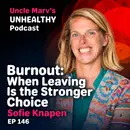
Burnout: When Leaving Is the Stronger Choice (EP 146)

 Apple Podcasts

 Spotify

 Pandora

 PocketCasts

 RSS Feed

 Overcast

 Amazon Music

 YouTube
I know what it is like to stay busy, keep moving, and assume you can handle whatever comes next. My guest, Sofie Knapen, knows that feeling from construction sites and humanitarian missions. A former Doctors Without Borders logistician and the founder of Adventures Alchemy, Sofie joins me for an honest conversation about what happened when her sense of responsibility kept her going longer than she could manage.
We get into poor sleep, emotional overload, the guilt of leaving a team behind, and the challenge of admitting you are not doing well. Sofie explains how surfing, outdoor experiences, and guided reflection helped her reconnect with herself. I also share why the sports that once helped me unwind eventually became another source of stress. You do not have to surf or book a retreat to take something from this conversation. We talk about small ways to pause, pay attention, and make room for yourself.
=== Chapters
- 00:15 Burnout, Resilience, and the Pressure to Handle Everything
- 03:23 Sofie Knapen’s Path from Construction to Humanitarian Work
- 06:13 Behind the Scenes of Doctors Without Borders Logistics
- 11:21 The Warning Signs Sofie Recognizes as Burnout
- 16:38 Why Leaving the Mission Was Harder Than Staying
- 18:52 Recognizing Burnout and Getting Support
- 21:50 Surfing, Sports, and Getting Out of Your Head
- 27:58 Creating Adventures Alchemy and a Community of Care
- 33:27 Building Nature-Based Retreats in Portugal
- 34:45 Five-Minute Pauses and Everyday Ways to Reconnect
=== Guest: Sofie Knapen, Founder of Adventures Alchemy; Humanitarian Logistician, Surfing Instructor, Outdoor Facilitator, and Coach
- Website: https://free.adventuresalchemy.com/opt-in
- LinkedIn: https://www.linkedin.com/in/sofie-knapen
=== Companies / Organizations / Nonprofits
- Adventures Alchemy: https://adventuresalchemy.com/guide
- Doctors Without Borders / Médecins Sans Frontières: https://www.doctorswithoutborders.org/
=== Products / Resources / Books / Podcasts
- Resilient Humanitarian Explorers: Your Playful Journey to Joy and Balance, free guide: https://adventuresalchemy.com/guide
=== MUSIC LICENSE CERTIFICATE: Envato Elements Item
- Item Title: Healthy Eating
- Item URL: https://elements.envato.com/healthy-eating-VNN4M4P
- Author Username: CrazyTunes
- Licensee: Marvin Bee
- Registered Project Name: Unhealthy Podcast
- License Date: January 3rd, 2026
- Item License Code: XPFS6HD54W
=== About the Unhealthy Podcast
Hosted by Marvin Bee (Uncle Marv), the Unhealthy Podcast dives into real conversations about health, wellness, and everyday habits that impact how we live, work, and age. From nutrition myths to stress management and tech-life balance, Uncle Marv brings humor, insight, and honesty to every episode.
- Visit our website: https://www.unhealthypodcast.com/
- Connect on Facebook: https://www.facebook.com/iamunclemarv
- Connect on LinkedIn: https://www.linkedin.com/in/marvinbee/
Follow and Subscribe: Stay updated with new episodes every week on Apple Podcasts, Spotify, YouTube, and more. Join the conversation about real-life health, fitness, and personal growth from the lens of an everyday guy striving to be healthier.
Disclaimer
Health information in this episode is for educational purposes only and is not medical advice. Guest experiences and interpretations of genetic, epigenetic, and biological-age testing should not be treated as a diagnosis or an individualized treatment plan. Consult qualified healthcare professionals about personal medical concerns, screening, testing, medications, and changes to your care.
[0:15] Hello everyone, Uncle Marv here and welcome back to my unhealthy podcast where we cut through the health and wellness BS and have real conversations about food, fitness, aging, relationships, everything in between to help live happier, healthier lives without taking ourselves too seriously.
[0:39] Uh today we are well we're going to talk about uh what happens when the thing that you're proud of uh being the person who can handle it, starts working against you and uh it should be very interesting my guest today is Sofie Knapen founder of adventures alchemy uh, she led logistics teams and managed construction projects um you're going to hear some interesting things She worked with Doctors Without Borders, and she has recently written about leaving a mission after reaching a port where she couldn't keep going. And now she uses surfing and guided reflection, outdoor retreats for women.
[1:26] For humanitarian and social impact. So, Sofie, thank you very much for joining the show. Thank you so much for having me here. I'm looking forward to this. Yeah. So I want to talk about the fact that I've heard parts of your story and obviously the idea of resilience has been a big part of that. You used to think of it as, you know, just being able to carry more and knowing, all of that stuff. But it's changed for you now. The word resilience, what does that mean to you now? Yeah.
[2:02] Yeah, well, thank you for asking. It's a word that I've been reflecting on quite a bit, because often people see resilience as pushing through and so on. But I guess that's somehow, what it means that if then it kind of turns against you how resilient are you then still right so I think it has a bit of.
[2:39] I haven't figured out yet what can we figure out in this life but yeah how to see it or how to use it properly. Well, I kind of got the idea that it's not simply a matter of how much you can push through or how hard you can work. It's more about recognizing where your limits are and when to say stop when you can't go on. Does that sound better? Yes, yes, yes, absolutely. Yeah, I think that is exactly, well, in my mind, how it should be seen. Yeah, yeah, yeah. Thank you for adding that. Okay.
[3:23] All right. So let's talk about where you were before. And before we talk about, you know, what made this impact on you, what was life before? What were you doing in terms of doing humanitarian work, Doctors Without Borders? Explain what you were doing. Do you mean what I was doing as a humanitarian or before I was? Before. Ah, yeah. So, well, before entering the whole humanitarian world, I worked in the construction field or for general contractors in Belgium for about 10 years. Until that.
[4:07] I started questioning if that was my real purpose or so, to say so, or it didn't feel so right anymore. So, I went on a cycling trip to figure it out. Then I got a bit into, well, trip-leading and active travel, tourism to say so. And meanwhile, along that road, I found out that Doctors Without Borders did not only need doctors, but also logisticians and so on. And then maybe going a bit back into.
[4:59] The past that even I had been doing before some volunteering projects. So I did have a hard beating for the humanitarian idea to say so. So finding that out somehow gave me that little notch. All right. So when you say working in construction, were you always doing logistics or were you actually doing some of the labor? No, no, I was not doing the labor myself. Well, unless for... The few mainly volunteering projects that I've done abroad there, I did a bit of laboring and then, except for renovation projects for my personal apartment, I did a bit of labor. But.
[5:56] In terms of the work for the general contractors, I was supervising the construction sites. And that is not a little bit, that is a whole lot of logistics in itself as well. Right.
[6:13] Okay. So this opportunity came up with Doctors Without Borders. And yeah, so we always think of it as where, you know, doctors and medical personnel just kind of show up in these countries and help where, you know, the need is. But you're saying that there's a logistical side of that? I mean, how does that work?
[6:36] Yeah, so these doctors need hospitals or infrastructure to, well, sometimes just be put up, like maybe rather like temporary structures or shelters or so. Okay. So that is part of what logistics is doing. But then also, yeah, like the car park, to say so, like a car ambulances is managed by the logistic team. All the biomedical equipment is maintained by the logistic team. So all these parts, everything that the doctors need in terms of infrastructure and maybe, well, tools is maybe a bit too broad. Let's keep it like that. Okay. So the doctors, they don't just show up and stuff is there. So stuff actually has to be brought in. They have to have transportation. So you're saying that they actually have to have some of these facilities, you know, built? Yeah, yeah, exactly. Well, sometimes they use existing facilities and it's a support of the.
[7:59] Medical system that's in place in the countries. But then still, often, they lack sometimes resources, and it's mainly with that then that also the Sudan borders and probably other humanitarian organizations help support, these medical, structures, to say so. Right. Okay.
[8:30] So this sounds like doing logistics with Doctors Without Borders was, a little different from what you were doing before, because in my mind, I'm picturing, you know, not just third world countries or places that don't have modern facilities. We're talking about unstable places a lot of times. So the stress of logistics is one thing, But I imagine that there's the stress of other things going on outside of the medical side, right? Yeah, yeah, absolutely. Um, okay. There is sometimes you have to be very creative of course, as you said, with like logistically what you can have or use and so on and get, um, but then sometimes.
[9:23] You're in projects in war zones, then you rather live in confined spaces, so that really limits your, well, your freedom. So you, how or how much you can move or even if you can, well, just step out of the gate to say so. And so that has, I would say, a very, a big impact on also, yeah, on your Interesting. So was it ever like confined by soldiers where you were, you know, there were places you weren't allowed to go? Did you have to like stay in camp and that sort of thing? Um so how i have known it in the doctors without borders world doctors without borders is uh, um well neutral um impartial and independent organization and they also have a big no weapon policy so um, Most, and well, definitely the projects that I've been in and most of the projects, maybe with like a few exceptions in the world, because of the circumstances that.
[10:44] The places where you stay in were, well, guarded by guards, but unarmed guards, but never soldiers or so. That there were sometimes security policies that you had to follow that sometimes, maybe there was just no way of leading the compound except for, well, the times if you had to be really, or the work somewhere else, but that was very, well, very well monitored. Right, okay.
[11:21] Okay, so it was during one of these trips that you got to the point where you said enough. Can you describe what was happening and what got you to that point? Yeah, well, I think I said enough, but probably after my body had told me enough. And yeah that basically happened gradually that.
[11:50] I was becoming more emotional about little things that came extra and, I was already feeling like I'm struggling to well just manage, the day-to-day and then this and then yeah the becoming emotional, well became just more and more frequent I became then physically ill like I got like fever or like some clue symptoms and then this cough and, and yeah and also there became a time that I would like wake up very early in the morning I just could not sleep as my, my mind started just raising up everything that needs to be done still and, what I could do or so.
[12:51] There was then the time coming close to my leave, so I was supposed to go for a week of holidays. And, well, upcoming to that leave, I remember that I had laid down on my bed and watching my work and asking myself if I should not just take everything.
[13:17] And, yeah, then the day before my leave, yeah, I had this meeting with my manager, a handover meeting. And yeah I came with a list of everything that Sonia is doing but she came with my job description I went down line by line everything I wasn't doing and at that point, well it went very quiet in my head and I was just this question what am I actually doing here and then was when I guess my mind told me, time to go it's time to go wow so that that had to have been, hard because uh how long had you been out up to that point um, you mean how long i worked in the in the project yes so well actually that was um halfway so after three months that i was in that Three months was halfway. Wow. So three months out there. Did you have contact with family and friends while you were there or was it very hard because of location and sort of stuff like that?
[14:34] I did, but, well, one of the logistical things that we were struggling with on that also was the internet connection that, was often not working well either at all or very badly. So sometimes it was hard, maybe at the moment that I maybe might needed it to speak to someone. And, uh, yeah. Yeah. I was thinking that, you know, having a support structure, you know, I mean, obviously you're close to the people that you're with every day, but, you know, sometimes you gotta, you know, I imagine that, you know, you and your best friend did not sign up together to go do this. So your, um, your best friend and family are probably back home and, you know, you don't get to, to vent, I guess, from time to time and get that reassurance and stuff. So um yeah and that is a bit sorry to interrupt you but it's a bit both sides.
[15:37] Um on one hand okay the venting and so, to your family and friends could happen but they never really understand or know how it's really like out there, to say so and then yeah as you said um you are there with people you don't choose yourself so, and then it depends a bit how, you connect with the people that are there and I ve made like amazing connections as well but there is also people that and then i don't blame them probably they are, in their way uh coping and having as maybe their version of burnout so they might not be like their best version of themselves And so you might not connect necessarily with them, but they do affect, you as a person.
[16:38] So I want to go back to the word resilience because it was at this point when you made the decision that you were leaving and not going back for the second half there that you've called that, one of the most resilient things that you've done. So my question to you is what made leaving harder than staying?
[17:02] Why it was harder than stink yeah because i think, i mean you probably felt this sense of duty to stay the humanitarian part of you but at the same time you said your body was saying like we got to get out of here so that struggle you, know yeah yeah absolutely that's i guess also So maybe I, could have left earlier, but.
[17:29] I didn't because, okay, there is this sense of guilt as well. First, this feeling that you abandoned your team, or that's what I felt in the dress space. And also the guilt of not only abandoning them, or the thought of abandoning them, but also, towards the local people that don't necessarily are able to step out so easily. And that also comes with a guilt that I personally felt. Because I remember there were very few people that I actually said that I would not come back, basically. And which one was our cook, Um, well, she, I still hear her saying it, like, she asked me, can you just not like, like, go, how do you, yeah, like, uh, stick with it or so. And, um, like, yeah.
[18:38] But I was at that point that I was like, no, I can, but I was also very much aware that they didn't. They would do it. They would, yeah, exactly as you said, suck it up.
[18:52] All right. So how would you describe this event? Was it just simply that your body was done? Was it a mental thing? Was it burnout? Was it a breakdown? What was it you think that kind of caught up to you? Well, now I would say definitely that it's a burnout at that time. I don't think that word would come out of my mind like that. At that time, I thought, okay, I'm very tired. And then there's a lot of things going on in my head. And my body is not following through because of lack of sleep and so on. But now I do definitely see.
[19:36] The signs of burnout that were so clear. because actually just today I remembered I also had this stiffness in my jaws that, if I even like months weeks after when I was having like a video call with someone and I was like, massaging it like well in a way unconsciously that like these things that uh that now I know yeah. Okay. So your body was affected now and it lasted for, for a while there. So when you left, what were some of the first things that you felt and what did you do after leave? Um.
[20:23] When I left, I guess still there was like all these emotions. And as I said, like this stiffness in my jaws and so on. And also not even knowing what or how to tell people at home. Okay, I just mentioned, yeah, I'm here with all my taxidermy. I'm not going back. I'm not going back but it was a process and, well through Doctors Without Borders you do have a psychosocial unit and then, who supports the people in the field, and when you get out of the field they refer you to a psychologist and so I started, some therapy with a psychologist but also Well, things came along my path that we're into more personal development. And yeah, I started exploring that path as well. And that fantasy has also helped me a lot in looking at things in a different way and from a different perspective and seeing that, yeah, maybe there is some inner work that I could do.
[21:47] That I might benefit from.
[21:50] So what were some things that you did to kind of calm yourself down, to get rid of that stiffness in the jaw? Were there activities? Were there exercises, mental things? What did you do to kind of relax yourself? Yeah, for me, and I knew that already before, what's been really helpful is, so I surf and going into the ocean. And, well, for me, that is what gets me, ultimately, just out of my head.
[22:25] Like full board surfing, like longboard surfing type of thing? Yes, yes, the wave surfing. And just because, well, okay, it depends a bit on how the ocean behaves, that sometimes it feels more like a bit of, well, surviving is a big word, that you just have to give your all and just be so focused on the activity itself, that there is absolutely no climate space to survive. Stay with what's going on in your head and the head goes fully into the activity and so well at least that is.
[23:06] What worked for me i don't know if you have like such a thing that gets you for example relaxed or out of your head um, i mean i do i don't have anything like surfing anything like that well i can i can imagine surfing you know you're out there in the water you don't have anything, you know buzzing around your head like you said you can kind of empty your thoughts, uh there are times you know just walks on the beach uh stuff like that I ve, you know i my life has been hectic you know most of my life uh with sports and i work in tech so there's always stuff going on and sometimes it's just getting away getting outside, you know alone in a park you know in a big park you know where you know you cannot see people for a few minutes that sort of thing yeah.
[24:03] Yeah and what about you mentioned sports is that something that for you um, gets you somehow out of your head or is that it used to it used to when i was younger it was my escape, you know, after work on the weekends and stuff. Yeah, playing was, I don't want to say therapeutic, but it was something I enjoyed, something I was good at. But as I got older, and, you know, I was a competitor, so I competed with the young kids, and there was a point in time where I realized, okay, this is more stressful than it used to be, you know, just because I'm playing with kids half my age. And that's where I'm like, you know what? I don't need to stress myself out, like this anymore. So I had to step away from that to do that. But you're right. That was, uh, for me, a lot of times sports was a way out.
[25:02] Yeah yeah i well i I m also a competitor i have to say that um but so for me what helps is, sports that maybe you compete against either nature or rather maybe yourself or so that, well still that then well for me mostly competing against nature is then, that takes me out of my head because there is well not necessarily a stress factor it's just uh focus on what nature offers you and uh well, going interesting so what else besides surfing I m trying to think of what other you know sports outside did you did you run did you swim, um good question because i always say I m not like a swimmer I m not a runner I m not a cyclist although i somehow, no i don't really run and like swimming just uh for the sake of, doing laps that is my thing um but so i mentioned that I ve done like cycling travels and, um.
[26:25] It's more about being in nature, because the cycling travels also, I crossed the Pyrenees.
[26:37] A stretch of mountain between France and Spain, and that required a bit of strength and cycling. That I said I always said I'm not a cyclist because I do this as a matter of slow travel and uh so I was also stopping a lot uh, at places to just take pictures and admire just the beauty around me and so I think it's more for me about that as well um going like on walks and in being in nature and, being present with like all my senses is, what for me is so helpful and healing as well uh but not going on a walk still with everything uh looping in my mind but really, hearing what i hear seeing what i see or and really noticing I m smiling or maybe tasting but also.
[27:35] I get maybe easily distracted as well, but small things can catch my attention. For example, a snail that is crossing my path and so on. And so I also feel like they're very fascinating. But these things, that really brings me into consideration.
[27:58] Present and not in all these looping thoughts or so right okay so the mind has kind of instead of closing in its opened up and you're noticing or an experiencing more, so is that what led you to come up with the um, the adventures alchemy yeah yeah absolutely um so on, my way out of the burnout So I always call it that I had to reinvent myself. And I started noticing what helped me a lot in the healing process then. And I realized that there was quite still a gap of the care for humanitarian aid workers. And so that's how i started then developing yeah.
[28:55] Adventure alchemy through this idea of being in, nature and in the present but also on this journey of reinventing myself i also trained as an outdoor facilitator um yeah with a Belgian organization and they were, Focused a lot on adventure education and experiential learning and adopting the principles of challenge by choice. And so that, or what is part of the adventure education and so on, was what they call active reviewing, which is just reflecting on before and.
[29:40] Expanding your comfort zone. And then also after, well, reflecting on the activities that you're doing and, well, doing them very somehow consciously and aware of where you can expand your comfort zone. And that I found very inspiring to bring into, yeah, an offer for the humanitarian aid world. Okay. All right. So I'm trying to, I was checking out your site. I'll have a link to the, uh, adventures, alchemy.com site there. And some of these things look like they can be activities. Some of them look like they could be, uh, I see a tent. So are these like overnight things? Are these weekends retreats? What, what are they?
[30:27] So, yeah, for me, the ultimate offer is a retreat where, small groups of like-minded people can be in a safe space where they exactly do certain, well, physical challenging outdoor activities that challenge them but they choose how far they go obviously uh so um, it's an yeah a nature-based retreat um with these outdoor activities and, but what for me is then the ultimate goal is creating kind of a community of care as i like to call it where, people yeah meet in person they are in that safe space where they explore how they can expand their comfort zone so they're in this together so that's creating a bond and then, by creating this bond you well.
[31:38] Can create peer groups to that people look after one another and that is the ultimate dream that there is this community that looks after each other, and also hold each other accountable because yeah, i always say care comes from well in the humanitarian world that comes from three places first well the organization and they do what they can do and there is still always, um room for, um well, improvement, but that's also the way it is, but then like the peers checking in on one another and looking after each other is already like so powerful, can help someone that especially if you're in like high achieving uh, environments where it's maybe not so easy to admit that you're not doing really great, if someone like points it out or gives it a little bit on a plate to hey how are you doing and i see maybe you're not like doing to it, maybe you can take some rest or so that already uh, well can mean a lot for someone um but then the third part is yourself you always have to do something yourself um.
[33:04] But that's how then the peers also can keep the other, or how you keep each other accountable for the part that has to come from yourself. But if there's someone keeping you accountable, then at least, well, you might be more likely to do whatever you have to do to take care of yourself. Okay.
[33:27] So these are, you know, activities and, you know, retreats that you do. You're in Portugal. Are all of these events near where you are, or do you travel to other places? So for now, I'm building it here in Portugal because I know the place. The vision for the future is, well, nature, certain outdoor activities. Well, you can find everywhere, so that is like the bigger vision to do it, or to explore basically the world and where this can be done. And maybe I going to the people that need it instead of doing that.
[34:16] Gotcha. Okay. So for people that are listening, and let's say that, you know, my American friends are listening and, you know, we don't surf. Uh we're not going to go you know hiking up a big old cliff and stuff but uh we've got little pockets of time that we can do is there a part of what your experience uh, does with the um the program that we can kind of borrow for now.
[34:45] Well, I think you don't have to serve. I always invite people to try it if they like, but that's not necessary. But I think it can start in so many small things. Okay, you're going to have to be a humanitarian to burn out. So many people burn out.
[35:09] Whatever their background is, wherever they come from. um and what according to or what i have found is that, really being in that present moment so it can start just with taking even if you have only five minutes uh, take these five minutes for yourself and if you can go outside, better but you don't even need to go outside or like this a sort of sensory, walk where you just notice these things that i described before but, well that would be even better but if for me if you can take five minutes and just come well home to yourself whatever home is for you and that can be like imagining, a beautiful place that you always dream dreamt of living or maybe it's your physical home, that you love or there's one place or it doesn't even need to be a place but, a food, a smell that you just love than just closing your eyes and visualizing it, vividly because what I did learn as well is that.
[36:27] Well, your brain cannot make the difference between what's real and what's vividly imagined. So if you can do that for five minutes already, well, even your American friends try it and I'm happy to hear what the outcome is as well. I will tell you that you would feel better after these five minutes. And then if you can do that five-minute daily, that you would already feel like much or you start feeling improving, I would say, on your mental health.
[37:04] But if you have more than five minutes, please, maybe 20 minutes a day would also be even better. So whatever is possible in your life and i think it's good to start with maybe, when you're busy start with five minutes but the more you do it the more you and see the benefits maybe you like to increase and maybe you realize that you do have, actually 10 minutes a day or maybe you do realize that 20 minutes a day you are worth of these 20 minutes a day for you I m, what it is that works find what you love and make time for it. So again, folks, the link to the website will be there and there's actually a free download that can get you started, a free guide, for the resilient humanitarian explorer, your playful journey to joy and balance. So that's for free. So that'll be a good place to start. Yeah, and it's okay. It says humanitarian explorers, but the practice can be for everyone.
[38:17] All right. Uh, well, Sofie, thank you very much for coming on the show. I do want to go back and thank you for being, uh, open, um, at the first part of the show about what, you know, what started this for you, the journey. I know it's, uh, it's hard to go back and, you know, talk about things that, uh, probably felt rock bottom at the time, but it seems like it really, uh, got you to stop and turn around and be on a much more productive path. Yeah, exactly. Sometimes, well, you need to hit rock bottom in a certain way to, well, get to the other side of it. And hopefully, I hope that I'm a better person than I was before. Thank you for having me. All right. Well, there you go, folks. Sothi can happen. And you can find all the information for her Adventures Alchemy on the website and that is going to do it for this episode of my unhealthy podcast.
[39:23] Remember, you don't have to be perfect. You don't have to follow every fad and you certainly don't have to believe everything you read on the internet. Take care of yourself. Keep asking questions. Enjoy life and don't forget to have a little fun along the way. Thank you for listening and until next time live healthy and be happy.